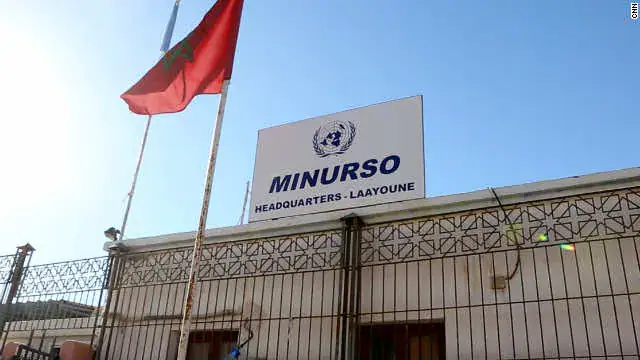
A significant development occurred at the U.N. Security Council on October 30, as the MINURSO mission's mandate expired due to reciprocal U.S. and Russian vetoes. This event marked the end of three decades of a "suspended situation" in the Sahara. The outcome has substantial implications for Algeria, which had long used the MINURSO renewal to keep the Western Sahara issue in the international spotlight and promote a referendum thesis.
Algerian diplomacy had exploited the routine renewal of MINURSO to maintain international attention on the Western Sahara issue. However, the U.S. and Morocco coordinated to submit a draft resolution that would change the mission's name and make the autonomy initiative under Moroccan sovereignty the basis for negotiations. Russia vetoed the draft, but the U.S. counter-veto brought down the Russian draft, resulting in a legal vacuum.
The expiration of MINURSO's mandate has significant implications for Algeria, which had sheltered under the U.N. umbrella for decades. The case has left the Security Council's procedural track, and Morocco's opponents have lost the card of periodic pressure. An 11-nation coalition, including European, African, and Asian powers, publicly sided with Morocco's Sahara and the autonomy option, demonstrating overwhelming support for Morocco.
The Russian veto has been viewed as a strategic gift to Morocco, allowing for the dismantling of the U.N. mission and the removal of international oversight from the territory. This development casts Algeria and Russia as an isolated minority that sabotaged the international peace mechanism. The absence of international observers represents a strategic shift in favor of the Royal Moroccan Armed Forces.
The end of MINURSO's mandate and the potential collapse of Military Agreement No. 1 may allow Morocco to argue that existing arrangements governing the area east of the sand wall can no longer be maintained. Morocco may be better positioned to respond to security threats with its growing reliance on drone technology and evolving rules of engagement. Any military response would remain subject to international law principles of necessity and proportionality.
Algeria's position is now characterized legally, and its role could come under serious international legal scrutiny if it allows the Polisario Front to launch attacks from its territory. Such actions may raise questions about Algeria's responsibilities under international law, including Article 51 of the U.N. Charter. This development could strengthen Morocco's argument for self-defense against attacks originating across the border.
The risks for Algeria include economic sanctions and suffocating political isolation if Polisario acts militarily against civilians or infrastructure without a peacekeeping framework. This could lead to the Front being formally designated as a terrorist group, placing Algeria before the world as a "harboring and sponsoring state of terrorism." Algeria now faces two bitter options: rein in the Polisario and accept Moroccan sovereignty or risk bearing direct legal and military responsibility as a host state for cross-border armed operations.
Key points
- The MINURSO mission's expiration marks a significant shift in the Western Sahara conflict, with implications for Algeria's role and responsibilities.
- The U.S. and Morocco coordinated to submit a draft resolution that would change the mission's name and make the autonomy initiative under Moroccan sovereignty the basis for negotiations.
- The absence of international observers represents a strategic shift in favor of the Royal Moroccan Armed Forces.