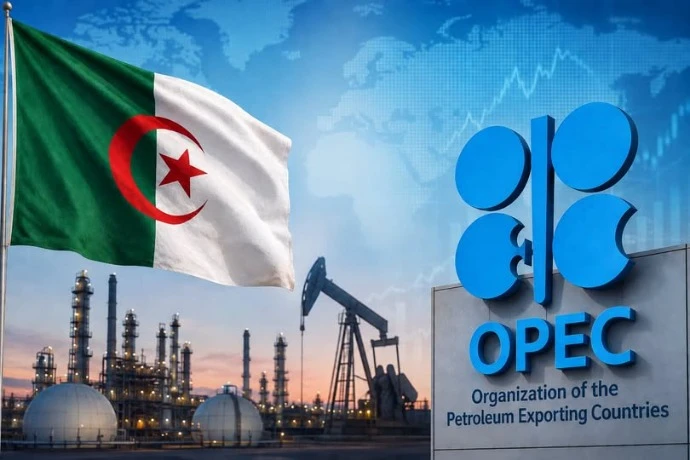
The Organization of Arab Petroleum Exporting Countries (OAPEC) has hailed Algeria's OPEC agreement as a strategic turning point in the global oil market. Adopted a decade ago, the agreement established a foundation for the OPEC+ deal, enabling the organization to address emerging market challenges. According to OAPEC Secretary-General Khalid Al-Atti, the agreement was more than a short-term response to low oil prices; it represented a shift in managing oil challenges and fostering a more inclusive partnership among producing countries.
The agreement was signed in 2016, during a period of significant decline in oil prices. The drop in prices was largely due to an increase in the global supply of oil, particularly from US shale oil, combined with weak demand growth and high inventory levels. Al-Atti noted that this situation highlighted the need for cooperation among oil producers to restore balance to the market. He emphasized that achieving this balance required dialogue, trust, and shared responsibility among producers.
Over the past decade, the OPEC+ alliance has demonstrated its ability to navigate periods of volatility and uncertainty in the global oil market. Through continuous monitoring of supply and demand trends, assessing inventory levels and investments, the alliance has taken necessary measures to address market fluctuations. Al-Atti stressed that the OPEC+ experience has shown that cooperation among producers is not about promoting one party's interests at the expense of others but rather about building a more balanced and predictable market.
The OPEC+ alliance has played a crucial role in supporting investments, ensuring supply security, and protecting the global economy from the adverse effects of sharp market fluctuations. Al-Atti highlighted the significance of the Algeria agreement in laying the groundwork for coordinated actions and adapting to changes in the global oil market. This cooperation has contributed to a more stable market environment, allowing producers to make informed decisions about investments and production levels.
The agreement has also facilitated a more collaborative approach to addressing common challenges facing oil producers. By working together, OPEC+ member countries have been able to respond more effectively to changes in the market, ensuring a more stable and sustainable oil market. This cooperation has been essential in maintaining a balance between supply and demand, which is critical for maintaining stable oil prices.
The impact of the Algeria agreement on the global oil market has been significant. By establishing a framework for cooperation and coordination among producers, the agreement has helped to reduce volatility and promote stability in the market. This, in turn, has supported investments in the oil sector, ensured supply security, and protected the global economy from the adverse effects of sharp market fluctuations.
As the global oil market continues to evolve, the OPEC+ alliance remains committed to its cooperative approach. The alliance will continue to monitor market trends, assess challenges, and take necessary measures to address them. With its ability to adapt to changing market conditions, the OPEC+ alliance is well-positioned to play a leading role in shaping the future of the global oil market.
Key points
- The Algeria agreement marked a significant shift in global oil market strategy, enabling OPEC+ to address emerging market challenges.
- The OPEC+ alliance has demonstrated its ability to navigate periods of volatility and uncertainty in the global oil market.
- The agreement has facilitated a more collaborative approach to addressing common challenges facing oil producers.