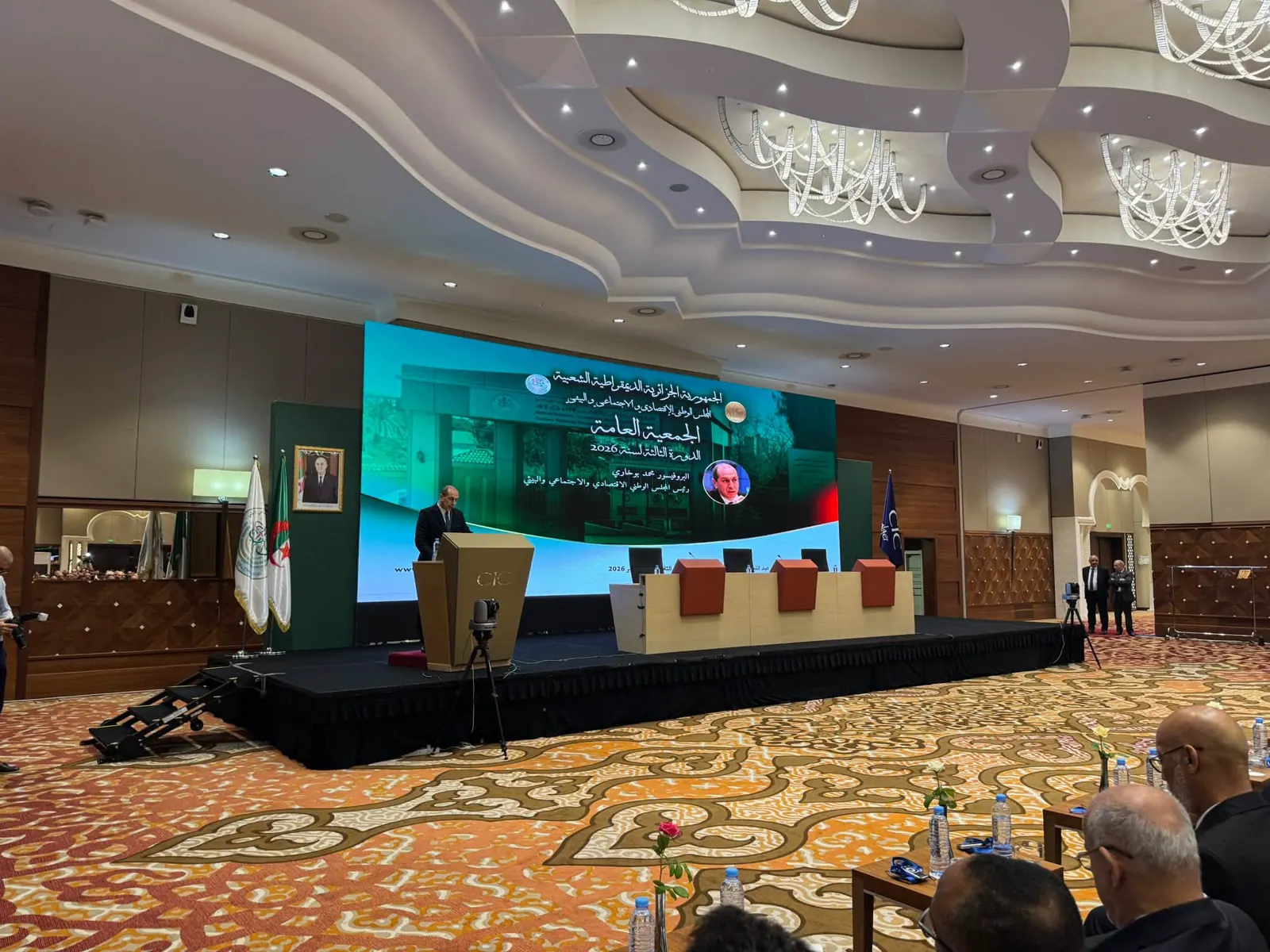
The National Economic, Social and Environmental Council of Algeria held its third ordinary general assembly on September 29, 2026. Council President Mohamed Boukharoub emphasized the importance of the gathering, which brings together members to discuss and analyze the country's economic, social, and environmental transformations. The assembly aims to propose solutions to improve the effectiveness and sustainability of policies in these areas. Boukharoub highlighted the council's role in providing thought leadership and consultation on key issues affecting the nation.
During the assembly, Boukharoub announced that three key reports would be presented for discussion. The first report concerns the financing of public services and the effectiveness of public institutions with an industrial and commercial character. This report focuses on balancing the requirements of public service with the need for financial sustainability and economic efficiency. The council president noted that public institutions are tasked with performing public-interest missions while optimizing resource use and improving governance.
The second report to be presented addresses the phenomenon of private tutoring outside formal educational institutions. Boukharoub noted that this issue has far-reaching implications, extending beyond the educational sphere to raise questions about its economic, social, and educational impacts. The council aims to adopt an objective and balanced approach to understanding the causes, motivations, and consequences of private tutoring. This involves moving beyond preconceived notions to develop a comprehensive understanding of the issue.
The third report is a self-initiated examination of institutional coordination in the management of breast cancer in Algeria. According to Boukharoub, despite state efforts to address breast cancer, there is still room for improvement in the quality of care provided to patients. The council has observed that patients could benefit from enhanced support throughout the care pathway, from prevention and diagnosis to treatment, follow-up, and rehabilitation.
The general assembly provides a platform for council members to engage in constructive dialogue and debate on these pressing issues. By analyzing the challenges and opportunities facing Algeria, the council aims to provide informed recommendations to policymakers. This process is designed to foster a more effective and coordinated approach to addressing the country's economic, social, and environmental needs.
In his opening address, Boukharoub emphasized the importance of collective responsibility in addressing these challenges. He noted that the council's work is crucial in providing a forum for discussion and analysis of key issues. The council's reports are expected to provide valuable insights and recommendations for policymakers, with the goal of improving the lives of Algerian citizens.
The council's work is closely aligned with the country's development goals, which prioritize economic growth, social justice, and environmental sustainability. By examining key issues and providing informed recommendations, the council aims to contribute to the development of effective policies that address the needs of Algerian citizens. The general assembly's discussions are expected to inform future policy initiatives and support the country's ongoing development efforts.
Key points
- The council will discuss reports on public service financing, private tutoring, and breast cancer care.