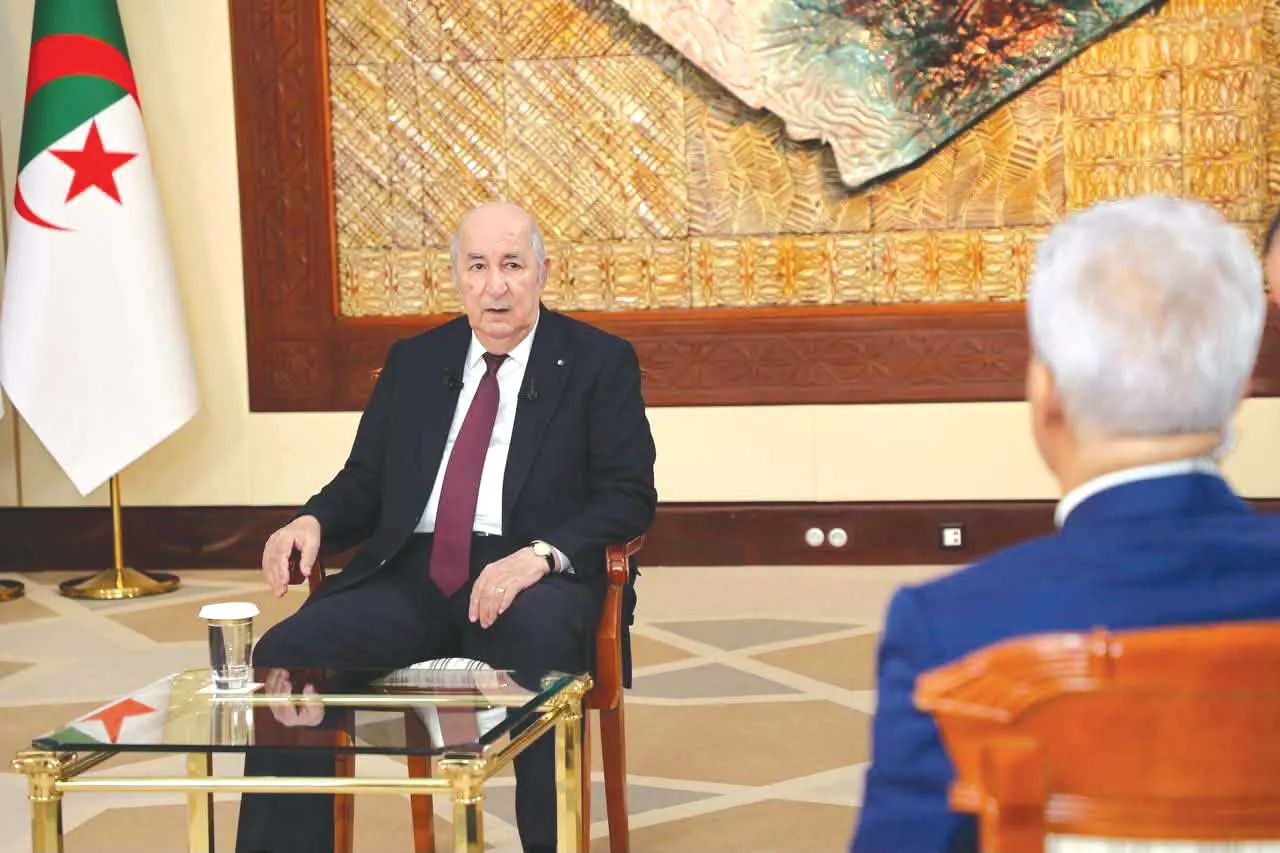
Algeria is implementing economic reforms to enhance national production, encourage investment, and diversify revenue streams, in line with President Abdelmadjid Tebboune's vision. During a recent media appearance, the President emphasized the importance of achieving economic independence and reducing reliance on international institutions. He highlighted the need for a strong, diversified economy that can create wealth and jobs. The President's statements underscore the government's commitment to driving growth and development.
President Tebboune forecasts Algeria's economy will grow at a rate of 4.01-4.02% in 2026, exceeding the International Monetary Fund's recent projections. This growth is attributed to ongoing investments and new projects across various sectors, which are expected to expand the economic base and reduce dependence on hydrocarbons. The government aims to develop industries such as mining, agriculture, and manufacturing, while supporting small and medium-sized enterprises. By broadening the economic base, Algeria hopes to achieve sustainable growth.
Algeria's GDP is projected to reach $400 billion by the end of 2026 or early 2027, according to President Tebboune. This ambitious target reflects the country's economic dynamism and increasing investments across sectors. Achieving this goal will require continued growth in national production, industrial development, and expanded mining and agricultural activities. The President's vision involves a diversified economy that generates value-added products and boosts exports beyond hydrocarbons.
Maintaining a robust foreign exchange reserve is crucial for Algeria's economic stability. President Tebboune emphasized the importance of preserving a sufficient reserve to ensure stability in the coming years. The government aims to develop new sources of foreign currency, targeting annual revenues of around $50 billion from sectors such as automotive manufacturing, mining, and electronics. This strategic shift focuses on enhancing domestic production capacity and promoting competitive, locally produced goods.
Algeria's economic strategy prioritizes investment, valuation of national resources, and diversification of growth drivers. By achieving these objectives, the country aims to strengthen its position among African economies and maintain its ability to fund development projects while preserving social and economic stability. The government's approach seeks to balance growth with stability, ensuring a sustainable economic trajectory.
President Tebboune's vision for Algeria's economy emphasizes independence and resilience. By reducing reliance on external factors and promoting domestic production, the country aims to build a strong, competitive economy. This approach involves nurturing a culture of entrepreneurship, innovation, and investment, which will drive growth and create opportunities for Algerians.
As Algeria continues to implement economic reforms, the country's progress will be closely watched by international observers. With a focus on sustainable growth, economic diversification, and investment, Algeria is poised to achieve its ambitious targets. The government's commitment to driving development and promoting economic independence will be crucial in shaping the country's future prosperity.
Key points
- Algeria aims to reach a GDP of $400 billion by 2027
- The country targets an economic growth rate of 4.01-4.02% in 2026
- Algeria seeks to boost annual foreign currency revenues to $50 billion from non-hydrocarbon sectors