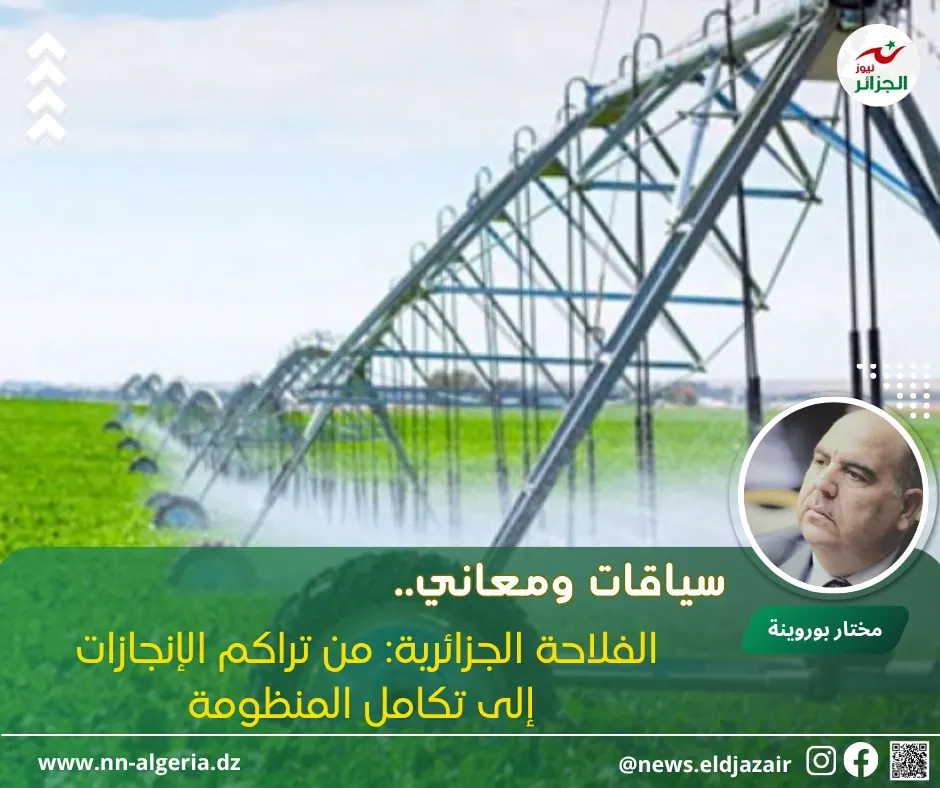
Algerian President Abdelmadjid Tebboune has issued new directives for the country's agricultural sector, emphasizing the need for a more integrated and sustainable system. This comes as the sector has made significant progress in recent years, with increased investments, expanded agricultural activities, and improved irrigation and mechanization. The president's directives aim to build on these achievements and take the sector to the next level.
The Algerian agricultural sector has made notable progress, with expanded agricultural activities in new regions, particularly in the highlands and south. The sector has also seen significant investments in irrigation, mechanization, and storage. However, the current stage requires a shift from merely accumulating achievements to integrating the various components of the sector. This includes enhancing agricultural information, digitalization, and revising the roles of certain institutions.
The new directives emphasize the importance of digitalization in the agricultural sector. This involves creating a reliable and regular system for collecting and analyzing data on cultivated areas, yields, production, and market trends. The goal is to enable more informed decision-making and timely interventions to address any imbalances. Digitalization can also help build a more transparent and efficient system for tracking production, collection, and marketing.
A new agricultural guidance law is being considered to provide a more effective framework for the sector. The law aims to translate the accumulated experience into a clearer vision for priorities and define the relationships between the state, farmers, investors, institutions, and markets. However, the guidance should not become overly bureaucratic, and the focus should be on creating an enabling environment for farmers to make informed choices.
The Algerian government is also emphasizing the importance of soil surveys and mapping to determine the optimal use of land and water resources. This involves identifying the most suitable crops for specific regions and optimizing fertilizer and water use. The goal is to ensure that agricultural expansion is sustainable and efficient, with a focus on building integrated production systems.
Water management is another critical aspect of the agricultural sector, and the government is prioritizing the development of more efficient irrigation systems and water-saving technologies. The use of treated wastewater and more efficient irrigation systems can help reduce water consumption and increase crop yields. The sector is also expected to benefit from improved mechanization and agricultural equipment.
The integration of the agricultural sector into a more comprehensive food security system is a key objective. This involves developing a more efficient and competitive sector that can meet domestic demand and potentially export surplus production. The government is working to improve the regulatory framework, logistics, and infrastructure to support the growth of the sector and enhance its contribution to the national economy.
Key points
- The Algerian government aims to transition the agricultural sector to a more integrated and sustainable system.
- Digitalization and soil surveys are key components of the government's strategy to improve the sector's efficiency and productivity.
- The sector's growth is critical to ensuring food security and potentially exporting surplus production.