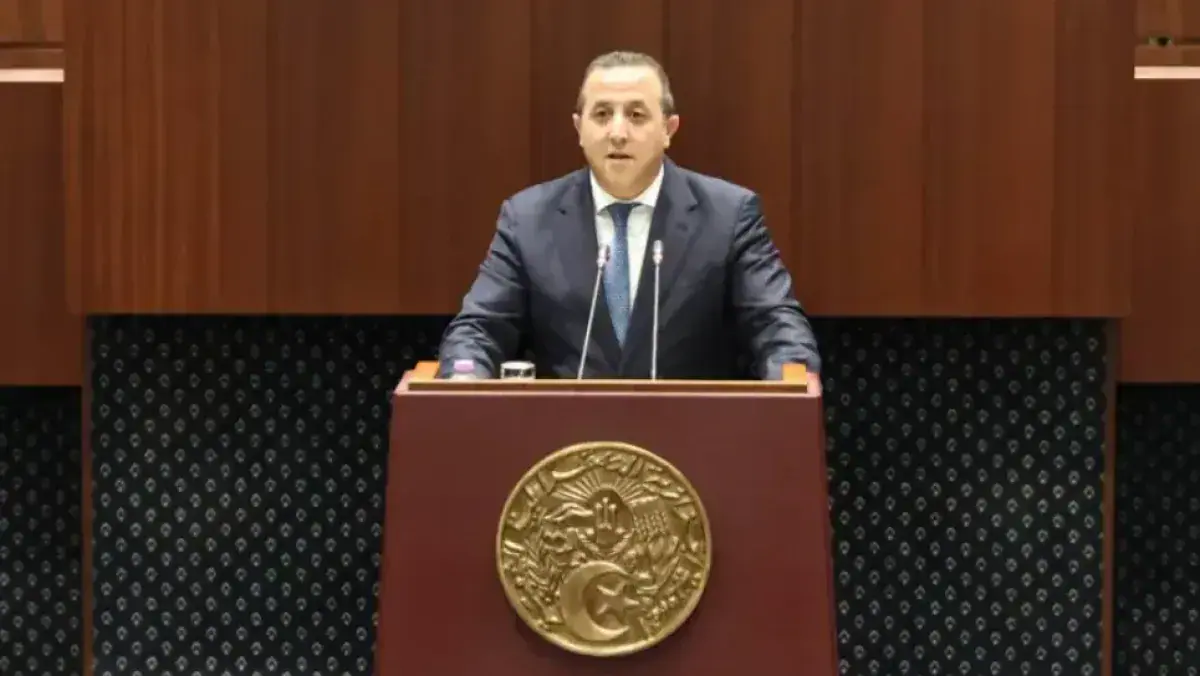
Algeria's Minister of Finance, Mohamed Lamine Labo, has announced that the country's 2027 finance law is designed to diversify public revenue and attract funds from the parallel market. The law also aims to mitigate the impact of global inflation and protect the purchasing power of citizens. Labo emphasized that the proposed measures reflect the state's social character and commitment to protecting low-income groups.
The 2027 finance law includes measures to encourage productive investment and support sectors outside of hydrocarbons, particularly start-ups. This will help expand the economic and tax base without increasing tax rates. The law also aims to improve tax collection, enhance the efficiency of the tax administration, and combat tax evasion. Labo highlighted the importance of supporting economic growth and accelerating the implementation of major economic projects.
The Algerian government is committed to ensuring price stability and providing essential products to limit speculation and monopolies. This will be achieved through continued support for basic goods and services, rehabilitation of wholesale markets, and enhanced market monitoring. The government also plans to develop digital monitoring and early warning mechanisms. Labo emphasized that the state's support policy is conditional on completing the digitalization process.
Labo reported that Algeria's public debt level remains below the reference index for emerging markets. He stressed that the debt should be evaluated in light of the country's gross domestic product growth. The minister revealed that 99% of Algeria's public debt is internal, providing the country with significant independence in making economic decisions.
The Algerian government is addressing the budget deficit through a balanced approach that involves mobilizing financial resources, using internal debt, and establishing a revenue regulation fund. The government has opted out of external financing and is focused on rationalizing spending, expanding the tax base, and combating tax evasion. Labo also mentioned plans to diversify financing tools, such as sovereign sukuk.
The Ministry of Finance has recorded over 800,000 annual real estate transactions, prompting an increase in the registration fee from 1% to 2.5%. Labo also discussed the allocation of financial resources to the 11 newly established provinces. The provinces have benefited from a total financial envelope of 152 billion dinars in commitment credits and 132 billion dinars in payment credits.
The implementation of the 2027 finance law is expected to support economic growth and improve the business environment in Algeria. The law's provisions will be evaluated in light of their impact on the country's economic development and social welfare. Key stakeholders will monitor the law's effectiveness in achieving its objectives.
Key points
- The 2027 finance law aims to diversify Algeria's public revenue and support economic growth.
- The law includes measures to encourage productive investment and combat tax evasion.
- Algeria's public debt level remains below the reference index for emerging markets.