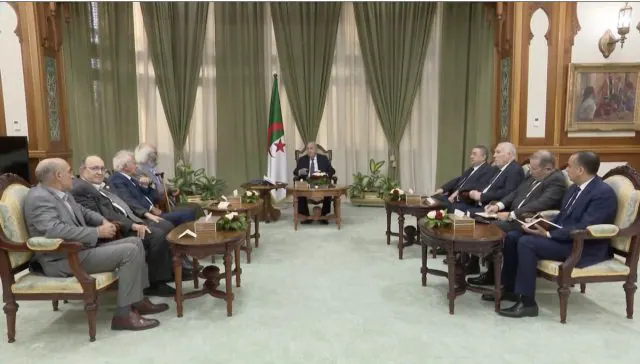
Algerian President Abdelmadjid Tebboune recently met with members of the High Council of the National Scientific Community Abroad at the El Mouradia palace. He emphasized that the country's current development level requires the contribution of its scientists, regardless of their location. The President highlighted that Algeria's young population, with over 70% under the age of 40, is a significant asset for the country's future.
The President expressed his pride in meeting the country's scientific elite, stating that Algeria's development is driven by its youth and university graduates. He stressed that the efforts being made now will take at least 20 to 30 years to bear fruit, but will ultimately enable Algeria to reach its desired position. The scientists present welcomed the President's initiative, expressing their satisfaction and eagerness to contribute to the country's development.
Elias Zerhouni, coordinator of the High Council, emphasized that Algeria has the necessary skills and resources to take a significant leap forward in its development. He highlighted the importance of mobilizing the country's scientific potential, both within Algeria and among its diaspora. Zerhouni noted that the President is convinced that Algeria needs a significant boost in various fields, relying on its scientists, both those living in the country and those abroad.
The High Council aims to create a bridge between Algerian researchers, universities, institutions, and economic actors. The council will propose projects of national importance, evaluate their scientific and technological relevance, and facilitate the exchange of knowledge. Its goal is to ensure that the country's scientific community is aware of emerging technologies and trends.
Zerhouni announced that a roadmap is being prepared to translate the discussions into concrete projects. The roadmap will be submitted to the President, outlining an organization that is agile and responsive to the country's priority needs. The approach involves two stages: understanding the ecosystem and identifying priorities, followed by defining programs that allow Algerian scientific and technical expertise abroad to make a tangible contribution.
The first session of the High Council was held in Algiers, bringing together scientists and experts from abroad, as well as representatives from ministerial sectors and companies. The establishment of the council reflects the government's commitment to mobilizing the scientific diaspora within a sustainable institutional framework. Zerhouni emphasized that the priority now is to take action, identifying needs, defining programs, and harnessing the expertise of Algerian competencies worldwide.
The Algerian government is seeking to tap into the expertise of its scientific community abroad to drive national development. With a renewed focus on collaboration and knowledge-sharing, the country aims to accelerate its progress in various fields. The High Council's efforts will be crucial in defining the country's scientific priorities and ensuring that its experts are working towards common goals.
Key points
- Algerian President Abdelmadjid Tebboune seeks to harness the expertise of the country's scientists abroad to drive national development.
- The High Council of the National Scientific Community Abroad aims to create a bridge between Algerian researchers, universities, and economic actors.
- A roadmap is being prepared to translate discussions into concrete projects, outlining an organization that is agile and responsive to the country's priority needs.