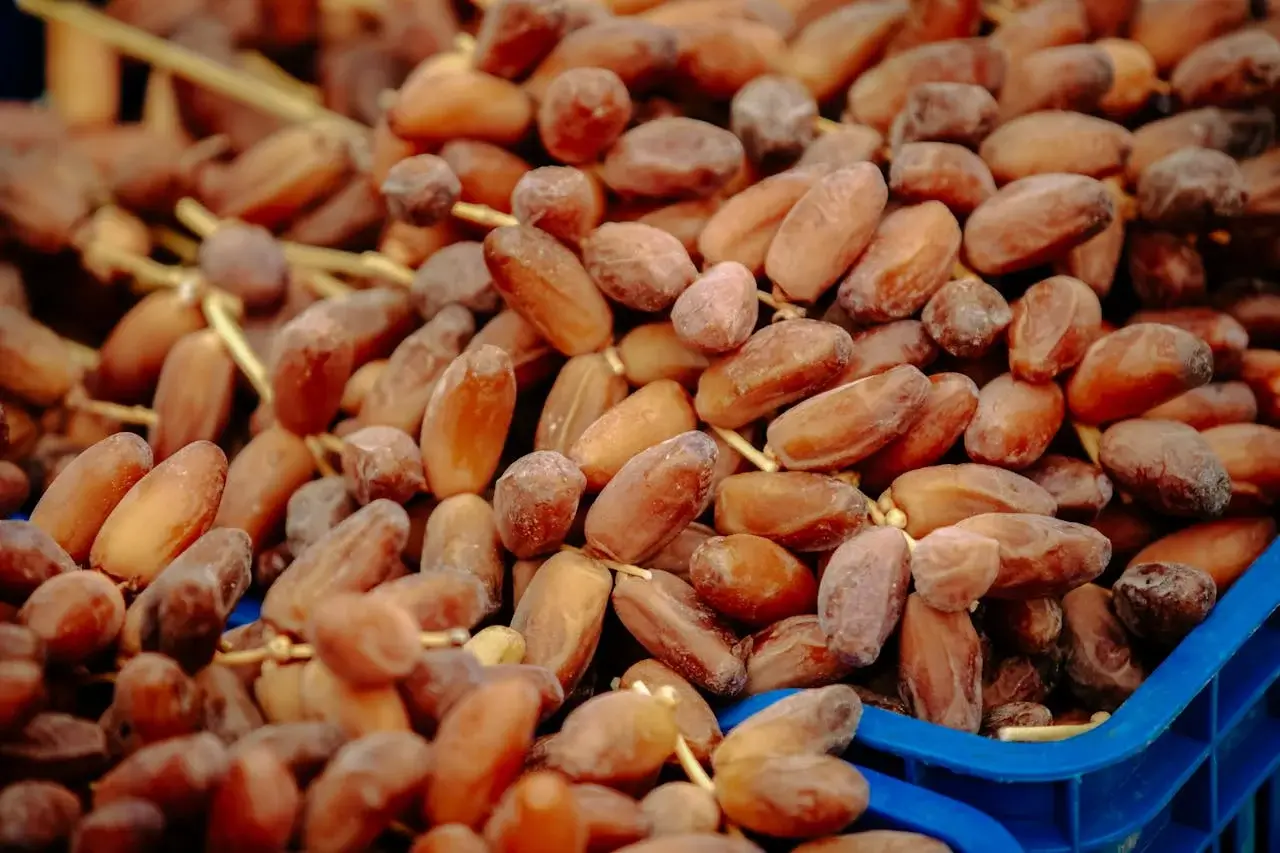
Algeria has taken the top spot in Africa for date exports in terms of volume, according to data compiled by Trade Map. In 2025, the country shipped approximately 185,000 tonnes of dates to international markets, generating an estimated $184 million in revenue. This achievement is attributed to the country's large production and export capabilities. The majority of Algeria's date production comes from plantations in the southern oases, particularly in the wilayas of Biskra, El Oued, and Ouargla.
The variety Deglet Nour is a significant contributor to Algeria's date production, especially in the regions of Biskra and Ouargla. According to the Food and Agriculture Organization (FAO) of the United Nations, Algeria produced around 1.34 million tonnes of dates in 2024, on a harvested area of approximately 176,000 hectares. However, the difference between the production level and the exported volumes indicates that most of the dates produced are intended for the domestic market.
Tunisia ranks second in Africa for date exports in terms of volume, with 147,000 tonnes exported in 2025. Despite being behind Algeria in terms of volume, Tunisia's exports generated $347 million, nearly twice the revenue of Algeria. This disparity is largely due to the average value of the exported products. According to Trade Map, the average value of Tunisian dates is around $2,400 per tonne, compared to $993 for Algerian dates.
Egypt occupies the third position in the African ranking of date exporters in terms of volume, with approximately 39,000 tonnes exported in 2025. These exports generated $147 million in revenue. Egypt has the largest date production on the continent, with the FAO estimating a harvest of around 1.75 million tonnes in 2024. The main production areas include the oases of New Valley, Siwa, and Bahariya, as well as other irrigated regions.
Libya and South Africa complete the top 5 list of African date exporters. Libya ranks fourth, with approximately 16,000 tonnes of dates exported in 2025, generating $25 million in revenue. The country's production is mainly located in oases and arid zones, where the climate is suitable for date palm cultivation. South Africa ranks fifth, with 6,200 tonnes exported in 2025, generating around $26 million in revenue.
The value of dates exported by South Africa is estimated at $4,100 per tonne, higher than that of the other four countries in the ranking. As new African producers seek to strengthen their presence in the international date market, Ethiopia has announced a 10-year plan to develop its date sector. The plan includes increasing the area dedicated to date palm cultivation to 25,000 hectares, up from around 6,000 hectares currently.
The performance of the main African date exporters shows that the volumes sold abroad do not solely determine the revenue. In 2025, Tunisia exported fewer dates than Algeria but recorded significantly higher revenue. The ability to add value to products is therefore also an important factor for countries seeking to develop their exports.
Key points
- Algeria exported 185,000 tonnes of dates in 2025, topping the African list.
- Tunisia leads African date exports in value, with $347 million in 2025.
- Egypt has the largest date production in Africa, at 1.75 million tonnes in 2024.