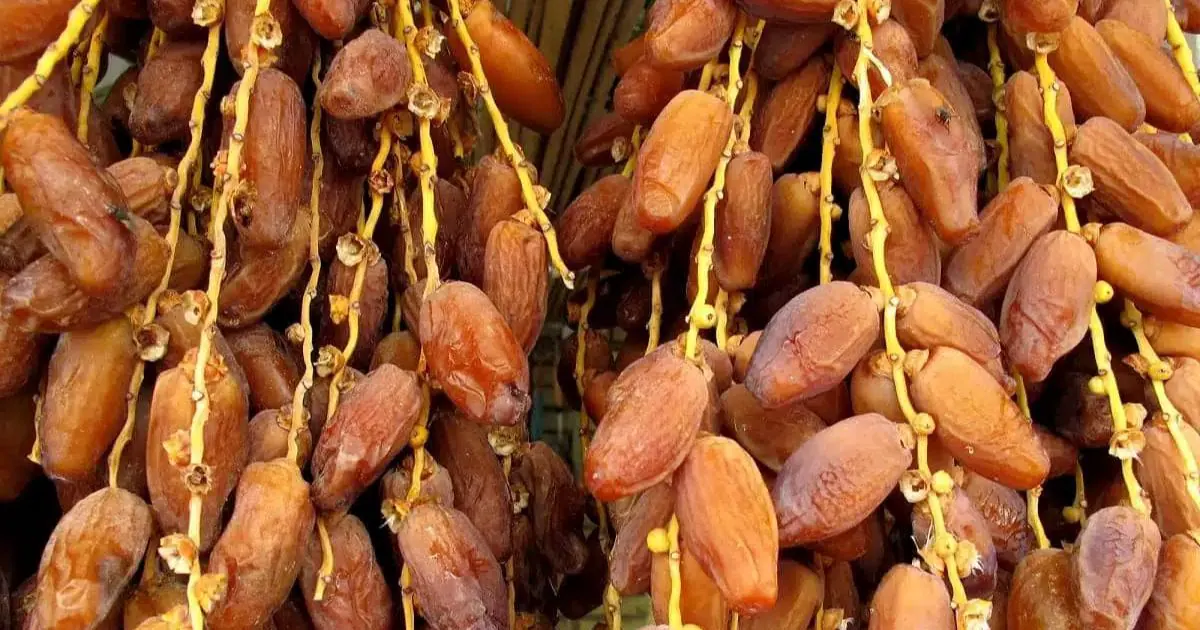
Algeria has emerged as the top African exporter of dates, with a significant 185,000 tonnes exported worldwide in 2025, generating approximately $184 million in revenue. The country's phoenix palm sector has become a major pillar of non-hydrocarbon exports, driven by the richness of its Saharan palm groves. This achievement is a testament to the country's potential in the agricultural sector.
The southern regions of Algeria, particularly the wilayas of Biskra, El Oued, and Ouargla, are renowned for their date production and have contributed significantly to the country's export success. Algeria's dominance in date exports is followed by Tunisia, which shipped 147,000 tonnes, and Egypt, which exported 39,000 tonnes worth $147 million. These countries have adopted different strategic approaches to date production and export.
Despite Algeria's leadership in terms of volume, the country's date exports have a relatively low value per tonne. In 2025, the average price of Algerian dates was around $993 per tonne, which is lower than that of some neighboring countries. In contrast, Tunisia generated $347 million in revenue from exporting fewer tonnes, with an average price of $2,360 per tonne, more than double that of Algeria.
The Libyan and South African date export industries are smaller but still notable, with 16,000 tonnes and 6,200 tonnes shipped, respectively. These countries generated $25 million and $26 million in revenue, with South Africa achieving a higher value per tonne of $4,194. The country's ability to target specific markets has contributed to its relatively high export value.
Looking ahead to the 2026-2027 campaign, Algeria's date production is expected to increase, with projections suggesting a harvest of over 4.1 million quintaux in the Biskra wilaya alone. This represents a gain of 100,000 quintaux compared to the previous cycle. The Deglet Nour variety is expected to account for 2.6 million quintaux of this volume, highlighting the region's focus on high-quality date production.
The Algerian date sector faces the challenge of increasing its export value through better packaging and strategic positioning in global markets. With an abundant supply of dates, Algerian operators must focus on capturing more value-added in exports to remain competitive. This will require investments in processing, marketing, and distribution to reach high-end markets.
As the Algerian date sector continues to grow, it is likely to play an increasingly important role in the country's economy. With the right strategies in place, Algerian date producers and exporters can capitalize on the country's natural advantages and build a more sustainable and lucrative industry. The sector's future success will depend on its ability to adapt to changing market trends and consumer preferences.
Key points
- Algeria exported a record 185,000 tonnes of dates in 2025, generating $184 million in revenue.
- The country's date exports have a relatively low value per tonne compared to neighboring countries.
- Algeria's date production is expected to increase in the 2026-2027 campaign, with a focus on high-quality varieties like Deglet Nour.