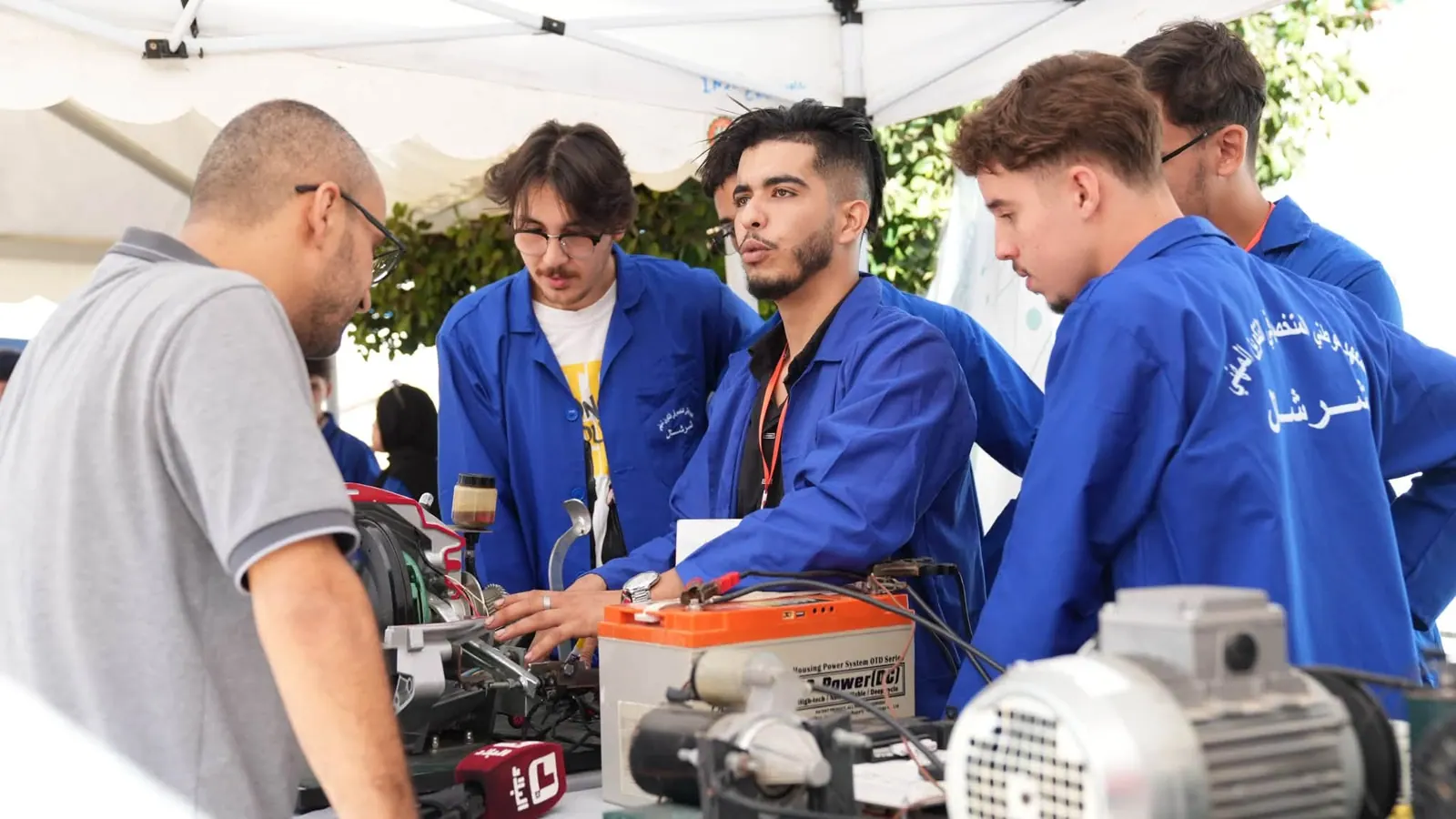
Algeria's Minister of Vocational Training and Education, Nassima Arhab, officially launched the new training cycle for October 2026 on Sunday, October 4, in the state of Tipaza. The launch took place at the National Institute for Vocational Training, located in Chershal. This event marks the beginning of a new academic year for vocational training in Algeria, with a focus on adapting training programs to meet the actual needs of the job market.
Minister Arhab emphasized that her sector has changed its approach to building a vocational training system, shifting from a logic of specialties to one of skills required by the job market. This change is based on the adoption of a national reference for training and skills, as well as linking training offers to the actual needs of the national economy. This approach is being implemented in coordination with various sectors, economic operators, and entities concerned with employment and investment.
As a result of this new approach, the Ministry has identified training needs exceeding 12,690 positions. For the October 2026 cycle, 349,907 pedagogical seats are available, in addition to the apprenticeship program. New specialties have been introduced, including renewable energies, cybersecurity, artificial intelligence, Industry 4.0, digitalization, environment, automotive mechanics, and tourism, among others. These areas have been prioritized to meet the evolving needs of the job market.
The "Tekoum" platform, which manages vocational training, has registered 486,336 candidates, including 3,136 who have been directed towards vocational education. Approximately 30,000 project holders have benefited from training through 183 centers for entrepreneurship development. These projects are being supported through 25 laboratories and incubators for entrepreneurship, as well as 19 excellence centers, including a new center specialized in cinema professions.
Minister Arhab also announced that 26 new training institutions will be operational, and 13 others will be completed, enhancing the sector's capacity and expanding the network of available training and specialties. This development aims to improve the quality and accessibility of vocational training in Algeria, ultimately contributing to the country's economic growth and employment opportunities.
The new training cycle is expected to provide opportunities for thousands of Algerians to acquire skills and competencies required by the job market. The Ministry's efforts to adapt vocational training to the needs of the economy are seen as crucial in addressing unemployment and promoting sustainable development. The launch of the new cycle is a significant step towards achieving these goals.
The Algerian government has been investing in vocational training and education as part of its strategy to diversify the economy and reduce dependence on hydrocarbons. The development of vocational training is seen as a key factor in promoting entrepreneurship, innovation, and job creation. With the new training cycle, Algeria aims to equip its workforce with the skills needed to compete in the global market and drive economic growth.
Key points
- Over 349,000 available pedagogical seats for the October 2026 training cycle.
- Introduction of new specialties, including renewable energies, cybersecurity, and artificial intelligence.
- 26 new training institutions to be operational, and 13 others to be completed.