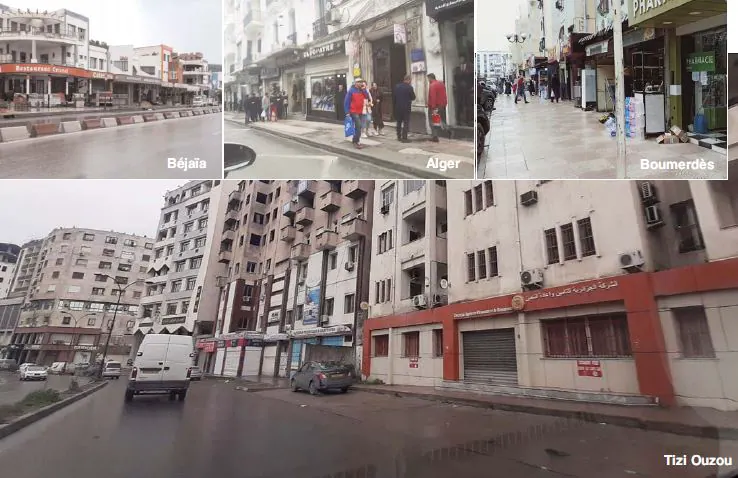
A nationwide strike, widely publicized on social media and supported by the Union générale des commerçants et l'UGTA, was observed with near-total adherence in the Tizi-Ouzou and Béjaïa wilayas. In contrast, the rest of the country saw little to no participation, with the capital city, Algiers, largely ignoring the call to action. Photos of open shops on Didouche Mourad street were shared online, showcasing business as usual.
The Kabylie region, comprising Tizi-Ouzou and Béjaïa wilayas, was almost entirely shut down, with all sectors participating in the strike. Villages and towns, including Azazga, Draâ Ben Khedda, and Maâtkas, saw widespread closures of shops, schools, and administrations. Only essential services like pharmacies and gas stations remained operational. In some areas, such as Aït Abdelmoumène, only bakers provided minimal services.
In Béjaïa, the 52 communes observed the strike, with public administrations, economic entities, and transportation services coming to a standstill. The city's streets were empty, with only pharmacies and health structures remaining open. Workers from Sonatrach, the port enterprise, and other economic entities joined the strike, as did teachers and students across all educational levels.
The strike was not universally observed, however. In Bouira, only the Berberophone regions largely adhered to the strike call, while the rest of the wilaya continued with business as usual. In some areas, like Sour El Ghozlane and Aïn Bessem, establishments and administrations remained open. Transporters continued their rotations, and buses operated normally.
Despite the strike, some essential services were allowed to operate. Commerçants were permitted to open their shops around 5 pm to enable citizens to purchase essential goods. Boulangeries also worked during the morning to provide bread. The SG of the UGCAA de Béjaïa confirmed that a minimal service would be ensured by supermarkets and general food stores.
The strike was not without its effects on the economy. Prices of widely consumed products, such as fruits and vegetables, skyrocketed. The price of carrots rose to 180 DA, potatoes to 60 DA, and courgettes to 200 DA. The availability of milk in sachets was also severely impacted, with many areas reporting shortages.
Further action is planned, with marches and protests scheduled in the coming days. In Béjaïa, a large march took place during the day, while in other areas, like Seddouk, hundreds of citizens took to the streets. The strike and subsequent actions appear to be part of a broader movement, with demonstrators expressing their rejection of the current system and the upcoming presidential election.
Key points
- The Kabylie region saw near-total adherence to the nationwide strike, with widespread closures of shops, schools, and administrations.
- The strike was largely ignored in the rest of Algeria, with Algiers and other major cities continuing with business as usual.
- Prices of essential goods, such as fruits and vegetables, increased significantly during the strike, with shortages reported in some areas.