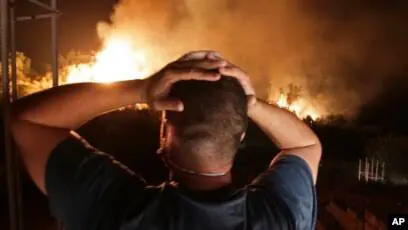
The Algerian parliament has voted to impose the death penalty on individuals convicted of intentionally setting fires to forests. This move comes in response to the devastating wildfires that swept through the country's northeast this summer, resulting in 12 reported fatalities. The fires destroyed thousands of hectares of forest, shrubland, and agricultural land, with the Jijel region being one of the hardest hit, suffering damage over a 100-kilometer area.
The new legislation also expands the scope of the death penalty to include the kidnapping of children accompanied by torture, sexual assault, or mutilation. Algeria has had a moratorium on executions in place since 1993, although death sentences are still handed down, particularly in terrorism cases. Despite this, no executions have been carried out since the moratorium was established. The decision to strengthen the law was made in response to what authorities describe as a growing threat to national security.
The move has been met with criticism from Amnesty International, which views the measure as "deeply retrograde." The organization is urging the Algerian government to focus on prevention and enhancing intervention capabilities rather than resorting to harsher penalties. According to Amnesty International, this approach does not address the root causes of the problem and may lead to further human rights abuses.
The bill was proposed by the government following an emergency meeting chaired by President Abdelmadjid Tebboune. During the meeting, officials assessed the damage caused by the recent wildfires and discussed strategies for mitigating future incidents. The president emphasized the need for a comprehensive approach to address the issue, including improving emergency response times and increasing public awareness about fire prevention.
Minister of Justice Lotfi Boudjemaa defended the new law, stating that the severity of the recent wildfires was comparable to organized crime. He also mentioned alleged connections with "foreign actors," highlighting a threat to the country's territorial integrity. Boudjemaa argued that the death penalty was necessary to deter such acts and protect national security.
The bill must now be reviewed by the Senate before being promulgated by President Tebboune. If passed, it will mark a significant shift in Algeria's approach to addressing wildfires and other serious crimes. Critics, however, argue that this approach may not effectively address the root causes of the problem and could lead to further human rights abuses.
Algeria experiences forest fires every summer, with the north of the country being particularly vulnerable due to periods of drought and heatwaves. The recent wildfires have highlighted the need for a comprehensive strategy to prevent and respond to such incidents. The government's decision to introduce the death penalty for arsonists is likely to spark further debate about the most effective way to address this issue.
Key points
- Algeria introduces death penalty for arson amid devastating forest fires
- Move criticized by Amnesty International as "deeply retrograde"
- Bill must be reviewed by Senate before being promulgated by President Tebboune