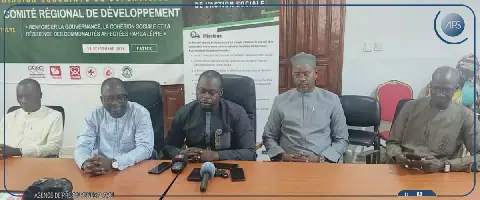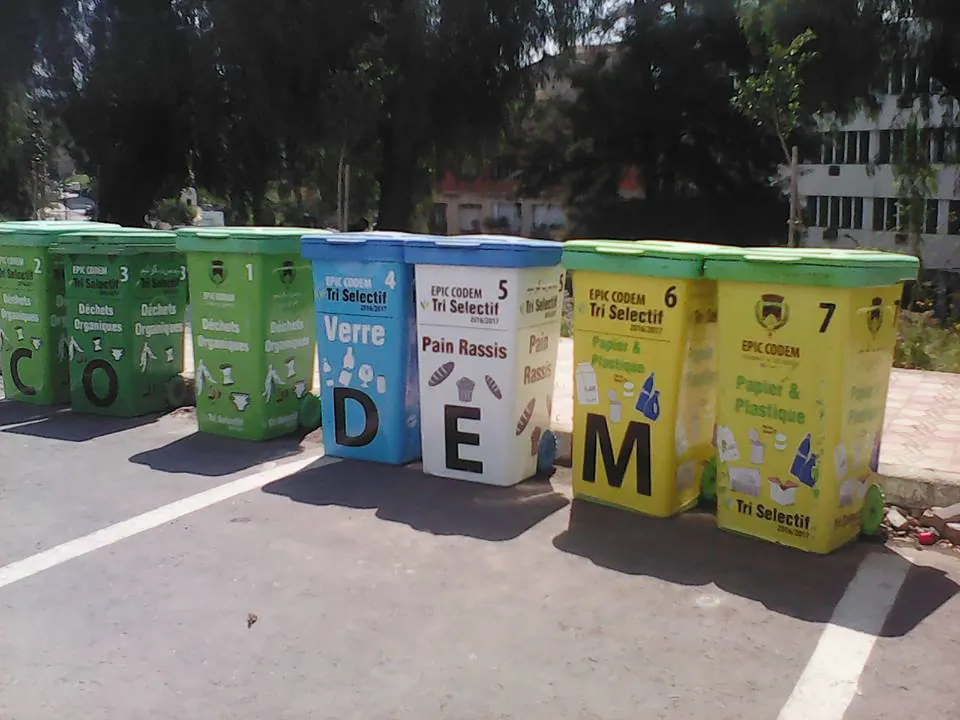
Today, at the Mouloud Mammeri Cultural Center in Tizi-Ouzou, Algeria, an information and awareness day is being held on the country's new national strategy for managing household and similar waste. This event is organized by the Environment Directorate in close collaboration with the Mouloud Mammeri University of Tizi-Ouzou. A scientific program has been put in place for the day, featuring several communications and presentations.
The event began with a communication by Nabila Siad Hamedi, a lecturer at Mouloud Mammeri University and the main organizer of the day. She presented the policy pursued by Algeria in the field of waste management, which has led to the development of a new sustainable national strategy. This was followed by a second communication on the communal scheme for waste management applicable to municipalities, presented by Professor Hammoum, also a lecturer at Mouloud Mammeri University.
A representative from the Ministry of Environment and Renewable Energies then presented the new strategy adopted for integrated management of household and similar waste. The first session concluded with a testimonial from a cleaning agent on citizens' behavior in the field of environment and waste. The day's program also includes a review of the actors involved in implementing the new strategy, including companies involved in the recovery and recycling of various materials.
The second session of the day focuses on the role of civil society, including associations active in the environmental field and village committees. These stakeholders will share their experiences and contribute to the discussion. According to Nabila Siad Hamedi, some villages have achieved good results thanks to the involvement of committees and associations, particularly women's associations. The experience of associations of people with disabilities, including those with Down syndrome, who are involved in composting in schools, will also be shared.
The event also highlights the importance of involving women in environmental initiatives. According to Siad Hamedi, women's involvement is crucial, and their direct implication is necessary for achieving good results. The day's program includes debates and recommendations to improve information and awareness and facilitate the implementation of the new national strategy.
The strategy aims to eliminate unsanitary conditions, create wealth, and generate employment. All stakeholders, including local authorities and associations, are invited to participate and contribute to the discussion. Siad Hamedi emphasized that everyone must get involved, stating, "We can't do everything, but we can do something."
The information day concludes with a call to action, emphasizing the need for collective effort to achieve the objectives of the new waste management strategy. The event is expected to raise awareness and promote a better understanding of the strategy among stakeholders, paving the way for its successful implementation.
Key points
- The new strategy aims to eliminate unsanitary conditions, create wealth, and generate employment.
- Women's involvement is crucial for achieving good results in environmental initiatives.
- The strategy's success depends on the collective effort of all stakeholders, including local authorities, associations, and citizens.