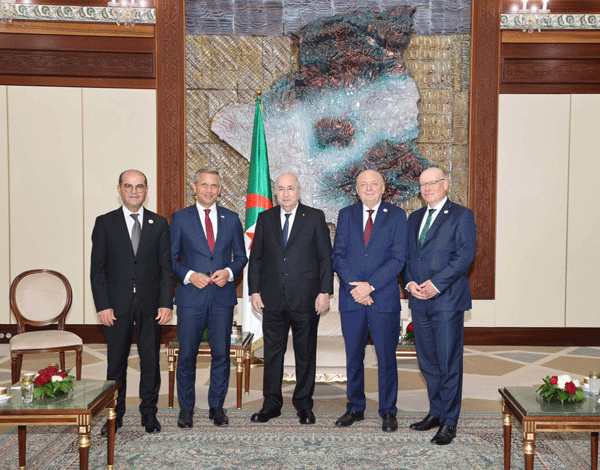
On October 2, 2026, Algerian President Abdelmadjid Tebboune welcomed energy ministers from Austria, Germany, Italy, and Tunisia to discuss the Southern Hydrogen Corridor project. The project aims to create a pipeline to transport hydrogen from Algeria to Europe, promoting a clean energy transition and strengthening economic ties between the countries involved. The meeting highlighted the project's strategic importance and the need for cooperation to ensure its implementation. The project is seen as a key initiative to secure hydrogen supplies for European industries.
The European ministers emphasized the project's significance for the future of energy and industry, describing it as a game-changer for the region. They praised President Tebboune's support for the project, which is expected to create new opportunities for investment and cooperation between the Mediterranean regions. The project is also seen as a way to support Europe's transition to clean energy and reduce its reliance on fossil fuels. According to German Energy Minister Frank Wieczorek, the project has the potential to strengthen ties between the five participating countries.
Austrian Energy Minister Wolfgang Hattmansdorfer highlighted the project's potential to bring together five countries in a region marked by significant geopolitical and geo-economic changes. He described Algeria as a strong partner, emphasizing the importance of securing hydrogen supplies for Austrian, German, and Italian industries. Hattmansdorfer also noted that the project could create new opportunities for investment and cooperation in renewable energy, particularly in Algeria. The project is expected to have a positive impact on the economies of the participating countries.
Italian Environment and Energy Minister Gilberto Pichetto Frattin praised President Tebboune's support for the project, emphasizing its importance for producing and exporting hydrogen to European countries. He noted that the project goes beyond energy, aiming to create better conditions for the future and generate economic and social benefits for citizens. The project is seen as a key component of the transition to a low-carbon energy system. Frattin also highlighted the potential for cooperation in the field of renewable energy.
Tunisian Minister of Equipment and Housing, Salah Zowari, described the Southern Hydrogen Corridor as a strategic infrastructure for clean energy, connecting North Africa to Europe. He emphasized the importance of cooperation between Algeria, Tunisia, Austria, Italy, and Germany, highlighting the project's potential to create new opportunities for investment and cooperation. Zowari noted that the project's studies have confirmed its feasibility, and the next steps will focus on completing the technical and economic aspects.
Algeria plays a crucial role in the project, given its energy resources and expertise in renewable energy. The country's strategic location makes it an essential hub for connecting North Africa to European markets. The project is expected to have a significant impact on Algeria's economy and reinforce its position as a key player in the region's energy landscape. The project's implementation is expected to create new opportunities for investment and cooperation in the region.
The Southern Hydrogen Corridor project is a significant initiative that brings together five countries in a region marked by significant geopolitical and geo-economic changes. The project's success will depend on the continued cooperation and commitment of the participating countries. The project's implementation is expected to have a positive impact on the economies of the participating countries and contribute to the transition to a low-carbon energy system. The project is seen as a key component of the region's energy future.
Key points
- The Southern Hydrogen Corridor project aims to create a pipeline to transport hydrogen from Algeria to Europe, promoting a clean energy transition and strengthening economic ties between the countries involved.
- The project is seen as a key initiative to secure hydrogen supplies for European industries and support Europe's transition to clean energy.
- Algeria plays a crucial role in the project, given its energy resources and expertise in renewable energy.