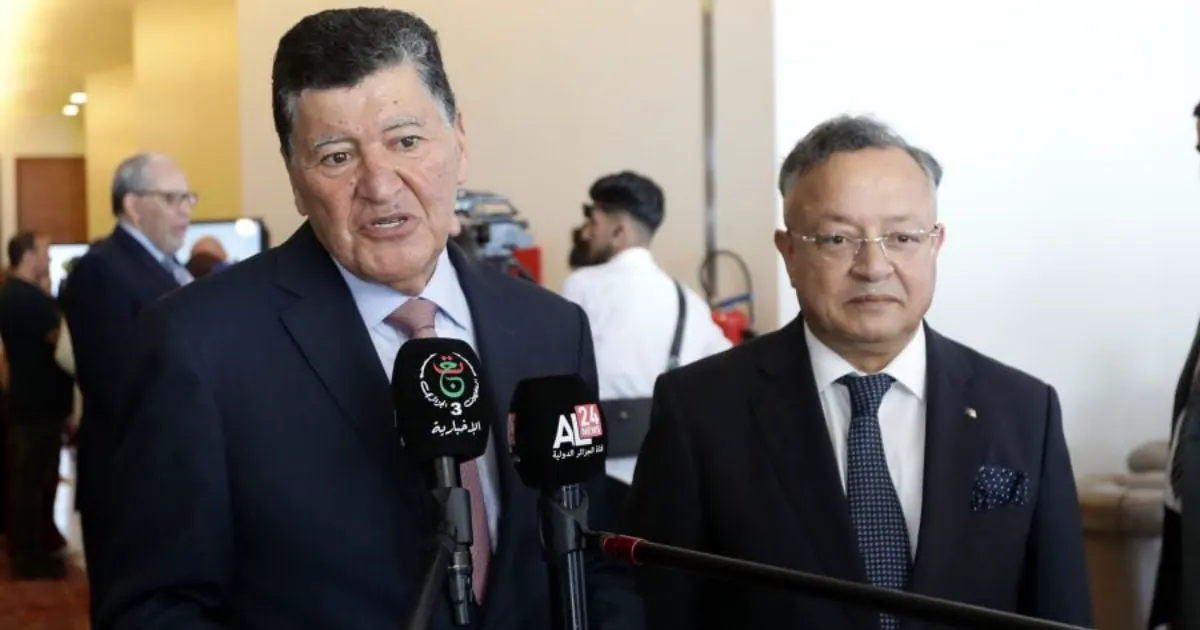
Algeria has taken a significant step in structuring its relations with experts living abroad with the establishment of the High Scientific Council for the diaspora. The council's inaugural meeting was held on Saturday at the El Aurassi hotel in Algiers, following its creation by presidential decree on September 7, 2026. The council is part of a strategy initiated by President Abdelmadjid Tebboune to tap into the expertise of Algerian scientists and researchers living abroad.
The High Scientific Council for the diaspora aims to provide a permanent and organized framework for exchanges with expatriate intellectuals. Until now, interactions with this elite group were limited to informal or occasional contacts. The council's establishment marks a fundamental shift in this approach, recognizing the importance of these experts as a key component of Algeria's human capital and scientific potential.
The council's priorities include mastering artificial intelligence and advanced technologies, as well as strengthening strategic areas such as cybersecurity, energy security, health security, food security, and water security. These efforts are part of a broader socio-economic trajectory aimed at achieving emergence by 2027. The government plans to leverage the diverse expertise of its diaspora to drive progress in these areas.
The council's coordinator, Professor Elias Zerhouni, outlined the operational orientations of the High Council. The council's flexible structure will connect the strategic needs of ministries and local economic actors with the technical capacities of scientists living abroad. Zerhouni emphasized that the initiative is driven by a sense of patriotism, with participants contributing on a voluntary basis.
A 12-month roadmap has been planned, with the first phase focusing on establishing a general secretariat and deploying a network of experts in France, Europe, and the Americas. The initial cycle will aim to gather a vast network of specialists and animate thematic working groups. A first assessment will be conducted after 12 months, allowing for adjustments to be made.
The council's work will be conducted in consultation with six ministerial departments, and a detailed report will be submitted to the head of state. The initiative is seen as a key component of Algeria's strategy to tap into the expertise of its diaspora and drive socio-economic progress. The council's establishment reflects the government's commitment to leveraging the skills and knowledge of expatriate Algerians.
The High Scientific Council for the diaspora is expected to play a key role in driving Algeria's emergence by 2027. By harnessing the expertise of its diaspora, the country aims to make significant strides in areas such as artificial intelligence, cybersecurity, and sustainable development. The council's success will depend on its ability to connect the needs of Algerian ministries and economic actors with the technical capacities of scientists living abroad.
Key points
- Algeria establishes High Scientific Council for diaspora to tap into expertise of expatriate scientists and researchers
- Council aims to drive socio-economic progress and achieve emergence by 2027
- Initiative reflects government's commitment to leveraging skills and knowledge of expatriate Algerians