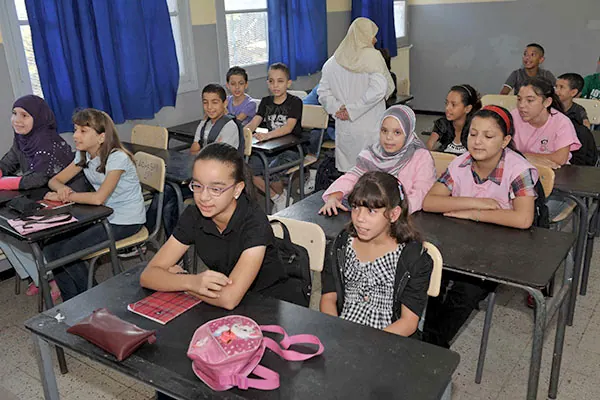
As the new academic year begins in Algeria, parents and students are eager to understand how the symbolic fees paid during registration will be allocated across the country's educational institutions. In response, education authorities have published detailed tables explaining the mechanisms for distributing these fees. The tables, obtained by local media, reveal that the amounts, ranging from 35 Algerian dinars for primary education to 55 dinars for secondary education, will be allocated across various essential areas to support extracurricular activities.
The distribution of student fees varies across different educational stages. For instance, primary education students will contribute 35 dinars, with 6 dinars allocated for correspondence expenses, 3 dinars for school accident insurance, and 6 dinars for the provincial solidarity committee. In contrast, secondary education students will pay 55 dinars, with 10 dinars for correspondence expenses, 4 dinars for school accident insurance, and 12 dinars for the provincial solidarity committee. These allocations aim to support various activities and services that enhance the educational experience.
A significant portion of the student fees will be allocated to cultural and sporting activities. The cultural and sports association of each educational institution will receive 6 dinars, while the provincial federation for complementary school activities will receive 4 dinars for primary and middle school students and 8 dinars for secondary school students. Additionally, the national sports federation will receive 2-5 dinars, depending on the educational stage. These allocations aim to promote cultural and sporting activities among students.
The Algerian education authorities have emphasized that the distribution of student fees is designed to ensure a balanced allocation of resources. The fees will be used to support various activities, including cultural and sporting events, student insurance, and solidarity initiatives. By allocating resources effectively, the authorities aim to improve the overall educational experience and provide students with a supportive learning environment.
The publication of the detailed tables is seen as a positive step towards transparency and accountability in the management of student fees. Parents and students can now understand how their contributions will be used to support various activities and services. The authorities have assured that the fees will be used efficiently and effectively to enhance the educational experience.
The allocation of student fees is part of a broader effort to improve the quality of education in Algeria. The authorities have implemented various initiatives aimed at enhancing the educational experience, including improving infrastructure, training teachers, and developing curricula. The effective management of student fees is seen as a crucial aspect of these efforts.
As the new academic year begins, students and parents in Algeria will be closely watching how the student fees are allocated and used. With the publication of the detailed tables, there is greater transparency and accountability in the management of these fees. The authorities have assured that the fees will be used to support activities and services that benefit students and enhance the overall educational experience.
Key points
- Algeria's education authorities release detailed tables outlining the distribution of symbolic student fees for the upcoming academic year.
- The fees will be allocated across various essential areas, including cultural and sporting activities, student insurance, and solidarity initiatives.
- The authorities aim to improve the overall educational experience and provide students with a supportive learning environment.