On the night of October 31 to November 1, 1954, a group of determined Algerian militants launched a series of coordinated attacks against French colonial rule, marking the beginning of the country's war of independence. The attacks, which took place across various regions of Algeria, including the Aurès, Kabylie, and Algiers, were carried out by a handful of men with limited resources and arms. Despite being outnumbered and outgunned, they were driven by a strong conviction that armed struggle was the only way to achieve independence.
The same night, the National Liberation Front (FLN) issued a historic call to the Algerian people, which was typed and distributed in the village of Ighil Imoula, in Kabylie. The proclamation, which was broadcast on the radio from Cairo, set out a clear objective: to achieve national independence and establish a sovereign, democratic, and social Algerian state based on Islamic principles. The call also guaranteed respect for fundamental freedoms without distinction of race or religion and proposed a negotiated solution based on recognition of Algerian sovereignty.
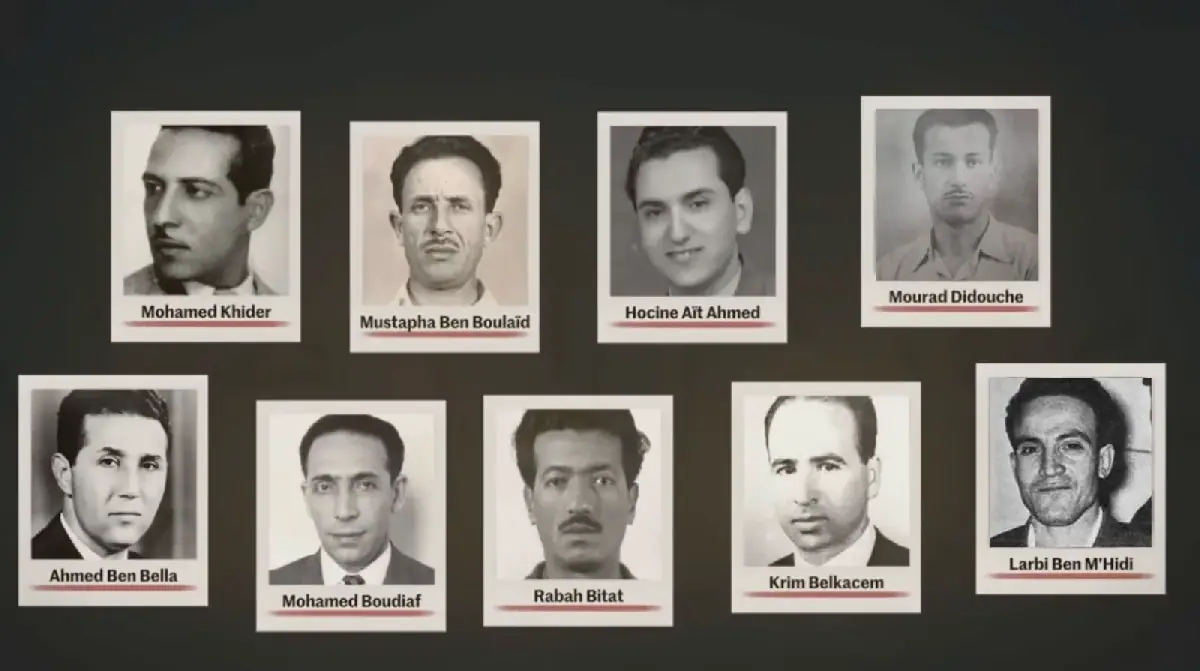
The appeal was the brainchild of a generation of militants from the national movement, who had gathered in Algiers in June 1954 to decide on taking action. Six key figures, known as the "six historical leaders," were instrumental in organizing the uprising. They included Mostefa Ben Boulaïd, Larbi Ben M'hidi, Didouche Mourad, Rabah Bitat, Krim Belkacem, and Mohamed Boudiaf, who shared command of the combat zones. Others, such as Ahmed Ben Bella, Hocine Aït Ahmed, and Mohamed Khider, took the cause to the international stage.
The moudjahidine, or fighters, of the National Liberation Army (ALN) showed remarkable courage and resilience in the face of a much better-equipped and larger French army. For over seven years, they waged a guerrilla war in the mountains and cities, enduring harsh conditions, hunger, and constant pursuit. Key events, such as the August 20, 1955, offensive in the North-Constantinois region and the 1957 Battle of Algiers, highlighted their bravery and sacrifice.
Women played a vital and often overlooked role in the Algerian revolution. Thousands of women, known as moudjahidate, participated in the struggle, providing support in the maquis and cities. They cared for wounded fighters, transmitted messages, and collected funds, often at great personal risk. Some, such as Hassiba Ben Bouali, Djamila Bouhired, and Zohra Drif, became symbols of the resistance, while others, like Malika Gaïd and Meriem Bouatoura, gave their lives for the cause.
The Algerian struggle for independence also drew support from individuals outside the country. Frantz Fanon, a Martinican psychiatrist, joined the FLN in Tunis and became a prominent advocate for the cause. Other non-Algerians, including Europeans and international activists, also contributed to the struggle, some at the cost of their freedom or lives. Fernand Iveton, a French communist worker, was guillotined in 1957, while Maurice Audin, a young mathematician, died under torture after being arrested by French forces.
Today, Algeria continues to commemorate the November 1, 1954 revolution, which ultimately led to its independence in 1962. The country's constitution still references the proclamation's principles, and the legacy of the moudjahidine and their supporters remains an integral part of Algeria's national identity. President Tebboune recently granted presidential pardons to over 5,000 prisoners to mark the occasion, highlighting the ongoing significance of this pivotal event in Algerian history.
Key points
- Algeria commemorates 72 years since the start of its war of independence against French colonial rule
- The National Liberation Front's November 1, 1954 proclamation set out a clear objective: to achieve national independence and establish a sovereign Algerian state
- Women played a vital and often overlooked role in the Algerian revolution, providing support in the maquis and cities.