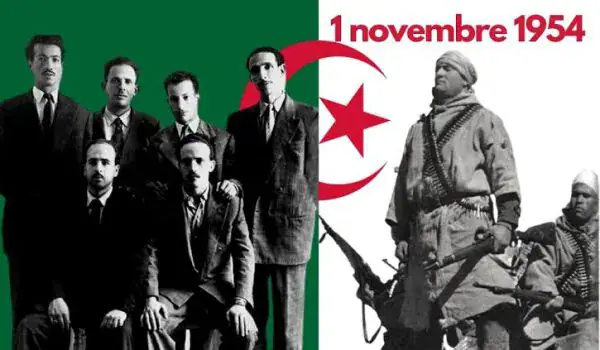
The proclamation of November 1, 1954, was not an impulsive act or an isolated reaction, but rather the culmination of years of resistance and struggle for Algerian independence. This event is deeply rooted in the country's history, fueled by military, cultural, and social battles waged by the Algerian people across the nation against French colonial domination.
Historians consider the meeting of the historic group of Six on October 23, 1954, in Algiers, a decisive turning point that sparked this armed revolution for liberation from French colonialism. The group, consisting of heroes and leaders Mohamed Boudiaf, Larbi Ben M'hidi, Mustapha Ben Boulaïd, Krim Belkacem, Didouche Mourad, and Rabah Bitat, were driven by their cause and armed with determination and loyalty.
The group of Six gave birth to the National Liberation Front, rejecting the unhealthy games of other political parties, their ideological hesitations, and their wavering. They enabled the announcement of the proclamation of the national struggle, which has become an eternal message and a reference in the pursuit of nation-building.
This historic proclamation, followed by popular mobilization, has become a school of humanity and a unique model of perseverance for dignity, inspiring liberation movements in Africa, Asia, and Latin America. The message of the group of Six resonated in the corridors of the United Nations, among Non-Aligned countries, and in the consciences of freedom-loving peoples worldwide.
Algeria remains faithful to the commemoration of this date, as it is an exceptional moment of communion and tribute to the millions of martyrs who sacrificed themselves for freedom, values, and faith. This date is more than a symbol; it is a lesson in national pride, reflection, memory, and belonging to a nation that stood up against colonial rule.
The commemoration takes place this year in Algeria at a time when extremist and xenophobic currents in France are developing a violent discourse, glorifying colonization and denying crimes, tragedies, and destruction committed during colonial rule. The Algerian people suffered ethnic cleansing, victims of genocidal policies, and incredible atrocities to vacate their territory and abandon ancestral lands.
The celebration of this date has a particular character: showing the sacrifices of Algerian martyrs and recalling crimes against humanity committed by French armies. It demonstrates an umbilical attachment to the collective memory of Algerians, which cannot be renounced.
Key points
- The proclamation of November 1, 1954, marked a pivotal moment in Algeria's struggle for independence from French colonial rule.
- The historic group of Six played a crucial role in sparking the armed revolution for liberation from French colonialism.
- Algeria commemorates this date to honor the sacrifices of its martyrs and recall crimes against humanity committed during colonial rule.