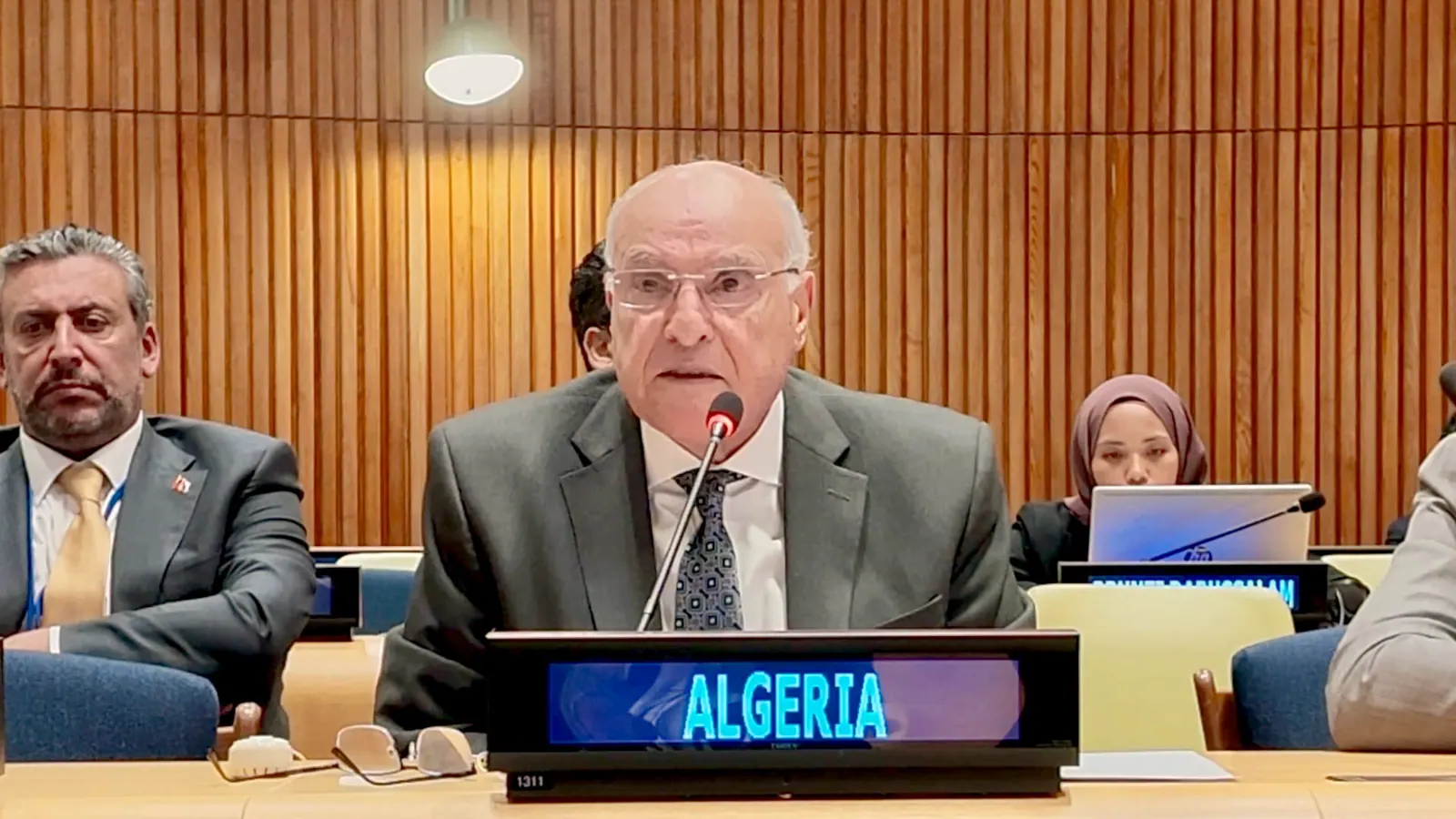
Algeria has called for a coordinated Arab and Islamic response to protect the status of Al-Qods, a city considered holy by Muslims and Christians. Speaking at a ministerial meeting on the sidelines of the 81st session of the United Nations General Assembly, Algerian Minister of State for Foreign Affairs Ahmed Attaf emphasized the need for collective action to counter attempts to alter the city's character, status, and demographic composition. He stressed that Al-Qods' status cannot be treated as a simple element of a political process, but rather as a matter of justice and international legality.
Attaf warned that any unilateral measures aimed at changing Al-Qods' character, status, or demographic composition would not create new rights or confer legitimacy. He urged the international community to go beyond condemning the fait accompli and instead take concrete actions to defend Al-Qods' legal status and prevent the imposition of new realities on the ground. The Algerian minister emphasized that the city's status is not dictated by realities imposed on the ground, but rather by its historical and legal status as a Palestinian land occupied since 1967.
Algeria's approach focuses on preserving Al-Qods' identity and historical and legal status. Attaf recalled that the city has been under Palestinian occupation since 1967 and that its status cannot be dictated by external factors. He also stressed the importance of protecting the city's inhabitants and holy sites, particularly the Al-Aqsa mosque. Algeria reaffirmed the need to maintain the historical and legal status quo in Muslim and Christian sanctuaries, ensuring that the rights of all parties are respected.
Attaf noted that the repeated attacks on Al-Qods are not isolated incidents, but rather part of a broader dynamic that threatens the city's character, identity, and demographic composition. He called for reinforced legal and political protection for Al-Qods' inhabitants and for the international community to prioritize this issue in Arab and Islamic action. The Algerian minister emphasized the urgency of moving beyond analysis and rhetoric to concrete action, stating that Al-Qods requires a collective will to protect it.
Attaf insisted that the international community must translate its positions into collective action and diplomatic efforts to defend Al-Qods. He argued that the right to protect the city is not only a moral imperative but also a legal obligation. Algeria's call for coordinated action aims to utilize international forums to defend Al-Qods' status, counter attempts to impose a fait accompli, and prevent the normalization of repeated violations.
The Algerian minister concluded his intervention by emphasizing that protecting Al-Qods, its holy sites, and its identity is a collective responsibility. He urged the international community to reject occupation and refuse to accept it as a normal situation, rather working to prevent the repetition of violations from becoming banalized. Algeria's appeal seeks to make the defense of Al-Qods a collective diplomatic effort, where international law is not only invoked but also defended through coordinated Arab and Islamic action.
At the United Nations General Assembly, Algeria reiterated its commitment to defending Al-Qods and called on Arab and Islamic nations to join forces in protecting the city's status. The country's efforts aim to raise awareness about the importance of preserving Al-Qods' identity and to mobilize international support for a collective response to the challenges facing the city.
Key points
- Algeria urges Arab and Islamic nations to unite in defending Al-Qods' status
- The city's status cannot be treated as a simple element of a political process, but rather as a matter of justice and international legality
- Algeria calls for reinforced legal and political protection for Al-Qods' inhabitants and holy sites