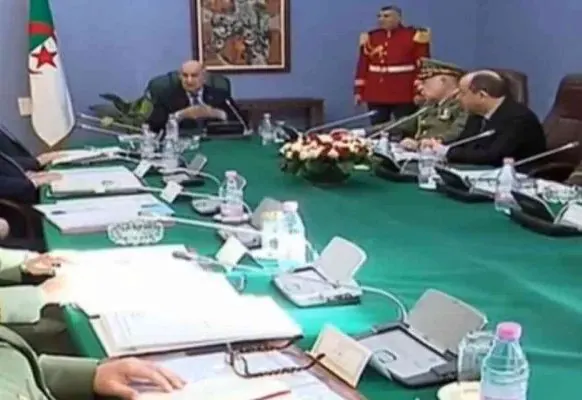
Algerian President Abdelmadjid Tebboune presided over a High Security Council meeting on Thursday to discuss the escalating situation in Libya and its implications for regional security. The meeting examined the situation in the region, particularly along the country's borders with Libya and Mali. According to a presidential communiqué, the council decided on a series of measures to protect Algeria's borders and territory, and to revitalize its role on the international stage.
The Libyan conflict has taken a concerning turn, with Khalifa Haftar's forces advancing on Tripoli, prompting fears of an imminent escalation in the region. The situation has raised concerns among neighboring countries, including Tunisia, and has drawn international attention. Algerian authorities are increasingly worried about the potential for the conflict to spill over into their territory, given the existing security threats in the Sahel region.
The Algerian government has been proactive in strengthening its military presence along its eastern and southern borders in recent years, particularly in response to the redeployment of hundreds of fighters from Syria and Iraq to the Maghreb and Sahel regions. Thursday's High Security Council meeting aimed to reinforce the country's security measures and address potential threats.
The conflict in Libya has garnered significant international attention, with various countries taking a stance on the issue. Turkish President Recep Tayyip Erdogan announced that his country will send troops to support the Libyan Government of National Accord (GNA) in its fight against Haftar's forces. This move has raised concerns among regional actors, including Algeria, about the potential for further escalation.
Algerian authorities are worried that a prolonged conflict in Libya could have far-reaching consequences for regional stability. The country's concerns are shared by other regional actors, including Tunisia, which also supports the GNA. The international community has expressed concerns about the potential for foreign interference in the conflict, with US President Donald Trump and Egyptian President Abdel Fattah al-Sissi discussing the issue over the phone.
The situation in Libya remains volatile, with ongoing clashes between Haftar's forces and the GNA. Algerian officials have warned that a Haftar victory could have serious consequences for regional security, potentially threatening the stability of neighboring countries, including Algeria and Tunisia. The international community continues to monitor the situation closely, with many urging restraint and a peaceful resolution to the conflict.
As the situation in Libya continues to deteriorate, Algeria is taking steps to bolster its security measures and protect its borders. While the country has not yet committed to direct military intervention, its leadership has emphasized the need for vigilance and cooperation with international partners to address the growing security threats in the region. The country's constitution prohibits military intervention abroad, raising questions about the potential for future involvement.
Key points
- Algeria has bolstered its military presence along its eastern and southern borders in response to growing security threats in the Sahel region.
- The conflict in Libya has raised concerns among regional actors about the potential for further escalation and the need for a peaceful resolution.
- Algeria's leadership has emphasized the need for vigilance and cooperation with international partners to address growing security threats in the region.