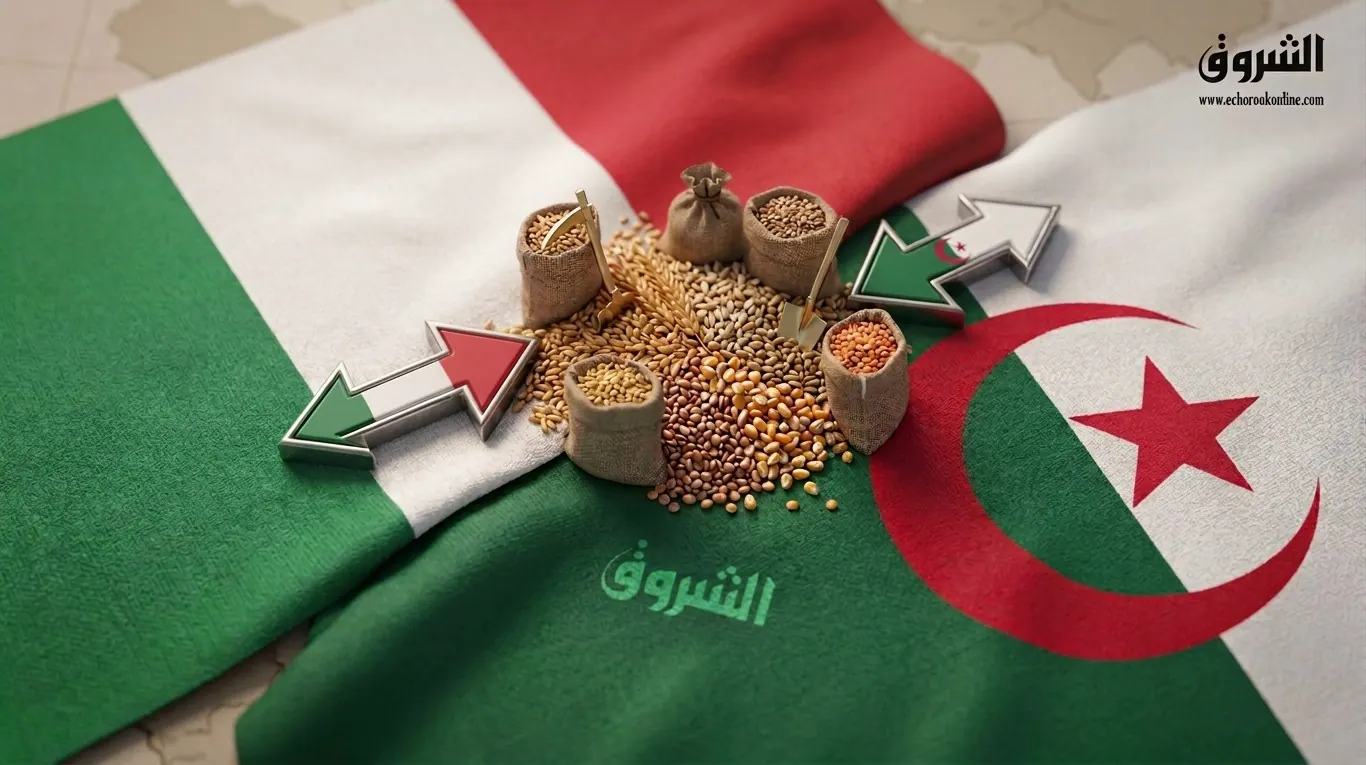
Algeria and Italy are strengthening their partnership in the agricultural sector, moving beyond equipment supply to establish integrated production and industrial projects. The Timmimoun project, valued at approximately $420 million, is a significant initiative between the Italian group "BF" and the Algerian National Investment Fund. The project, which began in 2024, has entered its second agricultural season and is progressing according to schedule. It involves cultivating hard wheat, chickpeas, lentils, dry beans, and corn, along with constructing irrigation systems, silos, and logistics facilities.
The Timmimoun project covers an area of 36 hectares, with plans to cultivate 24 hectares initially. The initiative aims to provide over 6,700 job opportunities, including more than 1,560 direct jobs, and potentially create additional jobs in transportation, maintenance, logistics, and services. The project's water management system relies on wells, distribution networks, and pivot irrigation systems, supported by precision agriculture technologies and digital mapping. These measures aim to monitor crop conditions, optimize water consumption, and improve efficiency.
The Algerian-Italian cooperation in the agricultural sector is expanding to include technologies for irrigation, precision farming, digitalization, storage, and processing of agricultural and food products. Italian Ambassador to Algeria, Alessandra Chiavò, emphasized that Italian expertise and technologies can support the transformation of Algeria's agricultural sector, particularly in increasing production and expanding cultivated areas in the south. The Italian-Algerian partnership aims to enhance cooperation beyond energy, with opportunities to increase non-hydrocarbon Algerian exports, especially fertilizers, steel, and agricultural products.
Algeria's agricultural sector contributes around 14% to the country's GDP, with a production value of approximately $38.2 billion in 2024. The sector provides over 2.7 million jobs, distributed across about 1.3 million institutions, and covers around 73% of the country's agricultural needs. Algeria annually cultivates between 2 and 3 million hectares of grains, with an average yield of around 17 quintals per hectare. The authorities aim to increase grain storage capacity from 4 million tons to 9 million tons through a program involving 36 strategic silos and 350 local storage centers.
The Italian-Algerian partnership includes the creation of "AgroDriv," an institution established to set up and manage a national fleet of agricultural machinery, allowing farmers and investors to use tractors and equipment without bearing the full cost of acquisition. Italian companies are also sharing their expertise in precision farming, digitalization, and smart irrigation systems. A delegation of Italian companies will visit Algeria to explore opportunities for cooperation and knowledge transfer in the agricultural sector.
The volume of trade between Algeria and Italy reached around $14.9 billion in 2025, with Algerian exports totaling $10.84 billion and imports from Italy amounting to $4.05 billion. The new cooperation aims to diversify trade beyond energy, with opportunities for Algerian exports of non-hydrocarbon products. Italian companies are interested in investing in Algeria's agricultural sector, particularly in the production of machinery and equipment.
The Timmimoun project is one of the largest agricultural investments in Algeria and is expected to become a production and industrial platform supporting economic activities in the south. The project's success could pave the way for further cooperation between Algeria and Italy in the agricultural sector, contributing to the growth of both countries' economies.
Key points
- The Timmimoun project is valued at approximately $420 million and aims to create over 6,700 job opportunities.
- Algeria's agricultural sector contributes around 14% to the country's GDP and provides over 2.7 million jobs.
- The volume of trade between Algeria and Italy reached around $14.9 billion in 2025.