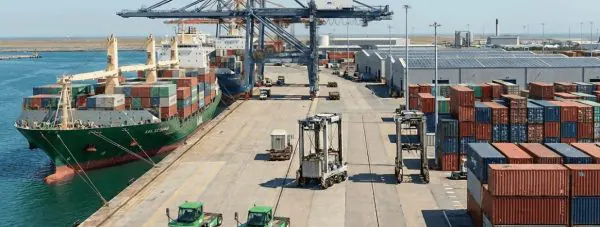
Algeria's port network is undergoing a significant reorganization to position the country as a logistics hub between the Mediterranean and Africa. The reorganization is part of a broader strategy to modernize the country's infrastructure and improve its competitiveness. According to Ali Boulaârès, the newly appointed General Director of Serport, the goal is to make Algeria an "incontournable hub" for trade between the Mediterranean and Africa. This vision is built on several key axes, including the modernization of infrastructure, continuous work, interconnection with rail and road networks, automation, digitalization, and training.
The port of Mostaganem has been identified as a key location for this strategy, with a new platform being developed to improve its capacity and efficiency. The platform, which was inaugurated recently, is designed to meet international standards for port infrastructure. Additionally, the minister of Transport, Saïd Sayoud, announced the launch of work on an additional 5-hectare zone to further enhance the port's capabilities. The port of Mostaganem is considered a strategic location due to its connection to the rail network and its proximity to major industrial areas.
The results of the port network's operations in 2025 show a significant increase in activity, with a total volume of 133.957 million tons handled, representing a 4% increase compared to 2024. The number of ships accommodated also increased by 12% to 16,923, while the number of containers handled rose by 19% to over 2 million. These results are seen as a positive indicator of the country's growing trade activity and the need for efficient logistics infrastructure.
The reorganization of the port network is part of a broader strategy to improve the country's competitiveness and facilitate trade. The President of the Republic, Abdelmadjid Tebboune, recently gave instructions to accelerate the reorganization and specialization of ports, which is seen as a key factor in improving the country's logistics performance. According to Ali Boulaârès, the specialization of ports will enable better management of waiting times for ships and reduce costs.
Another strategic project underway is the extension of the phosphate port in Annaba, which is expected to be completed by March 2027. The project involves the construction of a new complex for the valorization of phosphates and mining products, with a capacity to handle 8-10 million tons of additional traffic. The extension is also expected to create new job opportunities and contribute to the country's economic growth.
The implementation of a 24/7 work schedule at ports has also shown positive results, with a 24% reduction in waiting times for ships and a 13% decrease in average stay times. The connection between ports, rail, and road networks is also being strengthened to create a more integrated logistics chain. Ali Boulaârès emphasized the importance of training and digitalization in improving the efficiency of port operations.
Serport is also investing in digitalization, with a platform for processing port formalities already in place. The company plans to further develop its digital capabilities to improve the efficiency of port operations and reduce costs. The goal is to create a more integrated and efficient logistics chain that will enable Algeria to become a major player in trade between the Mediterranean and Africa.
Key points
- Algeria aims to become a logistics hub between the Mediterranean and Africa through the reorganization and modernization of its port network.
- The country's port network handled 133.957 million tons of traffic in 2025, representing a 4% increase compared to 2024.
- The extension of the phosphate port in Annaba and the development of a new logistics platform in Mostaganem are key projects in Algeria's strategy to improve its logistics performance.