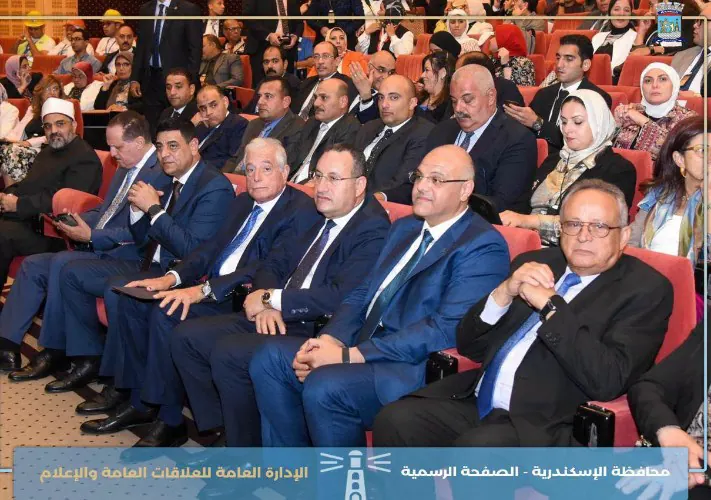
The Alexandria Library has concluded its three-day conference on "National Identity: Rooted in the Past, Renewed for the Future," which was held under the auspices of Egyptian President Abdel Fattah el-Sisi. The conference culminated in the release of the "Alexandria Library Document on National Identity." The event was attended by prominent figures, including Dr. Abdel Aziz Kanswa, Minister of Higher Education and Scientific Research, and Governor of Alexandria, Ayman Attia.
The conference brought together a diverse range of participants, including ministers, academics, and youth representatives from across Egypt. The event aimed to promote a deeper understanding of Egyptian national identity and its significance in modern times. According to Lieutenant General Dr. Khaled Foda, advisor to the President for Local Development, the conference represented a genuine opportunity for dialogue on the issue of national identity.
Lieutenant General Dr. Khaled Foda emphasized that the conference had not only facilitated the exchange of ideas but also explored ways to preserve national identity and present it to future generations in a way that keeps pace with changing circumstances. He stressed that building a strong national identity requires the integration of experience and youth energies.
The Alexandria Library Document on National Identity outlines several key aspects of Egyptian national identity, including its historical roots, cultural heritage, and spiritual values. The document aims to promote a sense of national belonging and unity among Egyptians. It also seeks to address the challenges facing national identity in the modern era, including the impact of globalization and technological advancements.
Dr. Ahmed Zaid, Director of the Alexandria Library, presented the document's main axes, which include defining Egyptian national identity, its theoretical foundations, and the pillars of national identity. He emphasized that the document is the result of a broad societal dialogue and collaborative efforts between various government agencies, civil society organizations, and private sector institutions.
The document's objectives include promoting knowledge of Egyptian history, preserving cultural heritage, and supporting the Arabic language as a tool for knowledge production and creativity. It also aims to foster a sense of national belonging and unity among Egyptians, both at home and abroad. The document's release marks an important step towards promoting Egyptian national identity and addressing the challenges it faces in the modern era.
Key points from the document include the importance of preserving Egyptian cultural heritage, promoting the Arabic language, and supporting innovation and creativity among young people. The document's implementation will involve collaboration between various stakeholders, including government agencies, civil society organizations, and the private sector.
Key points
- The document aims to promote a sense of national belonging and unity among Egyptians.
- The conference brought together a diverse range of participants, including ministers, academics, and youth representatives from across Egypt.
- The document outlines several key aspects of Egyptian national identity, including its historical roots, cultural heritage, and spiritual values.