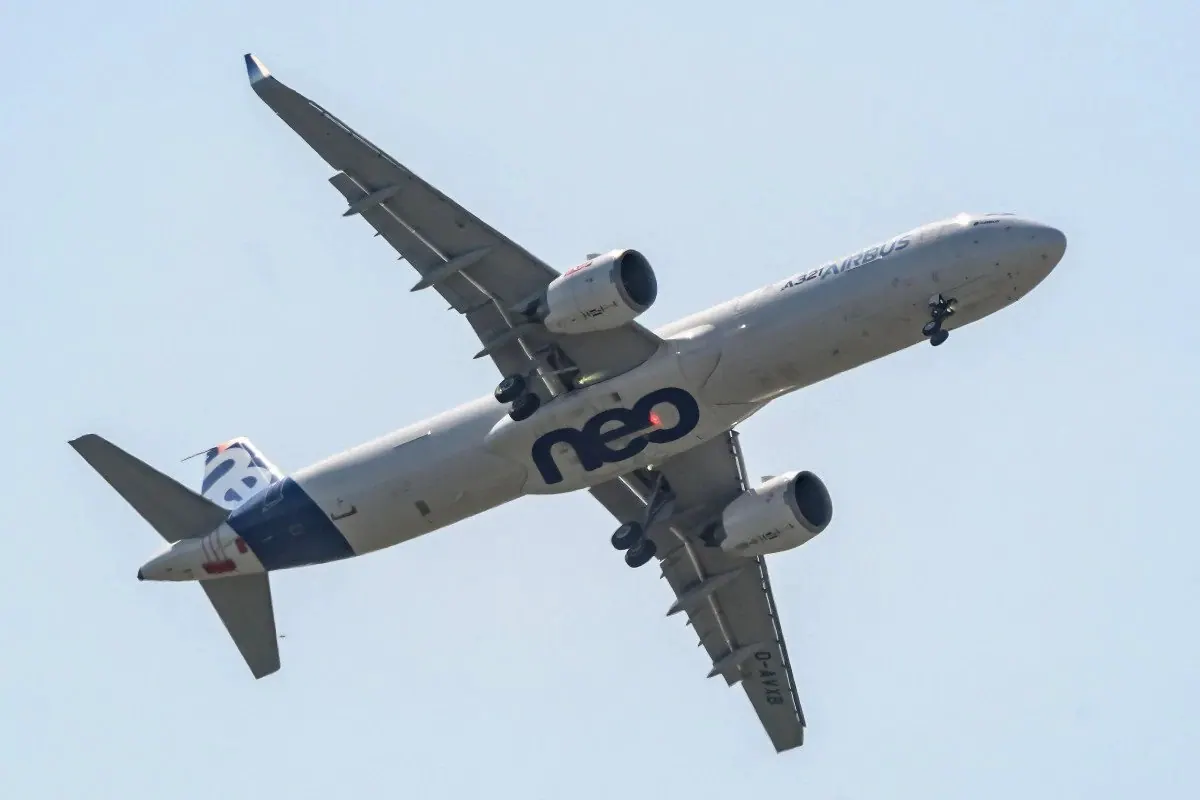
European aircraft manufacturer Airbus has identified a quality issue involving the fuselage structure of approximately 500 A321neo aircraft. The problem, which affects both aircraft already in service and those still in production, relates to the surface protection or coating applied to structural components known as stringers. These components run lengthways along the fuselage. According to Airbus, the issue has been contained and a corrective measure is already available.
The defect affects roughly 250 A321neos already in service and another 250 aircraft currently in production. Airbus discovered the problem while affected parts were undergoing rework on its production line. The company has identified the source of the issue and developed a remedy. Airbus emphasizes that the deviation does not pose an immediate safety risk to passengers or crew, allowing aircraft already delivered to airlines to remain in operation.
The A321neo is a key part of Airbus's commercial strategy, competing directly with Boeing's 737 MAX family in the single-aisle market. Its combination of passenger capacity and range has made it attractive to airlines seeking to replace older aircraft and expand capacity without moving to larger twin-aisle jets. The aircraft can accommodate up to 244 passengers and has a range of up to about 4,000 nautical miles.
This is not the first fuselage-related quality issue to emerge at Airbus. In December, the company disclosed defects involving fuselage panels on A320-family aircraft. Although Airbus characterized that problem as a quality issue without safety implications, the investigation and subsequent corrective work contributed to delivery delays lasting several months.
The recurrence of a fuselage-related manufacturing issue comes at a critical point for Airbus as it works to expand production of its highly sought-after narrowbody aircraft. Airbus aims to raise monthly production of its single-aisle jets to about 75 aircraft from roughly 60 at present. The A321neo has become particularly important to the company's order book, with airlines increasingly favoring larger single-aisle aircraft for both domestic and medium-haul international operations.
Customers are continuing to accept A321neo deliveries without insisting that the affected components receive additional work before the aircraft are handed over. Airbus has also informed customers that there is currently no immediate requirement for repairs to aircraft already in service. Delta Air Lines, which operates A321neo aircraft, said it was monitoring the matter in consultation with Airbus.
Airbus first detected the issue during the summer, and more detailed analysis recently produced initial results confirming the nature of the problem. The company has assured that there is no immediate safety concern, and the affected aircraft can continue to operate safely.
Key points
- The issue affects approximately 500 A321neo aircraft.
- The problem involves the surface protection or coating on fuselage stringers.
- Airbus has contained the issue and developed a corrective measure.