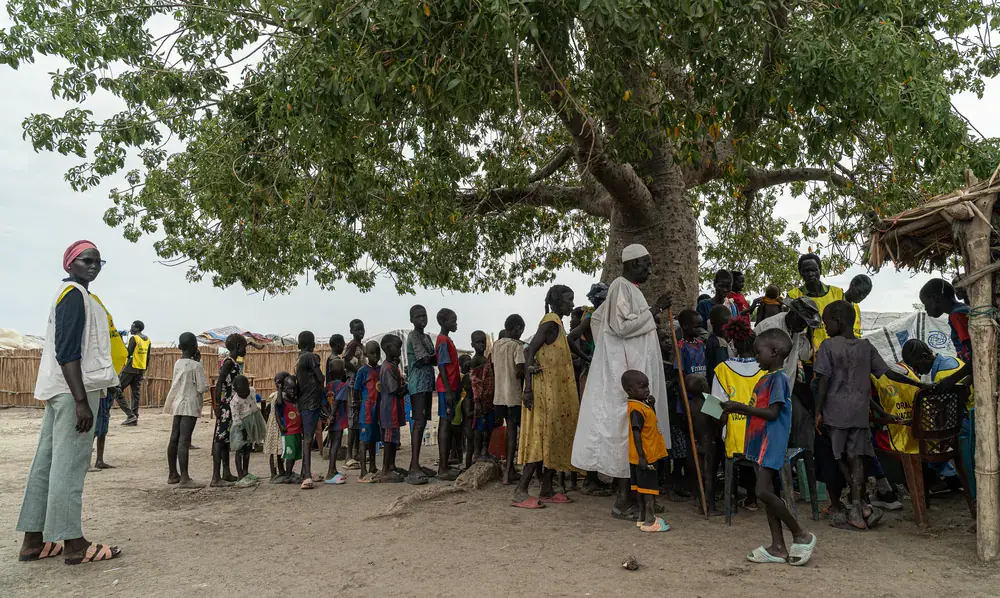
Médecins Sans Frontières (MSF) has warned that funding cuts have left approximately 150,000 internally displaced people in South Sudan's Bentiu and Malakal camps at risk of cholera and other waterborne diseases. The medical charity attributes this risk to reduced access to clean water, sanitation, and primary healthcare. MSF is urging donors and humanitarian organizations to act immediately to reverse these critical funding shortfalls.
The warning comes as humanitarian needs in the camps persist, despite efforts to transfer camp management to government authorities. MSF's deputy head of operations in South Sudan, Foued Gamoudi, emphasized that sustained water, sanitation, hygiene (WASH), and healthcare services are crucial to prevent a renewed public health emergency in Unity and Upper Nile states.
Gamoudi stressed that the aid cuts would leave internally displaced people increasingly vulnerable to cholera and other waterborne diseases due to inadequate access to essential healthcare services and clean water. He called on donors to provide immediate funding to protect people's dignity, avert a public health emergency, and prevent loss of life.
MSF counsellor Rebecca Abang noted that although cholera cases in areas supported by the organization have remained low since mid-2025, underlying conditions that contributed to earlier outbreaks persist. These conditions include inadequate waste management, with garbage often remaining uncollected for weeks or months, and latrines not being emptied regularly.
In response to the cholera risk, MSF, in collaboration with the Ministry of Health in Bentiu, vaccinated 102,251 people during a second round of oral cholera vaccinations in September 2026. However, MSF outreach manager Patrick Mayen Biel cautioned that vaccination alone is not sufficient to mitigate the risk, emphasizing the need for sustained access to safe drinking water, functioning latrines, and adequate sanitation.
Displaced individuals in the camps are taking steps to protect themselves. Nysunday Dobuol, a displaced woman living in the Bentiu camp, shared that she got vaccinated to safeguard herself and her family, and encouraged others to do the same. The International Organization for Migration (IOM) currently provides WASH services and primary healthcare in Bentiu, but faces critical funding gaps.
MSF warned that without additional funding, essential services in Bentiu and Malakal camps are at risk of disruption. In Bentiu, IOM's funding for water and sanitation services is set to end in March 2027, while primary healthcare services are expected to face a severe gap starting in January 2027. Similarly, in Malakal, water supplies to 40,000 people and desludging services for nearly 900 latrines are at risk of cessation.
Key points
- MSF urges immediate funding to prevent a public health emergency in South Sudan's displaced camps.
- 150,000 internally displaced people are at risk of cholera and other waterborne diseases.
- Sustained WASH and healthcare services are essential to prevent disease outbreaks in the camps.