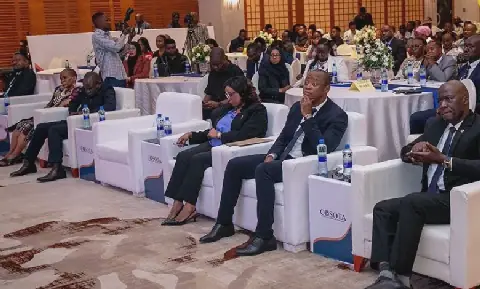
The Vice-Chancellor of the National Open University of Nigeria, Prof. Uduma Oji Uduma, has emphasized that Artificial Intelligence (AI) should assist, not replace, teachers in the education sector. Speaking at the UNU Macau AI Conference 2026, themed “AI × Education: AI for Learning, Learning for AI,” Uduma stressed that technology must remain a tool for improving learning, not undermining human values. He highlighted that AI policies and innovations must prioritize humanity at the center of education.
The conference, which attracted policymakers, academics, researchers, and young innovators from over 114 network members across six continents, examined the growing influence of AI on teaching, learning, and assessment. Uduma drew from his experience in Open and Distance Learning, noting that technology has played a critical role in expanding access to education. He added that AI is creating new opportunities for teachers to reach more students and support learning at individual paces.
However, Uduma cautioned against excessive dependence on AI, particularly in teaching and academic assessment. He emphasized that AI should strengthen the capacity of teachers to deliver quality education, rather than rendering them irrelevant. Uduma also urged students and lecturers to subject AI-generated information to proper scrutiny, rather than accepting its responses without verification. He advised, “Put AI answers in parenthesis. Information should be interrogated.”
Uduma further warned that Africa must not remain a passive observer in the global conversation about artificial intelligence. He urged the continent to develop policies and strategies that reflect its educational needs and realities. The vice-chancellor noted that although major technology companies are increasingly showing interest in investing in Africa, such investments must translate into sustainable development and strengthen local capacity.
Uduma identified inadequate electricity, poor internet connectivity, insecurity, and weak governance as major obstacles limiting the continent’s ability to benefit fully from AI-driven education. He stressed that Africa requires more infrastructure to keep pace with the developed world, calling for sustained investment and international support. The vice-chancellor also emphasized the need for teacher training to understand and effectively deploy emerging technologies.
The NOUN vice-chancellor called for a comprehensive review of teaching methods, examination systems, and teacher training programs to accommodate the changing demands of technology-driven education. He emphasized that AI must be deliberately designed to benefit disadvantaged learners, including women in rural communities, students with disabilities, and working-class learners. Uduma noted that technology could break barriers associated with language, distance, and cost, but warned that poorly designed AI systems could deepen existing inequalities.
Uduma concluded by emphasizing that AI should be regarded as an instrument for improving education, not an authority over human beings. He argued that universities would remain relevant but must reconsider their teaching methods, assessment procedures, and student support systems to remain effective in the emerging technological era. The vice-chancellor called for stronger leadership, teacher training, improved infrastructure, clear regulatory frameworks, and research led by Africans to address the continent’s peculiar challenges.
Key points
- AI should assist, not replace, teachers in the education sector.
- Africa must develop policies and strategies that reflect its educational needs and realities to benefit from AI-driven education.
- Teacher training is essential to understand and effectively deploy emerging technologies in education.
Reporting sources
- AI must assist, not replace teachers – NOUN VC · Blueprint Newspaper