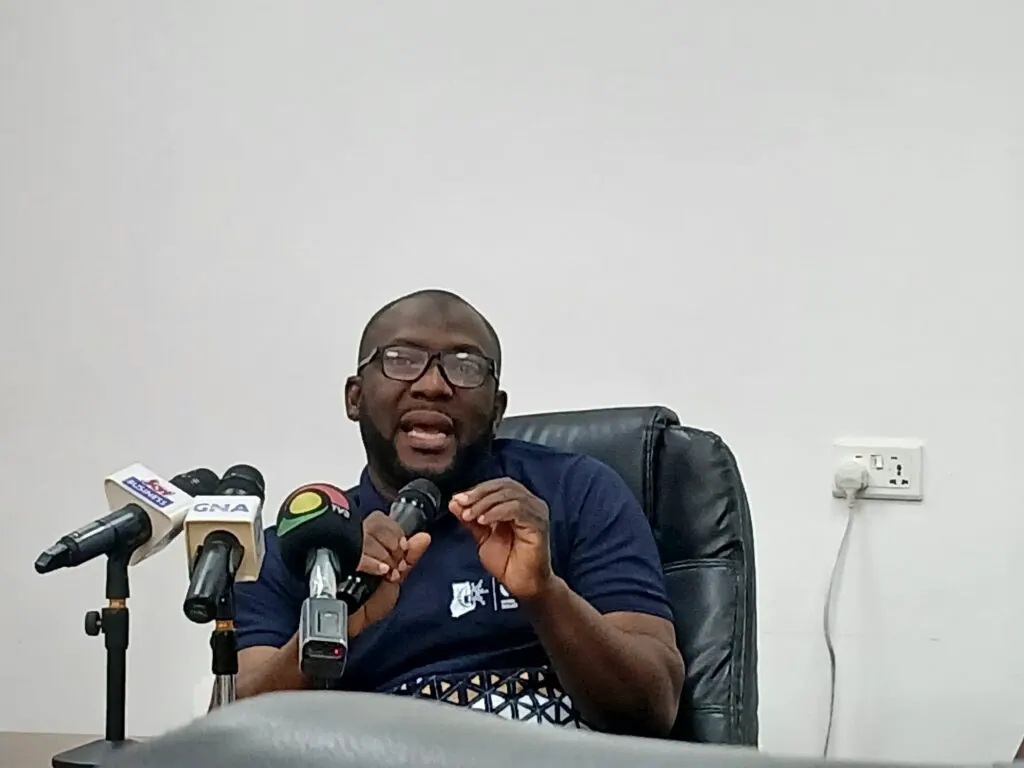
The Ghana Cybersecurity Industry Forum (GCIF) has issued a warning that criminals are now using artificial intelligence (AI) to make phishing scams more convincing, making it harder for people to distinguish between genuine and fraudulent messages. According to GCIF's Interim President, C.K. Bruce, AI tools are being used to correct grammar and produce well-crafted messages that can pass for legitimate communication. This development has made it more challenging for individuals and businesses to identify phishing attempts.
For years, Ghanaians have been advised to watch out for scam texts and emails with spelling mistakes and clumsy sentences, which were often a telltale sign of phishing attempts. However, with AI now being used to polish these messages, the public awareness that previously helped many people spot amateur phishing attempts is no longer effective. The GCIF's warning follows a string of scam alerts issued this year by the Cyber Security Authority (CSA), highlighting a growing wave of scams in 2026.
The CSA has linked fraudsters to fake investment schemes and impersonated restaurant listings on Google Maps, which cost victims more than GHS 296,000 over a six-month period. These cases point to the same trend that GCIF is now flagging: scammers refining their tactics to look more credible and evade detection by ordinary users. Mobile money remains one of the most widely used financial tools in Ghana, and phishing messages are frequently designed to trick users into revealing PINs, one-time passwords, or account details tied to mobile money wallets and bank accounts.
With AI now removing the language errors that once served as a warning sign, GCIF says both individuals and businesses face a harder task distinguishing genuine communication from fraud. The forum is urging the public to treat unsolicited messages and requests for personal or financial information with caution, regardless of how professionally written they appear. This requires a higher level of awareness and vigilance from the public to avoid falling victim to these scams.
The GCIF was set up under Section 81 of the Cybersecurity Act, 2020 (Act 1038), as an industry platform bringing together accredited cybersecurity professionals to share threat intelligence and coordinate responses to cybercrime. The forum currently operates as an independent body, with its 11-member interim facilitator group appointed by the CSA in line with the Act. So far, the GCIF's membership portal has received 360 applications, with 210 approved.
To build public awareness, GCIF has outlined a series of activities for Cybersecurity Awareness Month in October, including student engagements and a virtual assets workshop, followed by community roadshows in November and December. The forum also plans to launch CyberFest, an awareness initiative it expects to grow into a major event by 2027. This initiative aims to educate the public about the risks associated with phishing scams and promote cybersecurity best practices.
The GCIF sees a shortage of trained cybersecurity professionals as a major challenge and intends to build a talent pipeline through mentorship, internships, and training. According to C.K. Bruce, an IT degree is not a prerequisite for entering the field, and the forum aims to create a diverse and skilled workforce to combat cybercrime. By addressing the skills gap and raising public awareness, the GCIF hopes to reduce the risk of phishing scams and protect Ghanaians from financial losses.
Key points
- Criminals are using AI to make phishing scams more convincing, targeting mobile money and bank accounts in Ghana.
- The GCIF is urging the public to treat unsolicited messages and requests for personal or financial information with caution.
- The forum plans to launch CyberFest, an awareness initiative to promote cybersecurity best practices and educate the public about phishing scams.