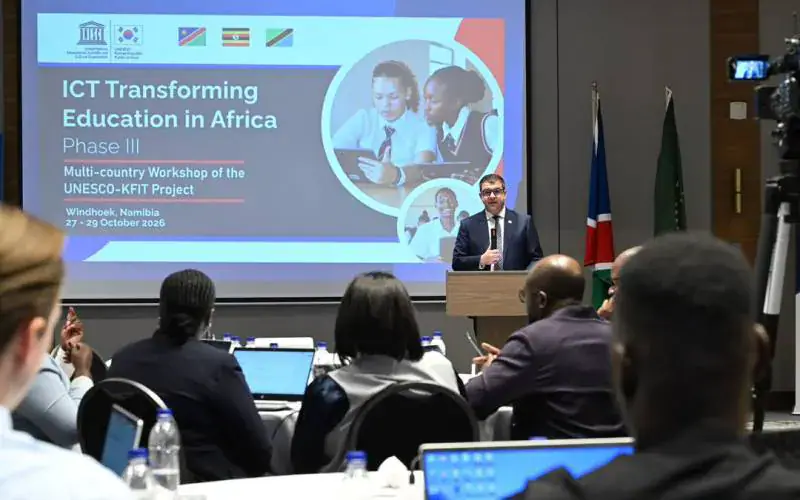
Young Namibians entering the workforce may be required to demonstrate artificial intelligence (AI) literacy, according to education deputy minister Dino Ballotti. Speaking at the UNESCO-KFIT cross-country workshop in Windhoek, Ballotti emphasized that digital competence is becoming a mandatory skill for the next generation of workers. He noted that learners currently in classrooms will enter an economy shaped by digital tools, including AI.
Ballotti shared his personal experience of hiring an assistant, where one of the first questions he asked was whether she was AI competent. He also referred to the term "prompt engineer," describing it as a way of making effective use of digital technologies. This highlights the importance of moving beyond familiarity with AI tools towards understanding how the technology can be applied in real-world situations.
The issue extends beyond the classroom, as young people must find ways to apply digital skills in practical settings. Anicia Peters, chief executive of the National Commission on Research, Science and Technology (NCRST), has emphasized the importance of young Namibians gaining practical experience with AI and applying their skills to local development challenges.
Young technology entrepreneur Gotlieb Mupandela has demonstrated how AI-assisted coding tools can be used to develop software and solutions to local problems. Their experiences point to the importance of moving beyond familiarity with AI tools towards understanding how the technology can be applied in real-world situations.
Ballotti stressed that teachers remain central to preparing learners for this changing environment. He argued that a teacher who is confident in using one effective digital tool could do more for learners than one given several tools without adequate training. UNESCO Representative to Namibia Eunice Smith also emphasized that the success of digital education depends on how effectively technology improves teaching and learning.
United Nations Resident Coordinator Hopolang Phororo highlighted the importance of digital connectivity and education in advancing the Sustainable Development Goals. Ballotti also challenged education officials to look beyond the number of teachers attending training workshops and the number of smart boards purchased, asking whether the tools were being used and what impact they had on learning outcomes.
The deputy minister warned that differences in access to electricity and reliable internet between urban and rural schools could widen existing inequalities. The current phase of the UNESCO-KFIT project ends in 2027, leaving participating countries to consider how its results will be sustained beyond the period of project support. By the end of the current phase, participating countries should be able to demonstrate what had changed for the teachers and learners who used the technology.
Key points
- Deputy minister Dino Ballotti emphasizes digital competence as a mandatory skill for the next generation of workers.
- Teachers are central to preparing learners for the changing environment.
- Differences in access to electricity and reliable internet between urban and rural schools could widen existing inequalities.