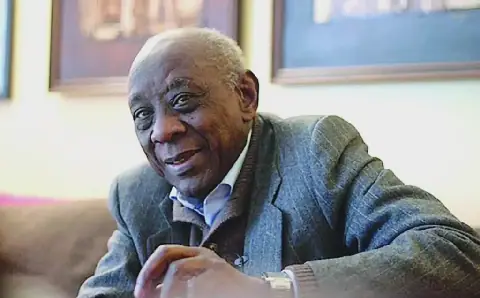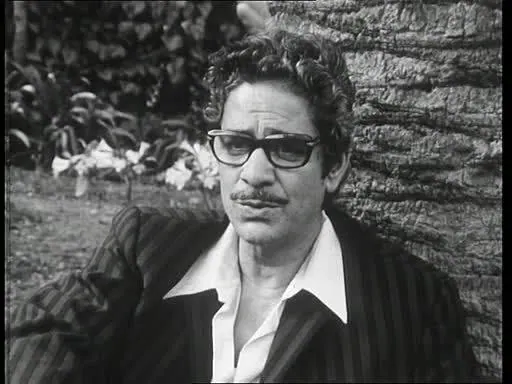
Ahmed Wahbi, born Ahmed Driche Tidjani on November 15, 1921, in Marseille, France, was destined for greatness. After losing his mother at four months, his father, a singer with the famous S'hab El Baroud troupe, brought him to Oran, Algeria. Wahbi grew up in the vibrant neighborhood of Médina Jdida, where he developed a passion for music and athletics. He became the North African champion in the 400-meter hurdles, showcasing his versatility.
Wahbi's musical journey began in 1937 when he joined the Scouts musulmans d'Oran, where he was nicknamed Wahbi, inspired by Egyptian master Mohamed Abdelwahab. He formed a lasting bond with Blaoui Houari, and together they revolutionized Algerian music by creating the "El Asri" style, blending traditional poetry with classical oriental melodies. This innovative fusion propelled Wahbi to fame in the 1940s.
In 1947, Wahbi moved to Paris, where he performed at the El-Djazaïr cabaret in the Quartier latin. He recorded his first 78 rpm in 1949 and achieved immense success in 1950 with his collaboration with poet Cheikh Abdelkader El Khaldi, who wrote masterpieces like Ya Touil Erragba. Wahbi's music was not only about love and nostalgia but also about his convictions and commitment to the Algerian cause.
In August 1957, amidst the Algerian war of independence, Wahbi abandoned his European career to join the FLN's artistic troupe in Ghardimaou, Tunisia. As a true moudjahid of art, he carried the voice and hopes of Algeria across the Arab world, Eastern Europe, and China. His courage and conviction were evident in his music and actions, inspiring a generation of Algerians.
Wahbi's life was marked by challenges and tragedies, including the loss of his wife and son. Despite these hardships, he continued to create music, and in 1992, he was awarded the "Achir" medal on his hospital bed. Wahbi passed away on October 28, 1993, in Algiers, leaving behind a monumental repertoire of over 800 songs.
Today, Wahbi's legacy lives on, with his iconic song Wahran, Wahran, a tribute to his father, being reinterpreted by artists worldwide. His music remains a testament to his commitment to using art as a shield against solitude and oblivion. As a celebrated figure in Algerian music, Wahbi's impact continues to inspire new generations of musicians and fans.
With a career spanning over five decades, Ahmed Wahbi's story serves as a reminder of the power of music to transcend borders and touch hearts. His remarkable journey, marked by both triumph and hardship, has cemented his status as an icon in Algerian music history.
Key points
- Ahmed Wahbi is considered the father of modern "El Asri" music.
- Wahbi's music blended traditional Algerian poetry with classical oriental melodies.
- He was a committed militant who used his art to support the Algerian independence movement.