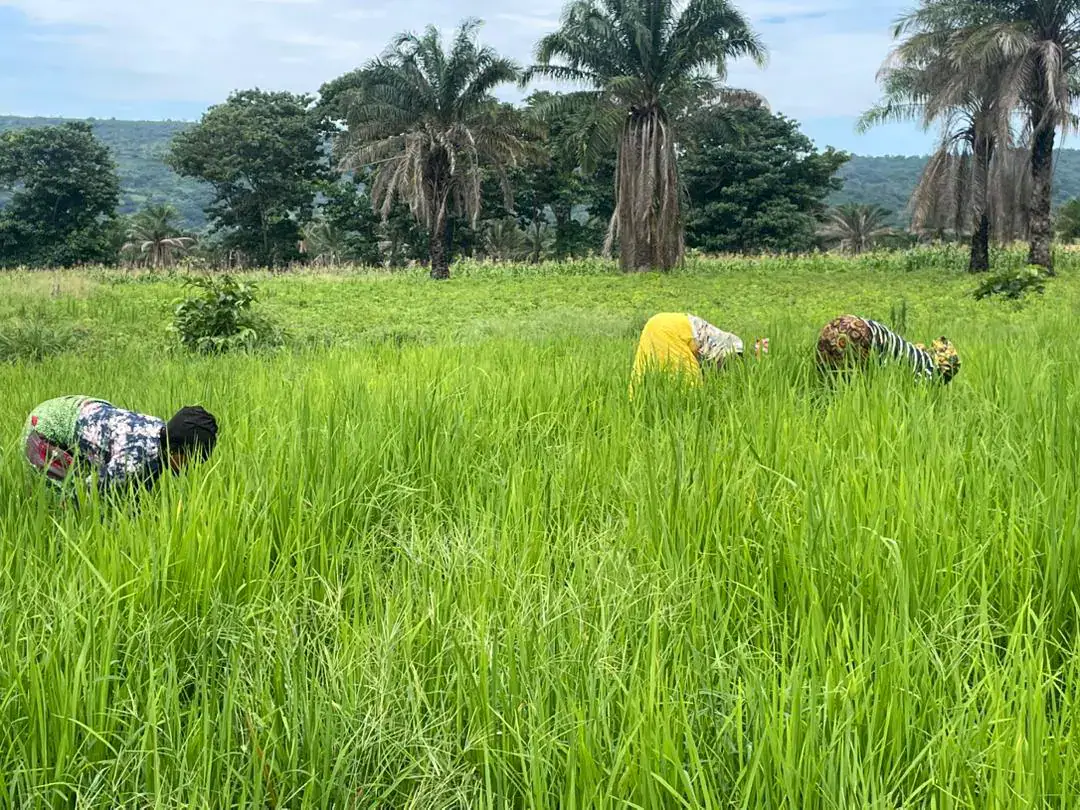
The district of Bendougou, located about 15 kilometers from Kindia, Guinea, is known for its agricultural and pastoral activities. With around 4,250 inhabitants, mostly farmers and herders, the area relies heavily on the land for livelihood. Rice cultivation plays a significant role in the local economy, with some farmers managing two agricultural campaigns per year. However, despite this potential, the region faces challenges that hinder sustainable development.
One of the main difficulties faced by farmers in Bendougou is the high cost of agricultural inputs. The lack of sufficient supply nearby forces farmers to travel to Kindia to purchase essential products such as seeds, fertilizers, and phytosanitary products. Fatoumata Camara, president of the women's association in Bendougou, highlights the struggles of female producers who depend on their farms for family income. The cost of a fertilizer bag is around 600,000 FG, and transportation costs range from 20,000 to 30,000 FG.
In addition to the high cost of inputs, farmers in Bendougou also face significant challenges due to crop damage caused by animals. The destruction of crops by roaming livestock not only results in financial losses but also discourages farmers from investing in their land. Fatoumata Sylla, a local farmer, expresses her frustration about the situation, emphasizing the need for measures to protect their fields. The farmers are requesting assistance from authorities and partners to obtain fencing materials to secure their land.
The conflict between farmers and herders in Bendougou is not new, and several cases have been resolved through dialogue and mediation by local leaders. Ibrahima Soumah, president of the district, stresses the importance of finding lasting solutions, including organizing livestock movement, raising awareness among stakeholders, and protecting agricultural land. The district's president believes that delimiting transhumance routes and providing support for field fencing are crucial steps.
The situation in Bendougou highlights the complexities of agricultural development in rural Guinea. With limited access to affordable inputs and the threat of crop damage from animals, farmers struggle to maintain productive farms. The women's association in Bendougou is advocating for subsidized inputs to increase production, while the district's leadership seeks comprehensive solutions to address the root causes of these challenges.
To address these issues, local authorities and stakeholders are exploring ways to support farmers in Bendougou. This includes facilitating access to affordable inputs, promoting dialogue between farmers and herders, and implementing measures to prevent crop damage. The goal is to create a more favorable environment for agricultural development and improve the livelihoods of the region's inhabitants.
The plight of farmers in Bendougou underscores the need for targeted support to rural communities in Guinea. By addressing the challenges faced by farmers, authorities can help promote sustainable agricultural development and improve food security in the region. Key solutions include improving access to inputs, protecting agricultural land, and fostering dialogue between stakeholders.
Key points
- High input costs and crop damage from animals are major challenges for farmers in Bendougou.
- Local authorities and stakeholders are exploring solutions to support farmers, including subsidized inputs and measures to prevent crop damage.
- Sustainable agricultural development in Bendougou requires comprehensive support to address the root causes of these challenges.