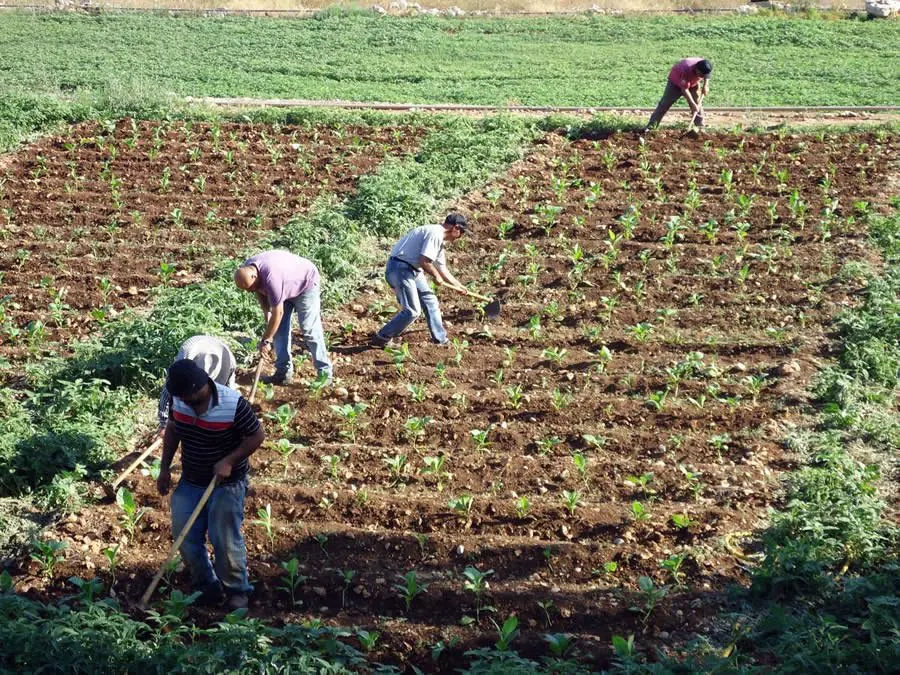
The Algerian province of Tizi Ouzou continues to face significant challenges in achieving food self-sufficiency, with production levels in key crops such as wheat, vegetables, fruits, and meat remaining insufficient. The region's rugged terrain, with 80% of its land featuring slopes of over 12%, presents a considerable obstacle to large-scale farming. Nevertheless, the plains of Draâ Ben Khedda, Azazga, Draâ El Mizan, Boghni, and Ouadhias are not being fully and efficiently utilized.
Tizi Ouzou covers an area of 2,958 km² and is home to a population of over 1.15 million inhabitants. The province has a total agricultural surface area of 258,253 hectares, with only 8,344 hectares, or 8%, being irrigable. A significant 97% of the land falls under private ownership. The region is equipped with 3 abattoirs and 11 slaughterhouses, which have a combined capacity of 460 heads per day. Additionally, there are 7 poultry abattoirs and 13 poultry slaughterhouses with a capacity of 17,100 subjects per hour.
The province also features a substantial number of structures for the valorization and transformation of agricultural products. These include 450 olive oil mills, of which 116 are modern, 85 cold storage facilities, 32 dairy farms, 19 collection centers, and 192 milk collectors. These facilities are capable of collecting over 110,000 liters of milk per day. In the 2017/2018 campaign, Tizi Ouzou witnessed a notable increase in production, with 167,000 quintals of cereals produced, yielding 22 quintals per hectare.
However, production levels for other key crops were less impressive. The province produced 9,975 quintals of dry vegetables, with a yield of 13 quintals per hectare. In contrast, over 3 million quintals of natural and artificial fodder were produced. According to the agricultural services department, the province produced 221,880 quintals of crops last year, representing a yield of 276 quintals per hectare. The region also produced 504,500 quintals of citrus fruits and 13.4 million liters of olive oil.
The province's livestock sector is also significant, with 94,360 heads of cattle, including 40,669 dairy cows. A total of 91,916 quintals of red meat were produced. The region is home to 120,300 sheep, 40,377 goats, and 11,600 beehives, producing 2,640 quintals of honey. Additionally, the province has a substantial poultry sector, with 748,835 subjects and a production of 153.8 million eggs.
Despite these efforts, the province's agricultural sector still faces considerable challenges in achieving food self-sufficiency. With the decline of the oil industry, there is a growing recognition of the need to focus on agriculture as a key driver of economic growth. As such, the province is setting its sights on improving production levels for key crops such as olive oil, wheat, honey, and other food products.
The local authorities are expected to prioritize strategies aimed at unlocking the region's agricultural potential, particularly in areas with suitable terrain. With a renewed focus on agriculture, Tizi Ouzou may yet make progress toward achieving food self-sufficiency and reducing its reliance on external sources of food.
Key points
- Algeria's Tizi Ouzou province struggles to achieve food self-sufficiency due to rugged terrain and limited irrigation.
- The province has a significant agricultural sector, with notable production levels for cereals, citrus fruits, and olive oil.
- Efforts are underway to boost agricultural production and achieve food self-sufficiency in the region.