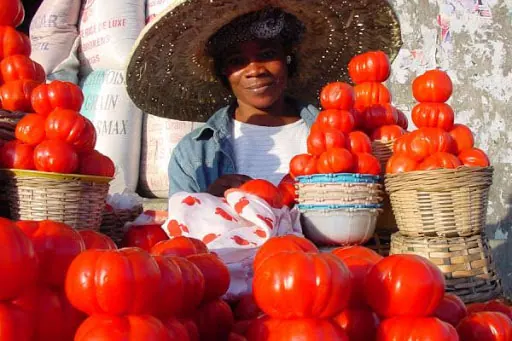
In Agogo, a major tomato-producing area in Ghana's Asante Akyem North, farmers are struggling to reduce post-harvest losses. Despite working hard, many farmers lose almost half of their harvest before it reaches the market. This is often due to factors such as harvesting at the wrong time, using raffia baskets that damage the tomatoes during transportation, and lacking affordable storage facilities to keep the produce cool.
The Chairman of the Agogo Pataban Tomato Growers Association, Ernest Akomeah, has highlighted the challenges faced by farmers in the area. According to him, farmers lack trusted information on when to harvest, and they are forced to use raffia baskets that destroy the tomatoes on rough roads. Additionally, there is no affordable place to keep tomatoes cool, and there is no reliable price information before market day. This makes it difficult for farmers to make informed decisions about their produce.
The lack of a local processing outlet also exacerbates the problem, leaving farmers with limited options for saving their surplus produce. Akomeah emphasized that it is not that Agogo farmers do not know how to farm, but rather that they do not receive the necessary information and support to reduce post-harvest losses. This is a significant issue, as lost produce translates to unpaid school fees and reduced income for farmers.
To address these challenges, the author of a recent article, Josephine Gyebuaah Ntiamoah, proposes several solutions. One key idea is to replace raffia baskets with strong plastic crates, which can help reduce damage to the tomatoes during transportation. This can be achieved through individual or collective efforts, such as donations from old student groups, churches, or companies.
Another proposed solution is to support community radio airtime for weekly farming programs or train peer volunteers to disseminate information to farmers. This can help bridge the communication gap between farmers and those who can provide them with the necessary information and support. By leveraging community radio and peer-to-peer networks, farmers can access trusted information that can help them make informed decisions.
The construction of Zero-Energy Cool Chambers, built with bricks, sand, and water, is also suggested as a way to keep tomatoes fresh for days without electricity. This can be achieved through community-led initiatives, with support from local authorities and organizations. By providing farmers with access to affordable storage facilities, they can reduce post-harvest losses and increase their income.
Finally, the author calls for greater accountability and action from the Ministry of Food and Agriculture and the Municipal Assembly regarding the promised processing factory in Agogo. The sod-cutting ceremony for the factory took place last year, but nothing has been done since then. The Agogo Rural Development Initiative aims to build a communication system that supports farmers and helps their voices reach decision-makers.
Key points
- Agogo's tomato farmers face significant post-harvest losses due to inadequate storage, transportation, and market information.
- Replacing raffia baskets with plastic crates and supporting community radio airtime are proposed solutions to reduce post-harvest losses.
- The promised processing factory in Agogo remains unbuilt, and greater accountability is needed from the Ministry of Food and Agriculture and the Municipal Assembly.