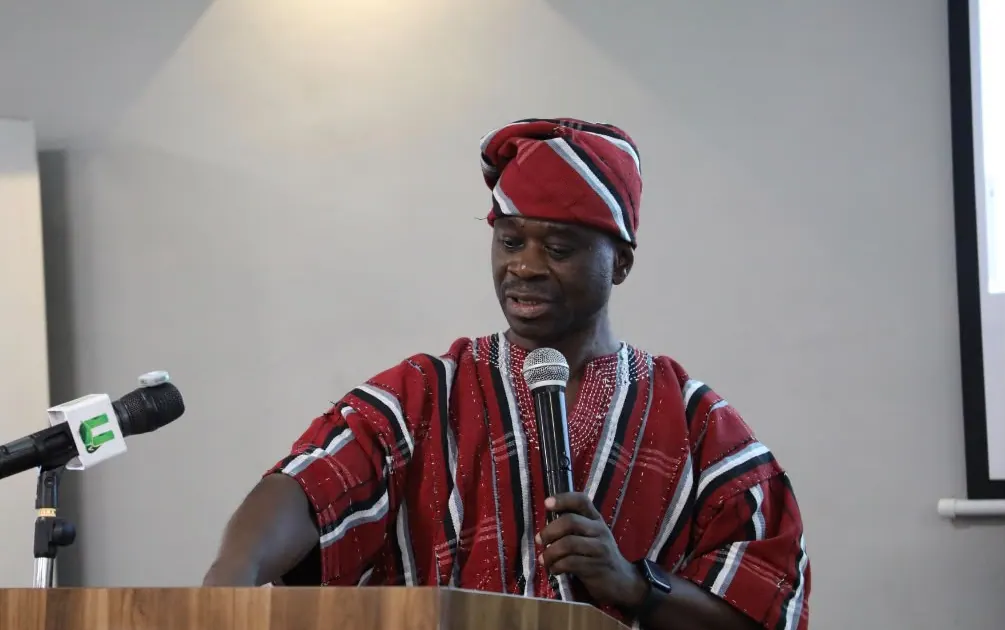
Climate experts, government officials, and agricultural stakeholders have gathered in Accra for a three-day stakeholder engagement workshop focused on strengthening inclusive climate adaptation tracking and reporting within Ghana's agriculture sector. The event, organised by the Alliance of Bioversity International and CIAT, the African Group of Negotiators Expert Support (AGNES), and the University of Cape Town, in collaboration with Ghana's Ministry of Food and Agriculture (MoFA) and the Environmental Protection Agency (EPA), aims to build capacity and align national reporting mechanisms with global standards.
The initiative comes as changing weather patterns, droughts, and rising temperatures continue to pose severe threats to Ghana's rainfed, smallholder-dominated agriculture sector. Delivering the keynote remarks, Chair of the African Group of Negotiators on Climate Change (AGN), Nana Dr. Antwi-Boasiako Amoah, emphasised that monitoring adaptation efforts must move beyond procedural paperwork to deliver concrete benefits for vulnerable communities.
Dr. Amoah highlighted that as Ghana scales up resilience initiatives such as promoting climate-resilient crops, early warning systems, and expanding irrigation, governments must evaluate the actual difference these projects make in farmers' lives. He noted that demonstrating adaptation activities is no longer sufficient; governments must also show whether those interventions are reducing vulnerability, strengthening resilience, and reaching the people and communities that need them most.
A central theme of the workshop is integrating Gender Equality and Social Inclusion (GESI) considerations directly into national reporting templates to reflect the experiences of women, youth, and persons with disabilities. Dr. Amoah cautioned that traditional tracking risks overlooking marginalized groups, stressing that if monitoring systems do not capture these differences, reports may show progress while important groups remain behind.
The AGN Chair advocated for connecting global decision-making directly to local agricultural realities, pointing out that good reporting begins long before the report is written, requiring clear institutional roles, established baselines, and structured data flows from district levels to national bodies. As Ghana prepares its Second Biennial Transparency Report (BTR2) under the UNFCCC Enhanced Transparency Framework, the workshop serves as a technical foundation to map data producers, validators, and key indicators across subsectors.
The workshop aims to build a permanent, evidence-backed information system that drives climate finance and national policy. Dr. Amoah encouraged participants to look beyond meeting international reporting cycles, concluding that if they get this right, they will strengthen not only their reporting but also the link between evidence, policy, finance, and real action on the ground.
The event is a significant step towards enhancing climate adaptation efforts in Ghana's agriculture sector. By integrating GESI considerations and aligning national reporting mechanisms with global standards, Ghana can better track and report on climate adaptation efforts, ultimately reducing vulnerability and strengthening resilience in the sector.
Key points
- The AGN Chair emphasised the need for action-driven tracking and reporting on inclusive climate adaptation in Ghana's agriculture sector.
- The workshop aims to build capacity and align national reporting mechanisms with global standards.
- Integrating GESI considerations into national reporting templates is crucial for reflecting the experiences of women, youth, and persons with disabilities.