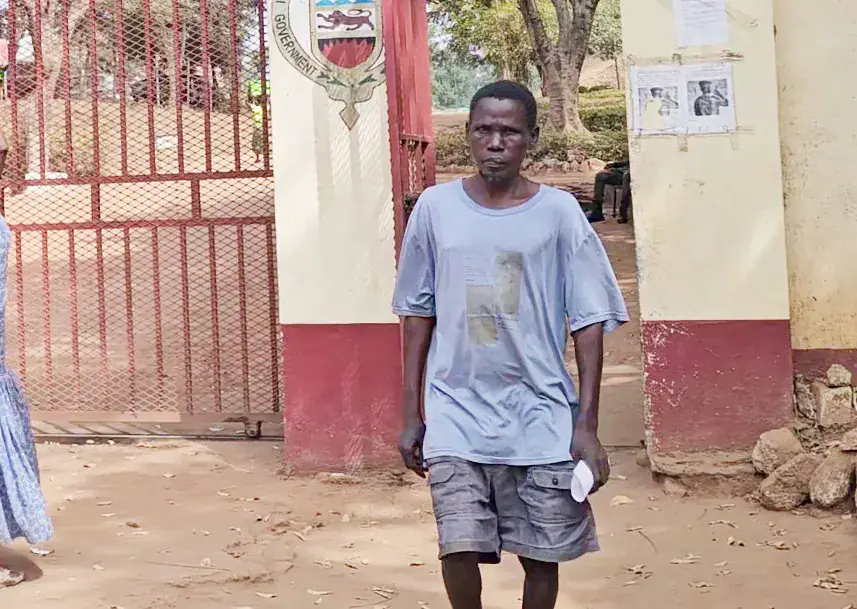
On July 4, 2026, Kalilitu Jimu walked out of Zomba Central Prison in Malawi, wearing an old t-shirt, short trousers, and unlaced shoes. He had spent 15 years in prison without a trial or sentence. Jimu, 45, is from James Village in Mozambique and had traveled to Malawi in 2011 to sell fish. He was arrested in 2011 after a woman he had helped with herbal medicine to terminate a pregnancy died. Jimu was remanded to Nsanje Prison and later transferred to Zomba Central Prison.
Jimu's ordeal began when a woman asked him to obtain herbal medicine to terminate a pregnancy. The concoction he obtained did not work, and the woman died. The community caught him, and he was arrested on February 12, 2011. For 15 years, Jimu waited in prison without a trial date or visitors from his village. He had four children when he was arrested and wondered if his wife still waited for him or if his children remembered him. Jimu described life in prison as hard, with many challenges, including congestion, lack of food, and sickness.
On June 24, 2026, Jimu's case took a significant turn when the Centre for Human Rights Education, Advice and Assistance (CHREAA) entered plea negotiations with the State Advocate Chambers at Zomba Prison. Jimu pleaded guilty, and the court convicted him and sentenced him to 19 years' imprisonment. However, since he had already spent 15 years on remand, the sentence meant he had served his time and was freed. His lawyer, Vitumbiko Phiri, said the case highlighted the issue of delayed justice and the importance of plea bargaining.
Vitumbiko Phiri noted that plea bargaining, introduced under Practice Directions issued by Chief Justice Rizine Mzikamanda on February 23, 2026, allows an accused person to admit responsibility for an agreed outcome approved by the court. This process reduces case backlogs, eases prison overcrowding, and gives victims closure sooner. Phiri added that plea bargaining had already proven its value in Jimu's case.
Public Relations Officer for the Malawi Prison Service Steve Meke stated that with safeguards, voluntary participation, legal representation, and judicial oversight, plea bargaining can improve access to justice. He noted that this process will result in the reduction of remand prison population across Malawi's facilities. The Judiciary has acknowledged that resource constraints and huge backlogs contribute to delays in the justice system.
As Jimu walked out of Zomba Central Prison, he was grateful for a system that had finally moved. He said, "What took 15 years was finished in a single day." However, Jimu's personal journey was just beginning. He wondered what he would find in his village in Mutarara, 15 years after he left it. He hoped to find his mother, children, and wife, and to reconnect with a community that might have thought he was dead.
Jimu's case is not unique, as hundreds of people in Malawi spend years on remand waiting for their day in court. The wait itself often becomes a punishment. Jimu's story highlights the challenges faced by those in prison without trial or sentence and the importance of reforms like plea bargaining to improve access to justice.
Key points
- Kalilitu Jimu spent 15 years in prison without trial or sentence before being freed on July 4, 2026.
- Jimu's case highlights the importance of plea bargaining in reducing case backlogs and improving access to justice.
- Hundreds of people in Malawi spend years on remand waiting for their day in court, often without trial or sentence.
Reporting sources
- After 15 years in jail, Mozambican walks out to anxious future · The Daily Times