A delegation from the African Union recently visited South Africa to investigate claims of xenophobia and Afrophobia. The visit, which took place from September 28 to October 2, was prompted by petitions from countries such as Ghana and other West African nations. These countries had called for action against Pretoria following anti-migration protests earlier this year. The AU delegation met with government officials, parliamentary representatives, and civil society stakeholders to discuss the issues.
During their visit, the AU delegation reviewed South Africa's migration laws and policies. They also conducted on-site inspections at deportation centers, including Lindela on the West Rand. The African Commission on Human and Peoples' Rights, which led the delegation, issued a report at the end of their mission. The report found that the anti-migration protests that took place this year were different from those in 2008 and 2015, given the current state of the economy.
The AU Commission's report debunked the perception that South Africa is a xenophobic society. The report stated that South Africans have coexisted with other Africans for decades, including during the apartheid era. This finding supports the claims of many South Africans who argue that their country is not inherently xenophobic. The report also noted that the recurrence of similar incidents of xenophobic and Afrophobic attacks would take the form of anti-immigrant protests and community mobilisation.
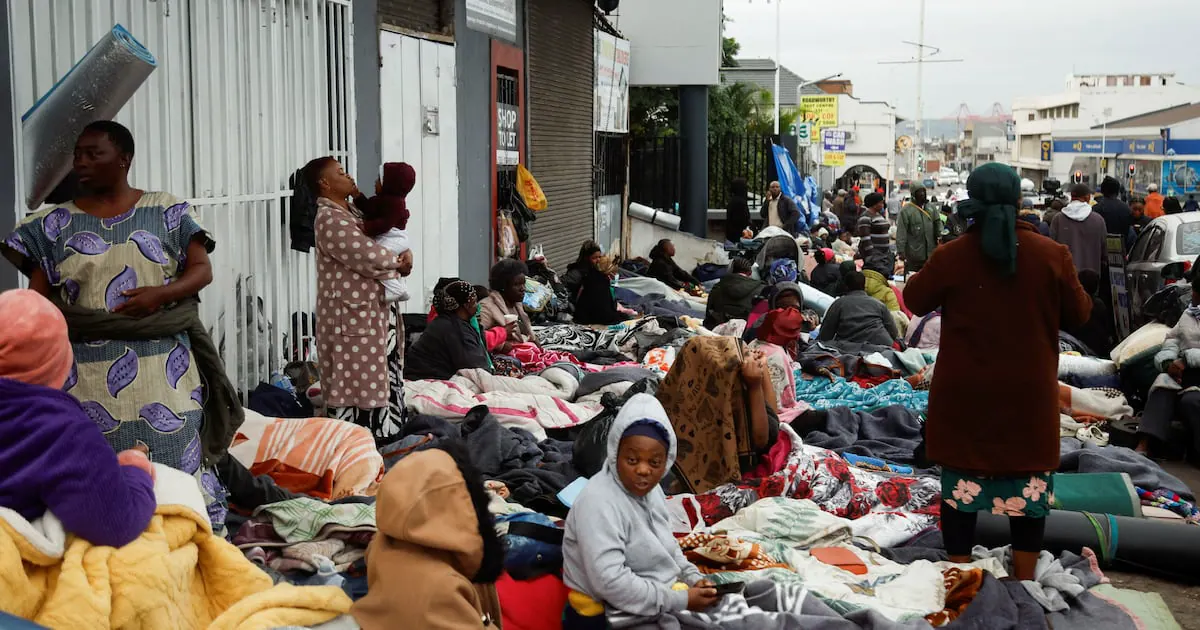
In a communiqué, the African Commission on Human and Peoples' Rights rejected any suggestion that South Africa is inherently xenophobic or Afrophobic. The commission also acknowledged that incidents of violence, intimidation, and discrimination had resulted in loss of lives, destruction of property, and displacement of families. The commission's statement is significant, coming from a non-partisan body mandated by the African Union to foster greater unity and solidarity among African nations.
The AU delegation's findings did not vindicate Ghana's push for the AU to sanction Pretoria. However, the delegation did demand more action from the South African government to better manage migration issues. They identified "financed and politicised vigilantism" and "pervasive corruption" at departments such as Home Affairs and the Border Management Agency as forces behind the anti-migration protests.
The AU delegation also criticized the South African government for not having legislation in place to criminalize illegal mining. They recommended that the government correct these issues. The delegation's recommendations are wise counsel for the government, and it is hoped that they will be heeded. Failure to act on the recommendations could fan the anti-migration fires.
The African Union's rejection of the xenophobia label is welcome news for South Africa. The country's government must now take steps to address the issues raised by the AU delegation. By doing so, they can demonstrate that South Africa is not a society that is "inherently" hateful of its African brothers and sisters. The government must work to implement the AU's recommendations and show that it is committed to managing migration issues effectively.
Key points
- The African Union has rejected claims that South Africa is inherently xenophobic.
- The AU delegation found that anti-migration protests in South Africa were different from those in 2008 and 2015.
- The AU recommended that the South African government take steps to address issues such as corruption and the lack of legislation to criminalize illegal mining.