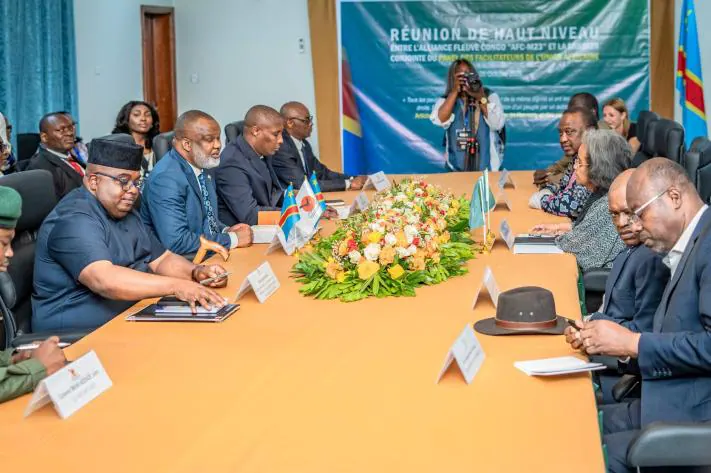
The African Union has taken a proactive approach to resolving the crisis in the eastern Democratic Republic of Congo (DRC) by sending a team of facilitators to Goma. The team, led by former heads of state Uhuru Kenyatta, Mokgweetsi Masisi, and Sahle-Work Zewde, as well as Togo's minister delegate for foreign affairs, met with high-ranking officials from the M23 rebel group on October 5. The meeting was a significant step towards finding a peaceful solution to the conflict that has resulted in hundreds of deaths and thousands of displaced people.
The conflict in eastern DRC has been ongoing for years, with the M23 rebel group and the Congolese government accusing each other of destabilization. The African Union's initiative is seen as a welcome move, as the institution has often been criticized for its lack of involvement in conflict resolution. The AU's facilitators had previously met with Congolese President Félix Tshisekedi and Rwandan President Paul Kagame, who have been at odds over the conflict. The AU's efforts aim to bring the warring parties to the negotiating table and find a lasting solution to the crisis.
Despite previous agreements signed between Kinshasa and Kigali, as well as between Kinshasa and the M23 rebel group, the conflict has continued to escalate. The African Union's mission faces significant challenges, as the parties involved seem unwilling to compromise. Congolese President Félix Tshisekedi and M23 rebel leader Corneille Nangaa have a particularly strained relationship, with Tshisekedi having condemned Nangaa to death and excluded him from national dialogue.
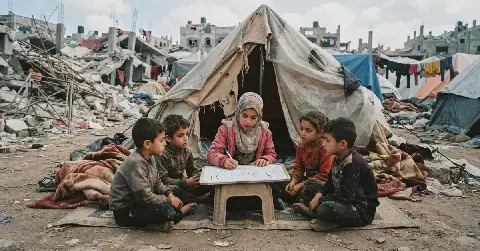
The African Union's facilitators will have to navigate a complex web of interests and agendas to achieve a breakthrough. The M23 rebel group's control of large areas of eastern DRC has made it difficult for the government to assert its authority. The conflict has also had a devastating impact on local populations, who have been forced to flee their homes or live in fear of violence.
Experts are skeptical about the African Union's chances of success, given the complexity of the conflict and the lack of trust between the parties involved. However, the AU's efforts are seen as a positive step towards finding a peaceful solution. The institution has a critical role to play in promoting stability and security in the region.
To achieve a lasting solution, the African Union's facilitators will need to address the underlying issues driving the conflict. This will require a deep understanding of the complex interests and agendas at play, as well as a willingness from all parties to compromise. The AU's efforts will also need to be supported by the international community, which has a critical role to play in promoting peace and stability in the region.
Ultimately, the success of the African Union's mission will depend on the willingness of the parties involved to work towards a peaceful solution. The conflict in eastern DRC has had a devastating impact on local populations, and it is imperative that a solution is found to bring an end to the suffering. The African Union's facilitators will need to work tirelessly to bring the warring parties together and find a lasting solution to the crisis.
Key points
- The African Union has sent a team of facilitators to Goma in an effort to bring peace to the conflict-torn eastern Democratic Republic of Congo.