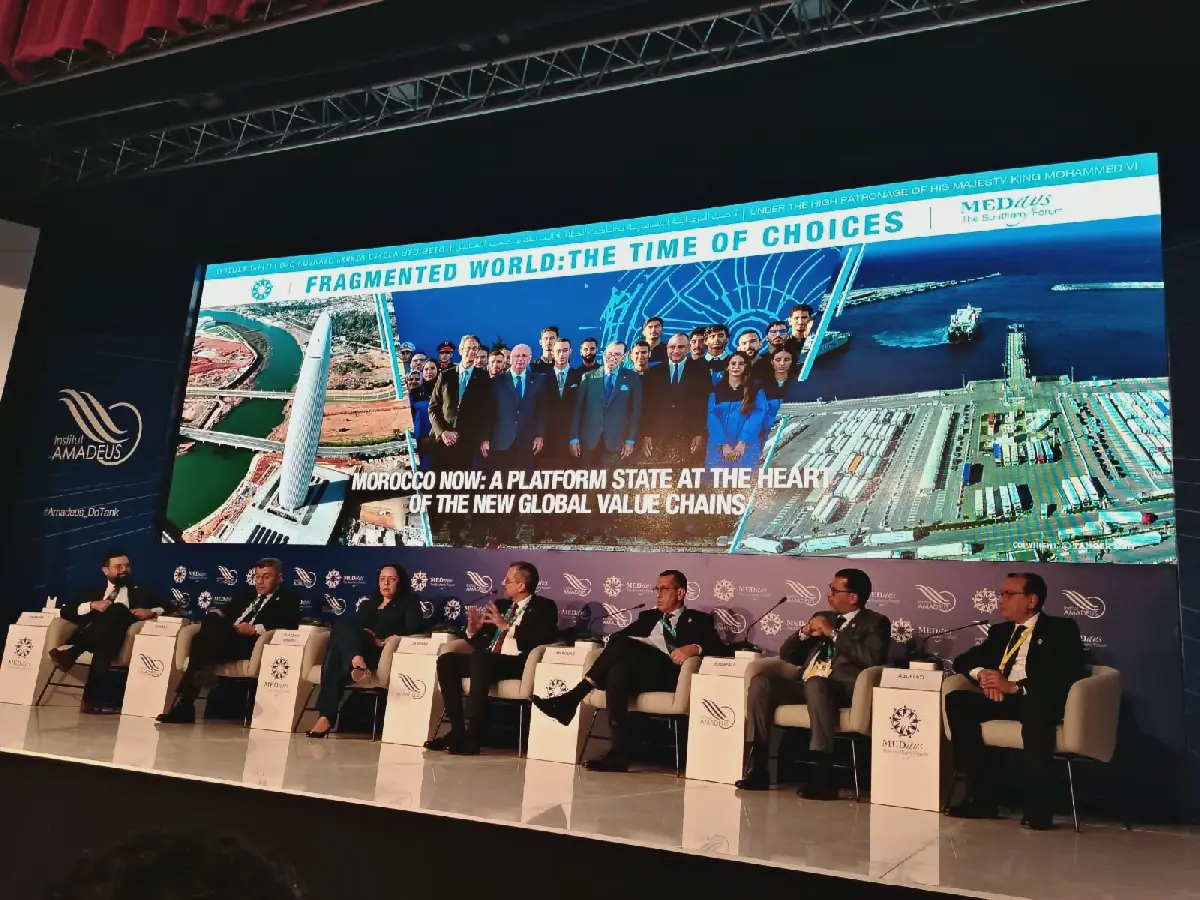
The "Midea" investment summit, held in Tangier, Morocco, brought together African leaders to discuss economic independence and strategies for achieving it. Participants emphasized that economic autonomy does not imply isolation or self-sufficiency, but rather diversifying international partnerships, negotiating balanced agreements, and strengthening national capacities in strategic sectors. They highlighted the need for a stable and predictable regulatory framework, risk-sharing mechanisms, and developed local capital markets.
The summit's discussions, moderated by Ghaïta Kalimba, founder of the "Leaders for a Goal" organization, focused on the criteria for structured investment, its ability to transfer technology, and create local added value. Speakers, including former Latvian President Egils Levits, stressed the importance of diversifying partnerships without weakening stable alliances. Levits cited the European experience in unifying markets and legislative systems as a model for African integration.
The African Continental Free Trade Area and south-south cooperation were also key topics of discussion. Participants noted that differences in legal and tax systems between African countries hinder the movement of goods and capital, emphasizing the need for unified legislation and incentives for the local private sector to attract foreign investment. Former Haitian President Laurent Saint-Cyr highlighted the crucial role of diaspora communities in financing development.
Saint-Cyr noted that Haitian diaspora remittances approach $5 billion annually, but most are directed towards direct consumption, deepening the trade deficit rather than creating added value. He called for innovative financial and tax mechanisms to channel diaspora savings towards joint investment with the local private sector. The Moroccan experience in attracting capital and involving Moroccan expatriates in economic dynamics was also cited as a successful example.
The summit also explored ways to stimulate foreign direct investment and risk-sharing in public-private partnership projects. Participants praised Morocco's experience in attracting capital and involving Moroccan expatriates in economic dynamics, which saw a 90% increase in foreign direct investment in 2025. Egyptian Deputy Minister of Tax Policies Yaser Sobhi reviewed his country's experience in diversifying funding sources.
Sobhi reported a 60% increase in foreign investment, reaching nearly $18 billion, thanks to innovative financing tools, including green bonds and concessional financing. The model of the Tangier Med port was presented as a practical example of structured investment and financial leverage, with public investment of $7 billion since 2003 attracting $14 billion in private investment.
Irish State Minister for Finance Robert Troy emphasized the importance of public financing in stimulating private capital, citing the Irish Strategic Investment Fund and National Development Plan. He stressed the need to direct international financing towards building human and institutional capacities in developing countries, ensuring sustainable economic returns that benefit local populations.
Key points
- The summit highlighted the need for a stable and predictable regulatory framework to attract investment.
- Diversifying international partnerships and strengthening national capacities in strategic sectors are crucial for achieving economic independence.
- The role of diaspora communities in financing development and the importance of innovative financial mechanisms were also emphasized.
Reporting sources
- قمة “ميدايز” ترسم خارطة طريق افريقية لتحويل رؤوس الأموال إلى رافعة للسيادة · Al Ittihad Al Ichtiraki