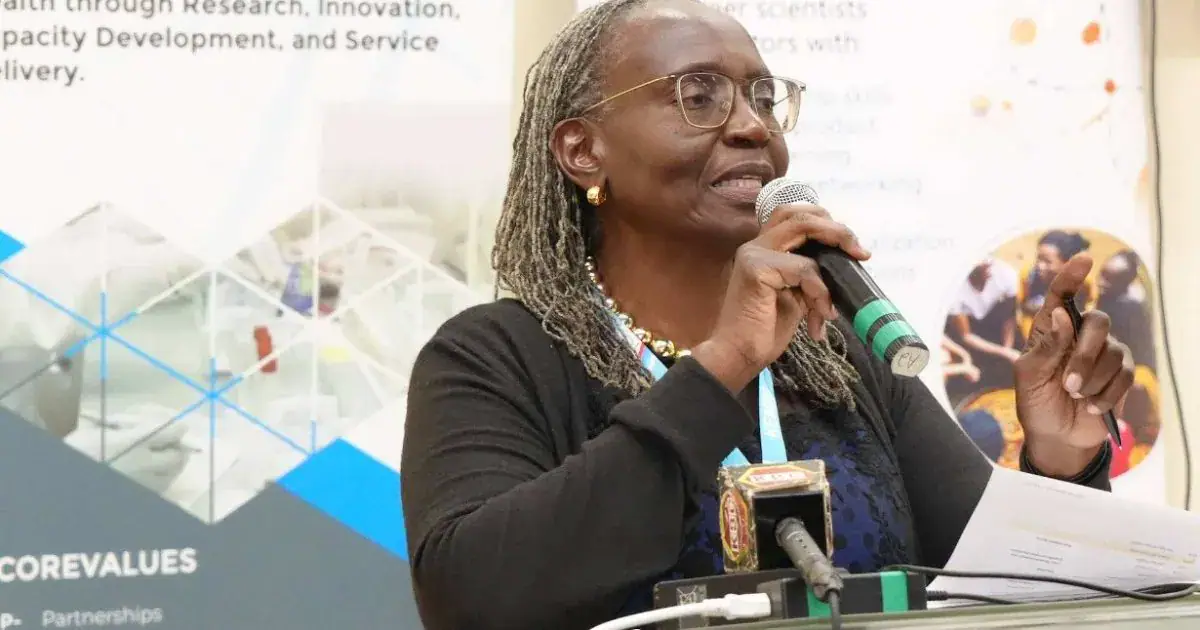
African scientists have been called upon to develop affordable solutions tailored to the continent's needs to address neglected women's health conditions. This call was made during the Leadership for Innovation and Excellence in Accelerating Research on Women's Health (LEA-WH) Fellowship, Women's Health Ecosystem Forum, hosted by the Kenya Medical Research Institute (KEMRI) in Nairobi. The forum aims to strengthen research and innovation in women's health.
KEMRI Senior Principal Clinical Research Scientist, Prof. Elizabeth Bukusi, emphasized that women's health research must extend beyond pregnancy and childbirth to address the full spectrum of health challenges women face throughout their lives. Conditions such as heavy menstrual bleeding, fibroids, and endometriosis continue to affect women's education, productivity, and quality of life. These conditions are often normalized or overlooked, despite their significant impact.
Prof. Bukusi noted that girls and women lose valuable school and working days due to menstrual disorders and related conditions. She added that Africa has the scientific talent to develop solutions but requires greater investment, training, and research opportunities to translate ideas into products that respond to local needs. Prof. Bukusi called on African governments to honour commitments to allocate at least two percent of their gross domestic product to research.
Dr. Maike Scharp of the Gates Foundation stated that women globally continue to experience significant health disadvantages due to longstanding gaps in research, investment, and innovation. Women live with poor health for 25 per cent more of their lives than men, while medicines are 3.5 times more likely to be withdrawn for safety reasons in women. This disparity is also evident in research investment, with a significant difference in funding for various health conditions.
The Gates Foundation is supporting women's health research through initiatives targeting innovation, data gaps, partnerships, and pathways to bring new products to market. Dr. Scharp cited the difference between the approximately 580 drug-development candidates for diabetes and about 20 for endometriosis, despite both conditions affecting roughly one in 10 people in their respective populations.
KEMRI and World Health Organization researcher, Prof. James Kiarie, said the LEA-WH Fellowship was designed to build African research leadership and help translate scientific discoveries into practical interventions. The three-year initiative, launched in October 2025, has enrolled 20 fellows from 11 African countries in its inaugural cohort. The Programme aims to support up to 60 fellows over three years through research leadership, mentorship, product development, and innovation pathways.
Prof. Kiarie urged fellows to develop solutions that reflect Africa's realities, stressing that research must go beyond publications to deliver measurable improvements in women's lives. The initiative will prioritize conditions, including menstrual health disorders, reproductive tract infections, cervical cancer, endometriosis, infertility, and contraceptive technologies. Its ambitions include advancing five to 10 health products towards market testing and supporting up to 10 start-ups.
Key points
- African scientists are being urged to develop affordable solutions to address neglected women's health conditions.
- The LEA-WH Fellowship aims to support up to 60 fellows over three years to build African research leadership and translate scientific discoveries into practical interventions.
- Women's health research must extend beyond pregnancy and childbirth to address the full spectrum of health challenges women face throughout their lives.