The African press has highlighted the strategic importance of the newly launched fiber-optic link between Algeria and Niger, hailing Algeria as a digital gateway to the Sahel region. The link, which was launched on Tuesday, is expected to revolutionize the region's digital landscape and provide a new corridor for international internet connectivity. According to analyses published by various African media outlets, the project goes beyond being just a communication infrastructure, representing a new digital passage that redraws the communication map in the Sahel region.
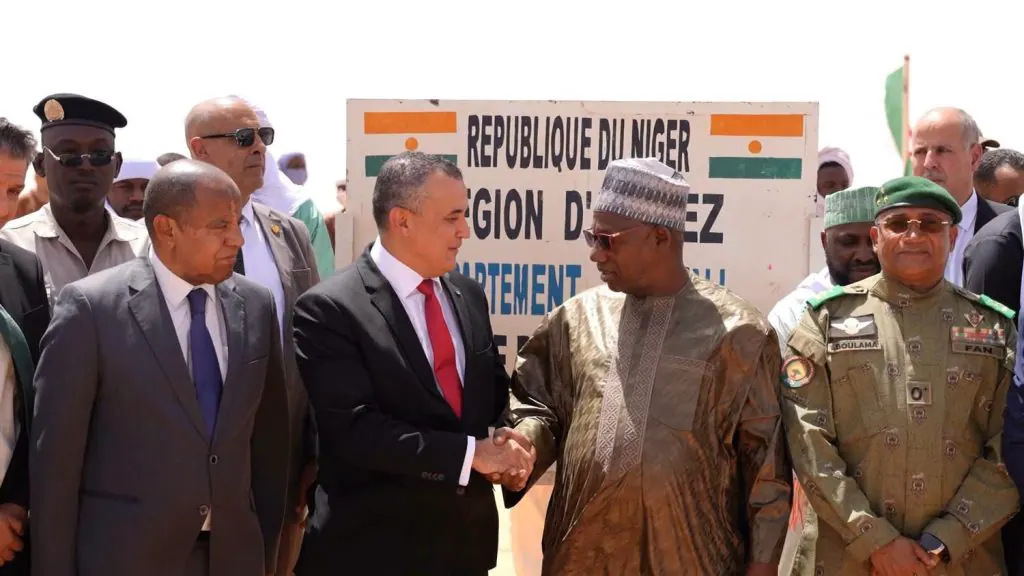
The fiber-optic link, which was launched by Algerian Minister of Post and Telecommunications, Sid Ali Zerrouki, and his Nigerien counterpart, Hamanie Carnei, in the city of Assamaka on the Algerian-Niger border, marks a significant milestone in the region's digital development. The link is expected to provide Niger, a landlocked country, with a new route to international internet networks, reducing its dependence on traditional communication paths. This development is seen as a major boost to the country's digital infrastructure and economy.
The Sahel region is set to benefit greatly from the new fiber-optic link, with various media outlets highlighting its potential to transform the region's digital geography. According to the Nigerien platform, Sahel Voice, the launch of the link represents a "decisive shift" in the region's digital landscape, providing a new corridor for international internet connectivity and enhancing Algeria's position as a regional digital hub. The platform notes that access to international bandwidth has become a factor of influence, and the project can strengthen Algeria's position as a digital gateway to the Sahel.
The African Tribune has described the project as a "strategic passage" rather than just a cable, highlighting its potential to reduce Niger's dependence on traditional communication paths and open up new economic opportunities for telecom operators. The platform notes that Algeria is seeking to expand its strategic contribution south of its borders and consolidate its position as a regional digital center through the connection of the Nigerien network to its infrastructure and international bandwidth capabilities.
The launch of the fiber-optic link is also seen as a significant step towards enhancing regional digital cooperation and development. According to the platform, IEES Actu, Algeria is not only completing its part of the project but also accompanying the operation and enhancement of the infrastructure on the Nigerien side. The platform highlights a September 2026 agreement between Algerian telecoms company, Algeria Telecom, and Nigerien telecoms company, Niger Telecom, to provide transmission equipment for the link between In Guezzam, Algeria, and Agadez, Niger, with an initial capacity of 100 Gbps.
The Burkinabé platform, Faso Liber, has noted that the Algerian-Nigerien link has the potential to contribute to the reconfiguration of digital and economic balances in the Sahel region, providing a new outlet for international bandwidth and reducing dependence on existing paths. The platform highlights the significance of the project in creating a new digital passage that can connect Algeria to Niger and other Sahel countries, promoting regional digital cooperation and development.
The various analyses published by African media outlets highlight the significance of the Algerian-Nigerien fiber-optic link in transforming the region's digital landscape. The project is seen as a major step towards establishing Algeria as a digital gateway to the Sahel region, providing a new corridor for international internet connectivity and enhancing regional digital cooperation and development. The link is expected to have a positive impact on the region's economy and digital infrastructure, promoting growth and development in the Sahel region.
Key points
- Algeria has been hailed as a digital gateway to the Sahel region following the launch of a fiber-optic link with Niger.