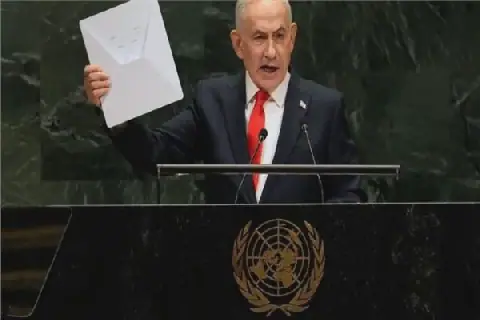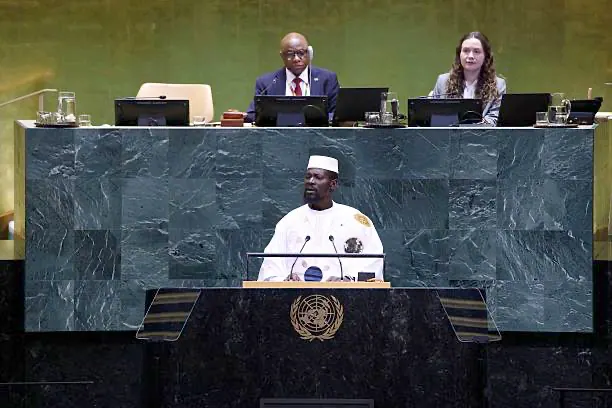
The 81st session of the United Nations General Assembly has provided a platform for African leaders to voice their concerns and priorities. Since September 22, numerous presidents and representatives of African countries have taken the stage to discuss pressing issues such as security crises, economic development, and governance. The African leaders emphasized the need for a more adapted governance structure that reflects the realities of the international community.
The Nigerien Prime Minister, Ali Mahamane Lamine Zeine, addressed the Assembly, denouncing neocolonialism and plans to destabilize his country. He stressed the importance of a seat for Africa on the UN Security Council, a long-standing African demand aimed at correcting historical injustices. Zeine also highlighted the need for a solution to the Palestine issue and reaffirmed his country's support for a two-state solution.
The Prime Minister of Niger also discussed regional issues, describing the situation in the Sahel region as a "war of liberation against recolonization." He accused France and its President, Emmanuel Macron, of manipulation and alliances with local subordinates to destabilize the region. Zeine warned against French-backed proxies, supported by Ukraine, that seek to attack Niger's military positions and oil installations.
The Malian Minister of Foreign Affairs and International Cooperation, Abdoulaye Diop, spoke on behalf of the Alliance of Sahel States, focusing on development, peace, and security. He emphasized the need for a more adapted governance structure that reflects African particularities and realities. Diop called for a reduction in inequalities and a reform of the international financial architecture.
The Burkinabé Minister of Foreign Affairs, Karamoko Jean Marie Traoré, advocated for a model of "endogenous, sovereign, and sustainable development" based on local resource transformation and national capacity building. He spoke during the commemoration of the 40th anniversary of the UN Declaration on the Right to Development. Traoré's statement echoed the sentiments of many African leaders who seek to reduce dependence on external factors and promote self-sufficiency.
Guinean President Mamadi Doumbouya emphasized the need for a governance model adapted to African realities, history, and culture. He recalled his previous statement that the imported governance model had failed to yield expected results for African populations. Doumbouya highlighted Guinea's Simandou 2040 megaproject, aimed at exploiting one of the world's largest iron ore deposits to drive economic transformation.
The Prime Minister of the Democratic Republic of Congo, Judith Suminwa, focused on security and economic development. She defended the presence of the UN Mission in the DRC (MONUSCO), citing its essential role in protecting civilians and supporting ceasefire mechanisms. Suminwa also stressed the need to transform local resources into economic growth, stating that the DRC wants to become a "sovereign workshop and laboratory" rather than a mere cog in the global economy.
Key points
- African leaders demand a stronger voice in global governance and economy.
- The Sahel region's security situation and neocolonialism were major concerns.
- Leaders called for reforms in the international financial architecture and UN Security Council.