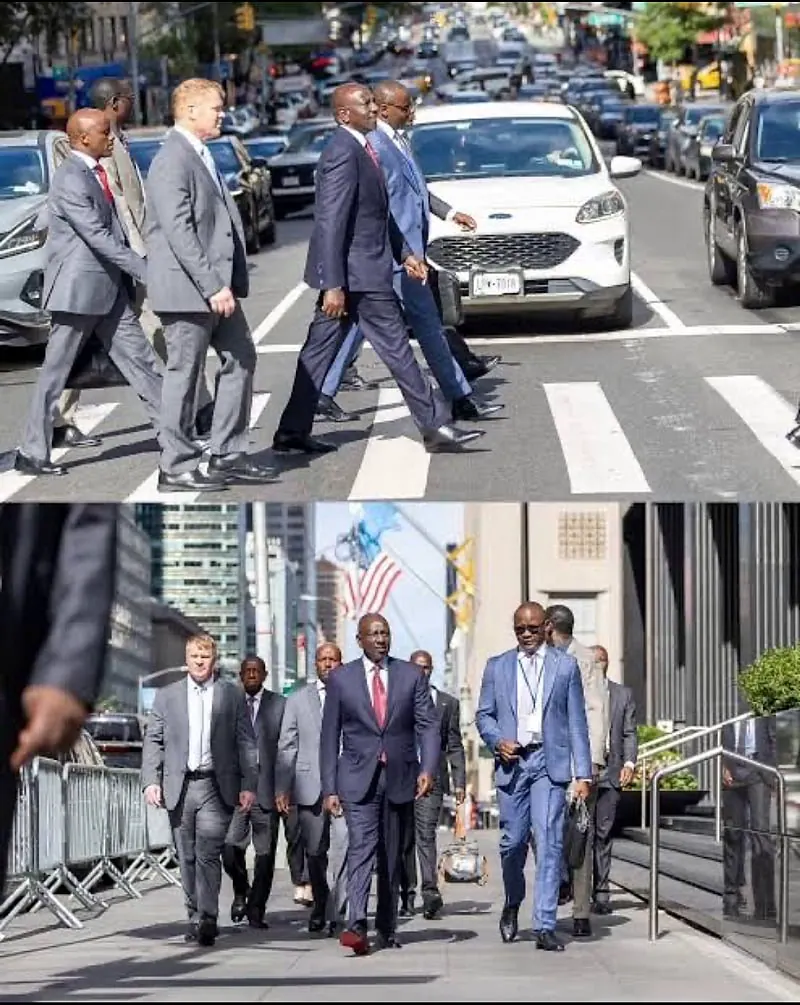
During the United Nations General Assembly (UNGA) week, African presidents and senior political leaders can be seen walking through public spaces in New York, a stark contrast to their usual movements in their home countries. In Africa, their movements are typically accompanied by security details, official vehicles, and police escorts, whereas in New York, they walk along sidewalks, cross streets, and move through public spaces like ordinary citizens. This brief experience raises questions about the pedestrian infrastructure in African cities.
In many African cities, pedestrians face significant challenges, including poorly maintained or missing pavements, inadequate zebra crossings, unreliable traffic lights, and insufficient street lighting. These conditions make pedestrian safety a concern, and crossing busy urban roads requires extraordinary caution. The contrast between New York's pedestrian-friendly infrastructure and African cities' infrastructure highlights the need for improved urban planning and governance. African leaders' experience in New York serves as a reminder of what can be achieved through deliberate urban planning.
The issue of pedestrian infrastructure is closely tied to governance and public administration. A functioning city should not be designed exclusively around vehicles; pedestrians are also road users who deserve safe and accessible infrastructure. Good governance is visible not only in government buildings but also in the streets, pavements, pedestrian crossings, traffic lights, and street lighting. The experience of African leaders in New York underscores the importance of creating conditions that allow citizens to experience dignity, safety, and accessibility in their daily lives.
The photograph of African officials walking across a marked pedestrian crossing and along a New York sidewalk, surrounded by their entourage and security personnel, serves as a visual representation of the disparities in pedestrian infrastructure. This image raises questions about the kind of cities governments build for their citizens and the importance of prioritizing pedestrian-friendly infrastructure. As African cities continue to grow, investing in properly designed sidewalks, safe crossings, and integrated urban transportation systems will become increasingly important.
International engagements like the UNGA expose political leaders to different systems, standards, and approaches to public administration. New York's pedestrian environment provides a backdrop for photographs, but it also serves as a reminder of what can be achieved through deliberate urban planning. African governments have repeatedly confronted questions surrounding congestion, road safety, urbanization, and inadequate infrastructure, and it is essential to move beyond temporary improvements around official events and toward infrastructure that serves citizens every day.
The experience of African leaders in New York highlights the need for reflection on leadership and governance. Leadership is not simply about representing a country at an international gathering; it is also about creating conditions at home that allow citizens to experience dignity, safety, and accessibility in their daily lives. The question raised by these images is not why African leaders are walking in New York but what it would take for ordinary Africans to walk through their own cities with the same sense of safety, accessibility, and dignity.
Ultimately, the issue of pedestrian infrastructure in African cities is a question of governance, political responsibility, and good politics. African governments can invest in infrastructure that serves citizens every day, including properly designed sidewalks, safe crossings, functioning traffic signals, and accessible public spaces. By prioritizing pedestrian-friendly infrastructure, governments can improve safety, mobility, economic activity, and the quality of everyday civic life for their citizens.
Key points
- African leaders experience pedestrian-friendly infrastructure in New York, highlighting disparities in their home countries.
- Pedestrian infrastructure is closely tied to governance and public administration in African cities.
- Investing in pedestrian-friendly infrastructure can improve safety, mobility, and economic activity in African cities.