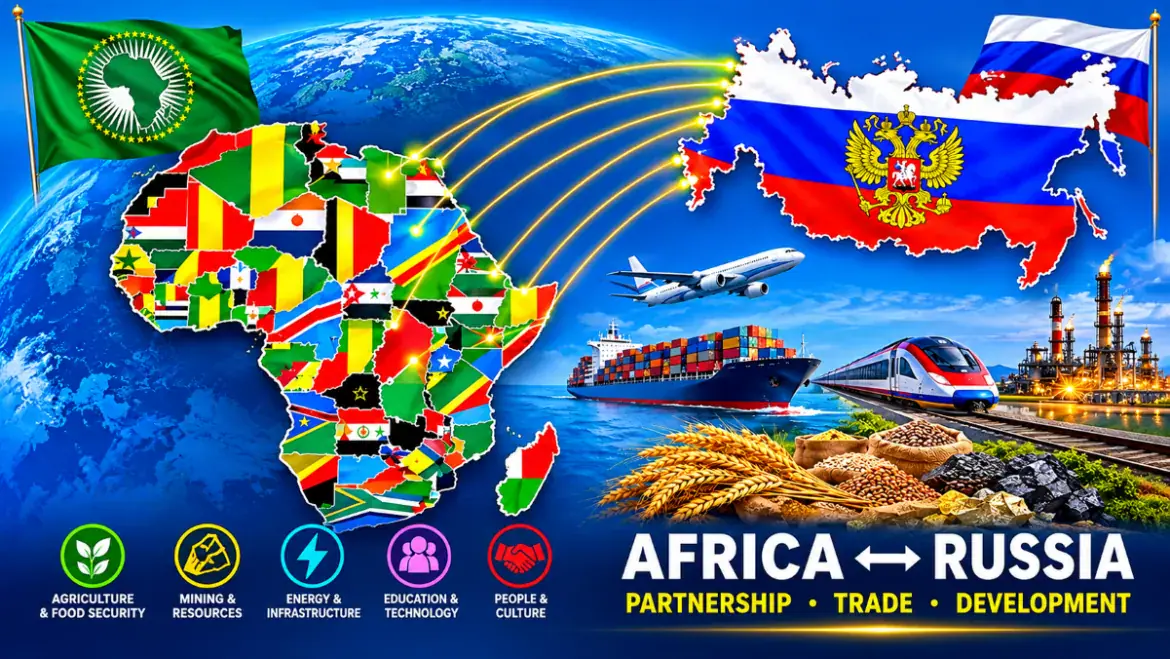
The 3rd Russia-Africa Summit took place in Moscow from October 28 to 29, 2026, with 22 African heads of state and representatives from 48 African countries in attendance. Russian President Vladimir Putin invited African leaders to discuss cooperation and strengthen ties between Russia and the African continent. The summit was one of the largest Africa gatherings outside the continent this year. High-profile attendees included Évariste Ndayishimiye, President of Burundi and Chair of the African Union, who co-chaired the summit.
Heavyweights from various regions attended the summit, including Abdel Fattah el-Sisi of Egypt, Abiy Ahmed of Ethiopia, William Ruto of Kenya, and Yoweri Museveni of Uganda. Other notable attendees were Abdel Fattah al-Burhan from Sudan, Salva Kiir of South Sudan, and Félix Tshisekedi of the Democratic Republic of Congo. Representatives from Tanzania, Rwanda, and 35 other countries also participated in the summit. The diverse attendance underscored Africa's growing importance in global politics.
President Putin emphasized Russia's desire for a "multipolar world order," one not controlled entirely by the West. He highlighted Russia's contributions to Africa, including the supply of 13 million tons of agricultural products, such as grains and fertilizers, in just nine months of 2026. The total trade between Russia and Africa currently stands at over $27 billion, although this figure falls short of targets.
Closed-door discussions focused on key issues, including grain deals, fertilizer supplies, nuclear power plants, infrastructure development, and security arrangements for Russian military trainers and weapons for Sahel countries. African leaders, including President Ruto, used the platform to reiterate the continent's long-standing demand for a permanent seat on the UN Security Council. This demand has been a priority for Africa for over 20 years.
President Putin positioned Russia as a better partner for Africa compared to the West, stating, "We never colonized you!" However, observers question whether this rhetoric translates into a genuine partnership or merely another form of competition for influence in Africa. The summit has sparked debate about what Africa should expect from Russia in return for its engagement.
The Russia-Africa Summit has significant implications for global politics, as Africa is no longer just a passive observer but an active participant. With 48 countries from the continent in attendance, Africa's role in shaping international relations is increasingly prominent. The summit has raised questions about the nature of partnerships between Africa and global powers like Russia, China, America, and Europe.
As Africa navigates its relationships with global powers, the continent must consider its priorities and demands. With Russia already supplying significant amounts of wheat to Africa, the question remains whether the continent needs more grain, assistance with nuclear plants, a UN seat, or financial support. Ultimately, Africa's engagement with Russia and other global powers will shape its future trajectory in global politics.
Key points
- The 3rd Russia-Africa Summit in Moscow highlighted Africa's growing importance in global politics and its desire for a stronger voice in international relations.