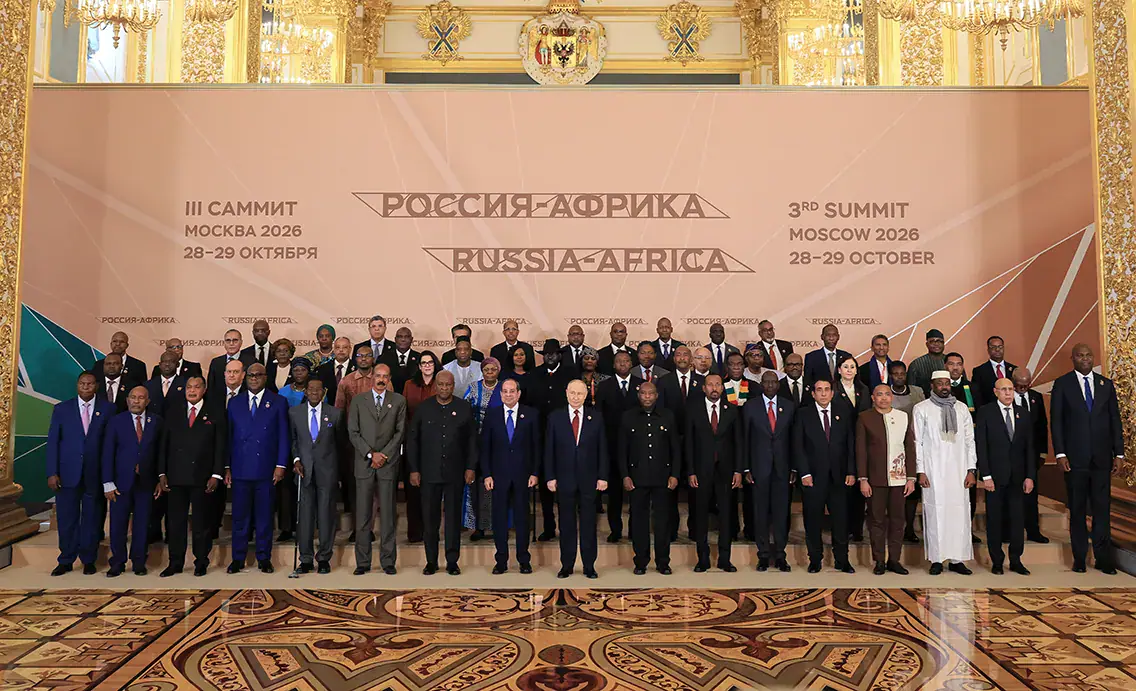
The recent Russia-Africa Summit in Moscow, which took place from October 29-30, 2023, saw 48 African countries participate, with 22 countries represented by their Presidents or Prime Ministers. This attendance figure marks an increase from 2023, but is still lower than the 43 Heads of State who attended the first Russia-Africa Summit in Sochi in 2019. The summit's format included one-on-one meetings with Russian President Vladimir Putin, with 18 African leaders taking part in these bilateral talks over two days.
The phenomenon of African leaders attending international summits, only to return with limited benefits, has sparked debate about the continent's approach to global diplomacy. Critics argue that these summits often result in empty promises and minimal tangible outcomes for Africa. The Russia-Africa Summit, for instance, was criticized for yielding few concrete commitments from Russia. Similarly, the US-Africa Leaders Summit hosted by President Joe Biden in December 2022, which was attended by 49 African heads of state, resulted in a $55 billion pledge over three years, but the implementation of these commitments remains to be seen.
African leaders' eagerness to attend international summits has been likened to a display of subservience, with some arguing that it undermines the continent's dignity and pride. The image of African leaders "bending the knee" to their international counterparts has been particularly pointed, with some questioning whether this approach is truly in Africa's best interests. This criticism is not limited to Russia or the US; other international summits, such as the China-Africa Summit and the Italy-Africa Summit, have also been subject to scrutiny.
The Italy-Africa Summit, which took place in Rome on January 28-29, 2024, was attended by 46 African countries, with 21 represented by their Presidents. Italian Prime Minister Giorgia Meloni, who was 47 years old at the time, hosted the summit, which raised questions about the dynamics at play when African leaders engage with their international counterparts. The significant age gap between Meloni and some of the African leaders, such as President Denis Sassou-Nguesso of Congo-Brazzaville, who is 82 years old and has been in power for over 40 years, has been noted.
The issue of African leaders' longevity in power has also been raised, with some arguing that it contributes to the continent's lack of progress and development. President Sassou-Nguesso, who has been in power for over 40 years, is one of Africa's longest-serving leaders. His attendance at international summits, alongside other veteran leaders, has sparked debate about the need for leadership renewal and succession planning in Africa.
In contrast, countries like China have been cited as examples of successful development through pragmatic leadership and strategic engagement with the international community. China's economic transformation over the past 40 years has been remarkable, with the country's leadership taking a proactive approach to development and international cooperation. The approach taken by China's leaders, including Deng Xiaoping, who visited Singapore in 1978 and was inspired by the city-state's development model, has been studied by many.
As African leaders continue to engage with the international community, there are calls for a more nuanced and effective approach to diplomacy. The emphasis on learning from other countries' experiences and developing domestic capabilities has been highlighted as key to Africa's future progress. By adopting a more strategic and proactive approach to international engagement, African leaders may be able to secure more meaningful benefits for their countries and citizens.
Key points
- Critics argue that African leaders' attendance at international summits often results in minimal tangible outcomes for the continent.
- The phenomenon of African leaders "bending the knee" to international counterparts has sparked debate about the continent's approach to global diplomacy.
- Countries like China have been cited as examples of successful development through pragmatic leadership and strategic engagement with the international community.