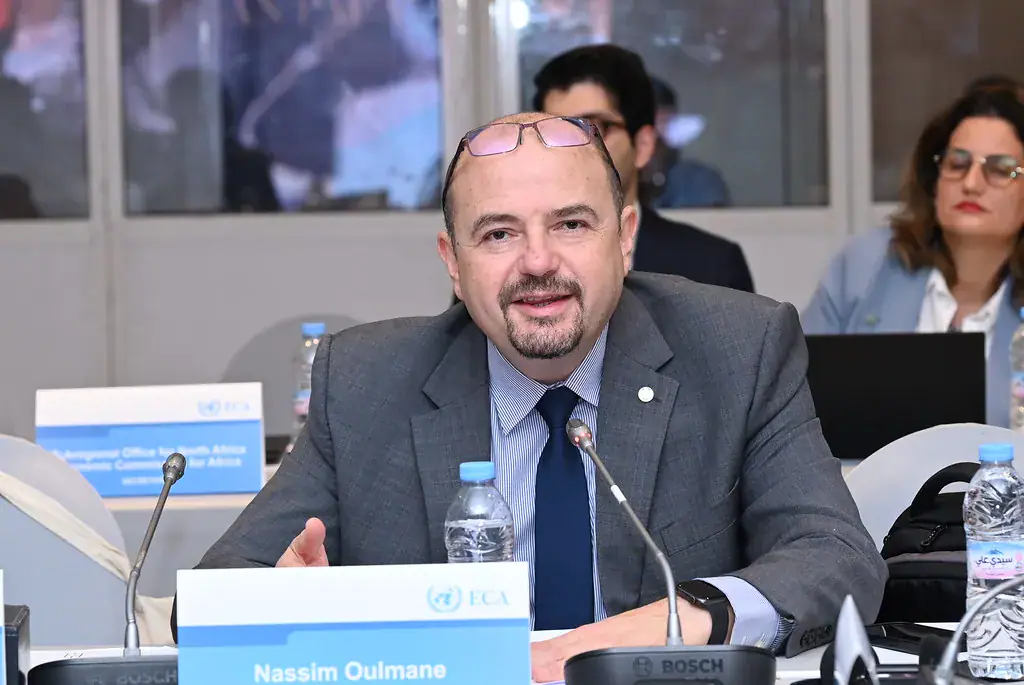
The 41st meeting of the Intergovernmental Committee of High Officials and Experts for North Africa (CIHFE-AN) recently took place in Rabat, Morocco. Dr. Nassim Oulmane, Director of the UN Economic Commission for Africa (UNECA) North Africa Bureau, shared his insights on the major challenges facing the region. With over 25 years of experience in the academic, national administration, international organizations, and the UN system, Dr. Oulmane has expertise in sustainable development, climate change, and economic policies.
Dr. Oulmane highlighted the complexities of responding to multiple crises simultaneously. He noted that countries are facing numerous challenges, but the simultaneous occurrence of these crises makes responses increasingly complicated. The war in the Middle East, for instance, has led to the closure of the Strait of Hormuz and rising oil prices, affecting countries differently depending on their import and export dynamics.
The CIHFE-AN meeting was held under the theme "Strengthening Economic Resilience Mechanisms to Cope with the Repercussions of Simultaneous Global Shocks in North Africa." Dr. Oulmane emphasized the need to shift from a response-oriented approach to one of anticipation and integration of vulnerability and resilience in socio-economic policy design. This approach would enable countries to better manage crises by anticipating their impacts.
North Africa is experiencing climate change at a rate twice as fast as the global average, severely affecting its ecosystems, economies, and societies. Dr. Oulmane stressed the importance of integrating adaptation and resilience into economic policies to address this issue. He noted that while there is no one-size-fits-all model for the region, a common approach is necessary to ensure that climate change is addressed in a comprehensive manner.
Dr. Oulmane highlighted the diversity of North Africa, with different zones such as the Sahel, coastal areas, and the Nile Basin, each with unique climate challenges. He emphasized that adaptation strategies must be integrated into economic policies, taking into account the specific needs and circumstances of each country. This approach would enable countries to measure the cost of inaction on climate change and make informed decisions.
The UNECA North Africa Bureau Director also emphasized the importance of access to financing for climate change adaptation and resilience-building efforts. He noted that countries need to be able to mobilize resources to support their climate change mitigation and adaptation strategies. This would enable them to reduce the risks associated with climate change and promote sustainable development.
Dr. Oulmane's insights underscore the need for a coordinated approach to addressing the complex challenges facing North Africa. By integrating resilience and adaptation into economic policies, countries can better manage the impacts of simultaneous crises and promote sustainable development. The CIHFE-AN meeting provided a platform for experts to share knowledge and experiences, with a view to strengthening economic resilience in the region.
Key points
- Dr. Nassim Oulmane emphasizes the need for a shift from response-oriented approaches to anticipation and integration of vulnerability and resilience in socio-economic policy design.
- North Africa is experiencing climate change at a rate twice as fast as the global average, severely affecting its ecosystems, economies, and societies.
- The region requires a coordinated approach to addressing the complex challenges of climate change, with a focus on integrating adaptation and resilience into economic policies.