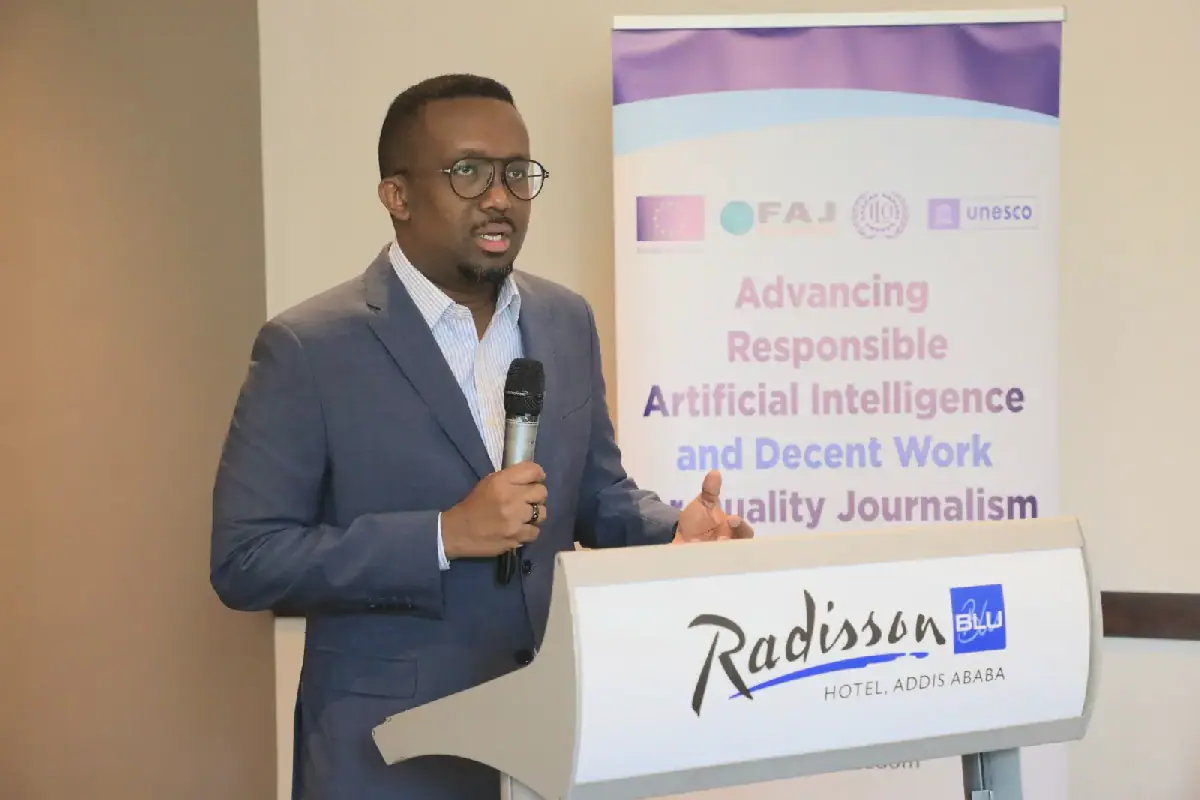
African journalist leaders have adopted a comprehensive action plan to promote responsible artificial intelligence (AI), improve working conditions, and enhance media freedom across the continent. The plan was agreed upon at a two-day dialogue and capacity-building programme convened by the Federation of African Journalists (FAJ) in Addis Ababa on 24-25 October 2026. The programme brought together journalist leaders, representatives of the African Union Commission (AUC), UNESCO, the International Labour Organization (ILO), and the European Union (EU).
The programme focused on countering disinformation and misinformation, improving journalists' working conditions, and defending media freedom. Participants examined the impact of AI on journalism and the information ecosystem, sharing ideas on how AI can assist journalists while mitigating risks such as fabricated content and the spread of disinformation. They explored practical responses to protect information integrity, freedom of expression, and media freedom. The programme also addressed the abysmal working conditions of journalists, including low pay, insecure employment, and lack of contracts and social protection.
The programme highlighted the need to address violence against journalists, digital security, and the importance of ending impunity for crimes committed against them. Participants expressed concern about the increasing physical attacks and legal harassment journalists face in Africa while practising their profession. They also discussed online harassment and digital violence targeting women journalists. Regional experiences and priorities for collective action were also considered to help turn the tide on the worsening situation.
The activity was funded by the ILO, the EU, and UNESCO through its Multi-Donor Programme on Freedom of Expression and Safety of Journalists (MDP). The programme's deliberations were guided by FAJ's recent continental survey on journalists' working conditions, safety, labour rights, and media freedom. The survey gathered responses from 1,586 journalists across 45 countries, providing a stronger evidence base for advocating change with media organisations, governments, and other institutions.
FAJ President Omar Faruk Osman emphasised that artificial intelligence must not deepen the precarious conditions in which journalists across the continent continue to work. He stated that when journalists lack decent working conditions, quality journalism is weakened, and disinformation and misinformation gain ground. Osman stressed that the responsible use of AI, decent work, and media freedom are closely interconnected.
The adopted action plan will guide FAJ and its affiliated organisations in advancing decent work for journalists, quality journalism, and responsible AI across Africa. FAJ will take these priorities forward through its member organisations and networks and through continued engagement with the African Union (AU), regional economic communities (RECs), UN agencies, organised labour, human rights organisations, and like-minded partners.
The action plan is expected to support collective advocacy and efforts to bring about progressive change. The survey findings will also inform future advocacy, providing a stronger voice for journalists and their organisations. The programme's outcomes are expected to enhance the quality and independence of reporting, ultimately contributing to a more informed and engaged public.
Key points
- African journalist leaders adopt a continental action plan to advance responsible AI, decent working conditions, and quality journalism.
- The plan aims to counter disinformation and misinformation, improve journalists' working conditions, and defend media freedom.
- The programme was guided by a continental survey of 1,586 journalists across 45 countries, providing a stronger evidence base for advocating change.