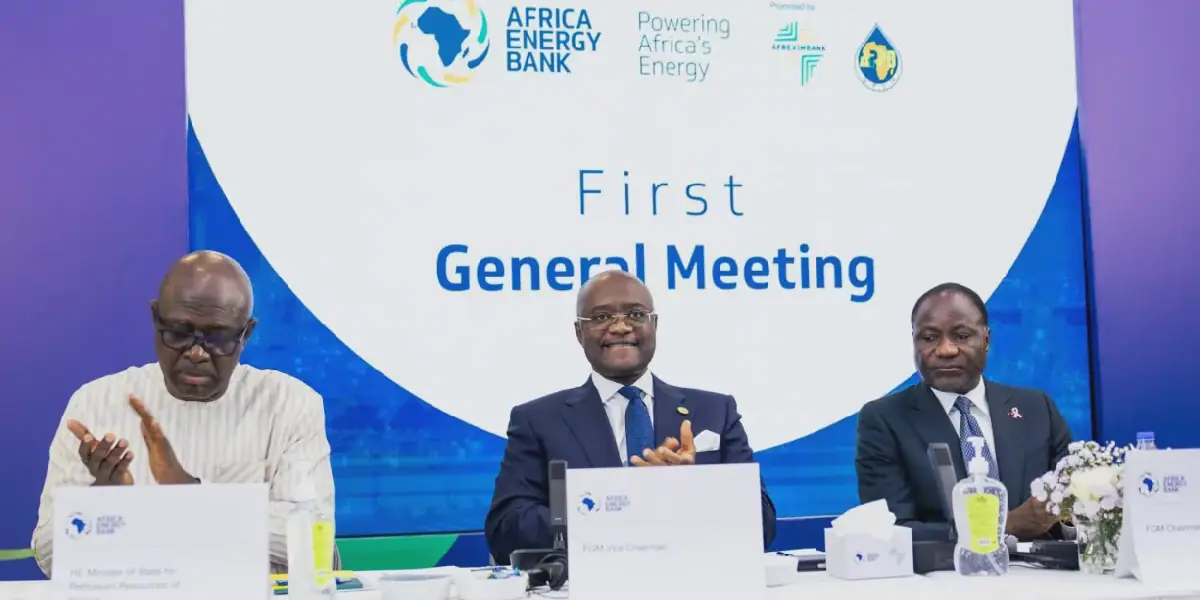
The African Export-Import Bank and the African Petroleum Producers' Organisation have launched the Africa Energy Bank with an initial authorized capital of $5 billion. The new multilateral institution aims to address a widening financing gap in the energy sector as traditional international lenders progressively withdraw capital from fossil fuel projects across the developing world. This move is crucial for Africa, where oil and gas resources remain central to energy security, industrialization, and revenue systems. The bank's establishment is a significant development in the global financial landscape.
The Africa Energy Bank's inaugural general meeting was held in Abuja, Nigeria, where shareholders appointed Egyptian banker Helmy Ghazi as its first president and constituted the bank's initial board of directors. The bank's capital framework is designed to build financial autonomy across African markets, ensuring that local energy developments maintain access to structured liquidity. This is particularly important for African countries that rely heavily on fossil fuels for energy and revenue. The bank's leadership structure and capital framework are critical to its success.
The Africa Energy Bank's primary mandate is to supply targeted capital across every segment of the energy sector. The bank will finance upstream exploration and production efforts, midstream refining operations, and downstream distribution infrastructure. This comprehensive approach aims to support the development of Africa's energy sector and address the financing gap. The bank's officials emphasize the broader economic strategic imperative behind its founding, highlighting the need for significant investments in energy generation and transmission to accelerate industrial growth.
The establishment of the Africa Energy Bank is a response to the changing global climate priorities and the withdrawal of Western lenders from fossil fuel projects. Despite the global shift towards renewable energy, oil and gas resources remain crucial for Africa's energy security and industrialization. The bank's emergence provides a critical financial backstop for domestic energy infrastructure in oil-producing nations across West Africa. By securing independent funding mechanisms, regional economies can safeguard ongoing field developments and bolster local refining capacity.
The Africa Energy Bank has set an ambitious long-term objective to expand into a major balance-sheet powerhouse, targeting an ultimate asset base of $120 billion. To achieve this, the bank aims to broaden its geopolitical participation across the continent, with non-member nations of the African Petroleum Producers' Organisation, including South Africa, signaling strong interest in participating. This expansion will enhance the bank's financial resilience and support its mission to bridge the financing gap in the energy sector.
The Africa Energy Bank's impact on West African energy markets is significant, particularly for oil-producing nations such as Ghana. The bank's emergence provides a critical financial backstop for domestic energy infrastructure, enabling regional economies to safeguard ongoing field developments and bolster local refining capacity. This development is expected to enhance energy security and support industrial growth in the region. The bank's officials stress that its establishment underscores the need for a just energy transition for African countries.
The Africa Energy Bank is poised to play a crucial role in addressing Africa's energy financing gap, which currently stands at an estimated $200 billion. The bank's officials believe that its establishment will help bridge this gap while supporting a just energy transition for African countries. With its comprehensive approach and ambitious long-term objectives, the Africa Energy Bank is expected to become a major player in Africa's energy sector, enhancing financial resilience and supporting regional economic growth.
Key points
- The Africa Energy Bank has been established with an initial authorized capital of $5 billion to address the financing gap in the energy sector.
- The bank's primary mandate is to supply targeted capital across every segment of the energy sector, from upstream exploration to downstream distribution infrastructure.
- The bank aims to expand into a major balance-sheet powerhouse, targeting an ultimate asset base of $120 billion.