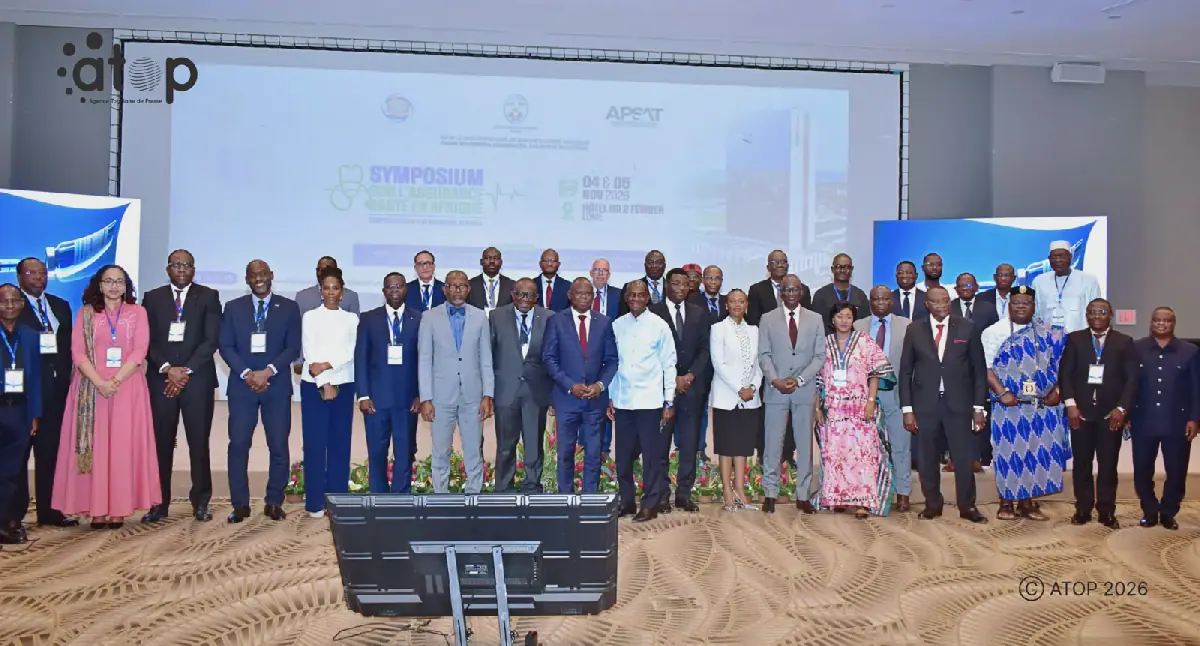
The Togolese capital, Lomé, recently played host to a two-day symposium on health insurance in Africa, organized by the Fédération des sociétés d’assurances de droit national africaines (FANAF) in collaboration with the Togolese insurance market. The event, which took place on November 4 and 5, brought together public decision-makers, insurance professionals, and sector experts to discuss the theme "Building a viable, inclusive, and sustainable health insurance ecosystem in Africa." The symposium aimed to explore ways to ensure that every citizen has access to healthcare without facing financial hardship.
The conference was officially opened by the Minister of Health, Jean-Marie Koffi Ewonoulé Tessi, who highlighted Togo's progress in implementing universal health insurance. He emphasized that the symposium's theme is a challenge for all stakeholders and stressed that inclusion is not a matter of charity, but rather about adapting services to meet the real needs of populations. The Minister called for the creation of affordable products that can be easily accessed and cover essential healthcare needs.
According to Hadaraï Rabo, a member of FANAF's executive bureau, insurance is a financial mechanism with significant social impact. He argued that the ecosystem needs to be rethought to make it robust, productive, and sustainable, while also being inclusive of public and private healthcare systems. Rabo expressed hope that participants would leave the symposium with concrete and relevant resolutions that could be implemented in their respective countries.
The symposium addressed several key topics, including the leadership required to build a viable, useful, and accessible health insurance system in Africa, improving its financial balance, and expanding disease coverage to populations that are still underinsured. The discussions aimed to identify practical solutions to these challenges and promote a more inclusive and sustainable health insurance ecosystem.
The event culminated in the adoption of a roadmap for 2027-2030, which will guide the development of health insurance in Africa. FANAF plans to continue examining issues related to improving health insurance on the continent by promoting complementarity between public and private insurance systems. This approach aims to leverage the strengths of both systems to achieve better healthcare outcomes.
The symposium demonstrated the commitment of FANAF and its partners to addressing the healthcare needs of African populations. By bringing together stakeholders from across the continent, the event provided a platform for sharing experiences, expertise, and best practices in health insurance. The outcomes of the symposium are expected to contribute to the development of more effective and sustainable health insurance systems in Africa.
The Togolese government's efforts to promote universal health insurance were highlighted during the symposium, with the country's progress serving as a model for other African nations. The event also underscored the importance of collaboration and coordination among stakeholders to achieve a more inclusive and sustainable health insurance ecosystem in Africa.
Key points
- The symposium adopted a roadmap for 2027-2030 to guide the development of health insurance in Africa.
- The event brought together public decision-makers, insurance professionals, and sector experts to discuss the theme "Building a viable, inclusive, and sustainable health insurance ecosystem in Africa."
- The Minister of Health emphasized the need for affordable products that can be easily accessed and cover essential healthcare needs.