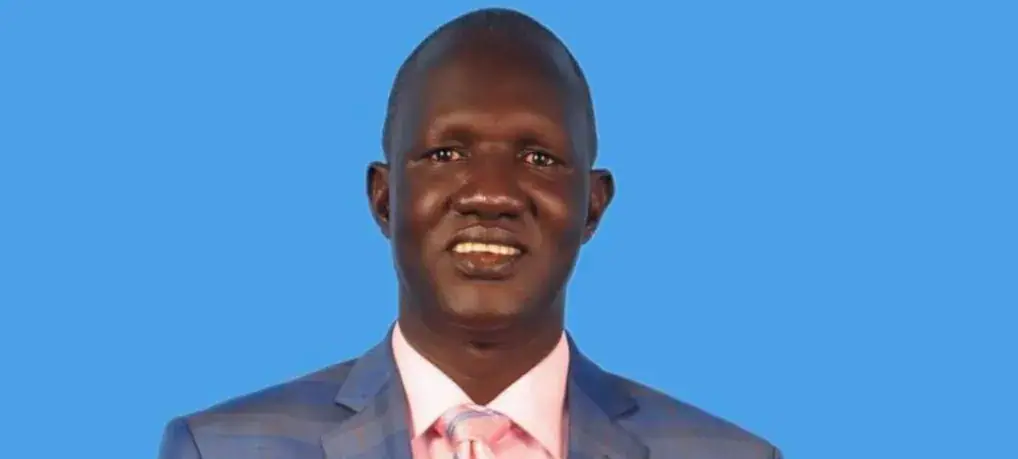
South Sudan's inter-party dialogue, which took place in Juba last month, failed to reach a consensus due to disagreements over the government's plans to hold elections in December. According to political analyst and government critic Abraham Awolich, the talks broke down because the government wanted political parties to endorse decisions already taken by President Salva Kiir rather than negotiate a consensus on the country's political future. Awolich, a former managing director of the Sudd Institute and co-founder of the People's Coalition for Civil Action (PCCA), stated that participants called for the postponement of the December 22 elections and negotiations on a new political arrangement.
The dialogue, which was held after the government dissolved parliament, the cabinet, and other transitional institutions, was criticized by Awolich as a "banquet among people who had already agreed to violate the constitution." He accused the government of seeking to use the talks to secure political endorsement of Kiir's decisions and establish an arrangement that would allow him to remain in power without holding general elections. However, participating parties insisted that the necessary conditions for credible elections did not exist and called for negotiations on an alternative political arrangement.
According to Awolich, some participants proposed postponing the elections without extending the mandates of the Revitalised Transitional Government of National Unity (RTGoNU) and the institutions established under the 2018 peace agreement. They argued that any new arrangement should be negotiated through the inter-party dialogue. Government representatives, however, maintained that the December elections should proceed regardless of the political and security environment.
The firing of Martin Elia Lomuro from the position of cabinet affairs minister was also linked to tensions surrounding the inter-party dialogue, according to Awolich. He described Lomuro as a hardworking official who had helped keep the government functioning but said disagreements within the government had contributed to his removal. Awolich alleged that tensions between Lomuro and individuals he described as influential within the government intensified during the inter-party dialogue and after the government restricted the movement of officials following the dissolution of transitional institutions.
Awolich's organization, the People's Coalition for Civil Action, has proposed an inclusive national political dialogue involving South Sudanese inside and outside the country, facilitated by international mediators. He argued that the expiry of the extended transitional period and the absence of conditions for credible elections require a broader political process to determine the country's future. Awolich called for an inclusive process that would lead to a constitutional and political settlement.
Awolich also endorsed concerns raised by the UN Commission on Human Rights in South Sudan over what it has described as a constitutional coup through legislation. He said amendments to the National Elections Act and the subsequent dissolution of parliament and the cabinet violated the 2018 peace agreement because they were undertaken without consensus among the parties or approval through the agreement's monitoring mechanisms. Awolich questioned the caretaker administration's authority to govern without a functioning parliament.
The analyst also raised concerns about the December 22 elections, questioning their legal and administrative basis. He said the government had prioritized polling over the constitutional and census processes envisaged under the 2018 peace agreement. Awolich accused the ruling Sudan People's Liberation Movement (SPLM) of gaining an unfair advantage by campaigning across the country while opposition leaders faced restrictions on movement.
Key points
- The inter-party dialogue failed due to disagreements over holding elections in December.
- The government's actions have been criticized as a constitutional coup through legislation.
- An inclusive national dialogue has been proposed to address the country's political crisis.