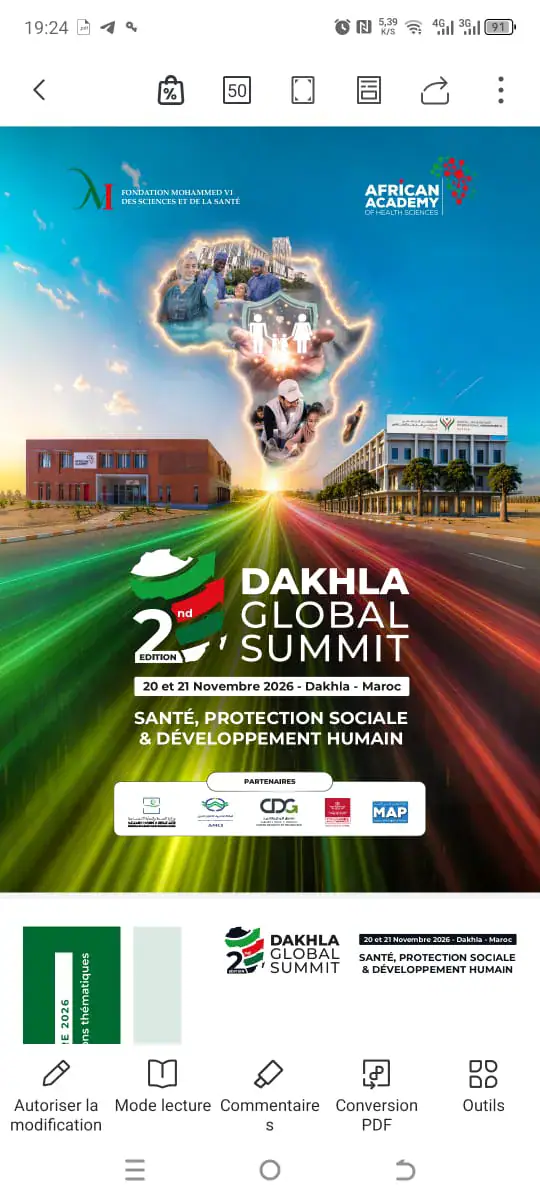
The Dakhla Global Summit 2026 brought together experts to discuss healthcare issues, including women's cancers. On November 20, Professors Rajae Aghzadi from Morocco and Abdou Zouré from Burkina Faso presented their findings in a panel on non-communicable disease management. They emphasized the importance of early detection, diagnosis, and access to innovative treatments for breast and cervical cancers. Their presentations highlighted the significant burden of these diseases in Africa.
Professor Aghzadi noted that Africa records approximately 200,000 breast cancer cases and over 90,000 deaths annually, according to the World Health Organization. She criticized late diagnoses and interrupted care pathways, stressing that screening alone is not enough to save lives. Complete care pathways are crucial for improving outcomes. Aghzadi also highlighted disparities in access to innovative treatments, warning that these should not become a geographical or economic privilege.
Aghzadi outlined seven priorities for improving women's cancer care in Africa. These include sustainable prevention financing, rapid care pathways, territorial equity, access to innovations, training and research, South-South cooperation, and a culture of accountability. She emphasized the need for measurable changes in women's lives and reliable data to track progress. Aghzadi proposed establishing an African women's health observatory under the Mohammed VI Foundation for Health Sciences.
The proposed observatory would focus on four key areas: observation, connection, orientation, and action. Aghzadi stressed that the goal is not to export models from one country to another but to build solutions together, respecting national priorities, cultures, and health sovereignty. This approach aims to foster collaboration and knowledge sharing across the continent.
Professor Zouré presented on cervical cancer, highlighting a significant paradox. Despite being 99% caused by the human papillomavirus and being over 90% preventable through vaccination, cervical cancer continues to claim many lives in Africa. He noted that low- and middle-income countries account for 90% of cervical cancer deaths, with a regional fatality rate of 68%.
Zouré attributed the high fatality rate to late diagnoses, emphasizing that this is not a biological inevitability but a direct result of inadequate healthcare. He called for effective measures to accelerate cervical cancer elimination, including increased vaccination and screening efforts. The experts' presentations underscored the need for comprehensive and equitable healthcare systems to address women's cancers in Africa.
The discussions at the Dakhla Global Summit 2026 highlighted the complexities of addressing women's cancers in Africa. Experts emphasized the importance of collaboration, innovation, and equity in improving healthcare outcomes. By working together and sharing knowledge, African countries can develop effective strategies to reduce the burden of women's cancers and improve the quality of life for patients.
Key points
- Experts stress need for equitable access to cancer prevention, diagnosis, and treatment in Africa.
- Africa records approximately 200,000 breast cancer cases and over 90,000 deaths annually.
- Cervical cancer is 99% caused by the human papillomavirus and is over 90% preventable through vaccination.