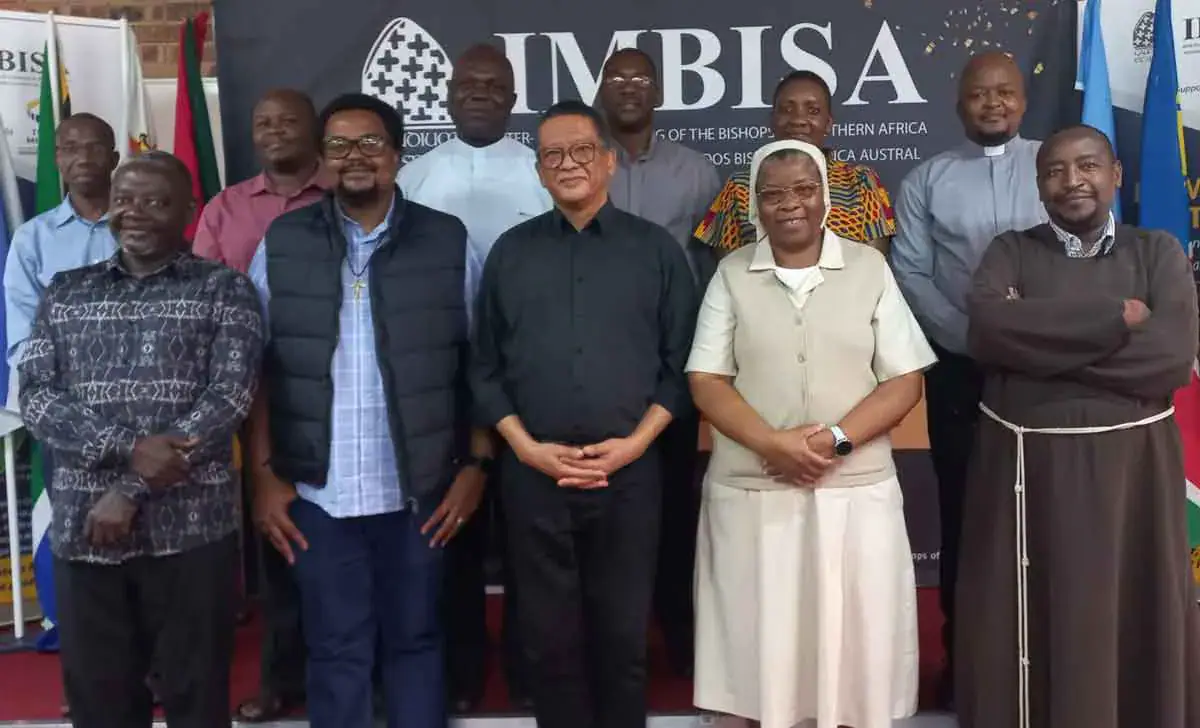
The Church in Africa has been called upon to address the issue of polygamy and other cultural realities. A recent regional workshop on inculturation, organised by the Inter-Regional Meeting of the Bishops of Southern Africa (IMBISA), brought together theologians from South Africa, Lesotho, Angola, Mozambique, and Zimbabwe. The workshop, held at the Padre Pio Spirituality Centre in Pretoria from November 2-6, focused on embracing inculturation, traditional beliefs, and synodality for a liberating Church in IMBISA.
The workshop was led by Sr Estér Lucas José Maria, a Mozambican member of the Daughters of Charity of St Vincent de Paul, and Fr Ian Mberikwazwo Chitambo, a Zimbabwean Oblate of Mary Immaculate. Sr Estér co-authored the final report of the Synod's Study Group 10 on polygamy, which highlighted the difficulties faced by families in polygamous situations. Historically, the Church has often baptised a husband and his first wife while leaving subsequent wives and their children outside sacramental life, creating serious pastoral injustices.
Sr Estér stressed that the study group's final report did not represent the last word on the subject, but rather called for further theological and pastoral reflection. She argued that pastoral workers must understand the circumstances and reasons that lead families into polygamous marriages, and that an approach must be sought to avoid excluding anyone. This requires courage, she said, as African Catholics often fear how the wider Church will respond to discussions of African cultural practices.
Fr Chitambo challenged the tendency to measure African expressions of Christianity against inherited European standards. He argued that inculturation must engage seriously with the "African condition", rather than treating African culture as something that needs to be justified before it can contribute to the universal Church. The implementation phase of the Synod on Synodality offers an opportunity for local Churches to exchange gifts while respecting legitimate diversity.
Participants at the workshop raised fundamental questions about who determines what constitutes authentic African culture, which traditions are considered compatible with Christianity, and why European Christianity often appears to be the universal theological standard. They also discussed the need to continue this conversation, particularly by asking which people have been left out of pastoral discussions.
The workshop concluded with participants agreeing to work towards a publication to assist pastoral workers in the region with inculturation and the ministry to families living in polygamous situations. This publication aims to provide guidance and support for pastoral workers who are dealing with complex cultural and pastoral issues.
The African Church must take a more nuanced approach to cultural realities, including polygamy, in order to provide a more inclusive and compassionate ministry to all families. By engaging with these issues, the Church can work towards a more liberating and synodal approach that respects legitimate diversity and promotes the dignity of all people.
Key points
- The Church in Africa must address the issue of polygamy and other cultural realities in a more nuanced and inclusive way.
- A recent workshop on inculturation called for further theological and pastoral reflection on polygamy and its implications for the Church.
- The implementation phase of the Synod on Synodality offers an opportunity for local Churches to exchange gifts and promote a more synodal approach.
Reporting sources
- African Church must face issues of polygamy · The Southern Cross